AI Neural Network Comparison 2026: Capabilities, API Limits and Pricing Models Tested
Frontier models reached index scores above 166 in 2026 while token prices dropped sharply. This guide details measured capabilities, rate limits and costs.
Frontier AI models in late 2026 deliver benchmark scores above 166 on aggregated indices while offering context windows of one million tokens or more. API pricing for production use now starts below two dollars per million input tokens on several platforms, and rate limits scale with spend commitments. The following sections examine the concrete numbers behind these claims.
AI Neural Network Comparison 2026 Capabilities and Benchmarks
Claude Opus 5.5 from Anthropic records the highest aggregate score at approximately 166.8 on indices that combine Epoch Capabilities, BenchAlign, LiveBench and Arena data. GPT-6 Astra and GPT-6.1 Sol from OpenAI follow within one point at 166.4, while Gemini 4 Argon from Google reaches 164.6. These figures reflect performance across coding, mathematics and general reasoning tasks measured through October 2026.
Context windows for the top closed models sit between one million and 1.05 million tokens. Open-weights releases such as Llama 4 Scout extend this to ten million tokens in listed configurations. Coding benchmarks show Claude Sonnet 5.5 and Opus variants achieving 91.4 percent on LiveBench coding subsets, while DeepSeek V4.1 Flash scores around 77 percent on agentic coding tasks. GPT-6 Astra maintains an edge on selected math and science suites including GPQA and FrontierMath.
Open-weights models remain competitive on value. Kimi K3 from Moonshot reaches 157.4 on the same index scale, and several DeepSeek, Qwen and Meta releases deliver strong results at lower hosting costs. Capability gains have accelerated since 2023, when the leading index stood near 126; the 2026 frontier now exceeds 166.
API Pricing and Rate Limits Compared
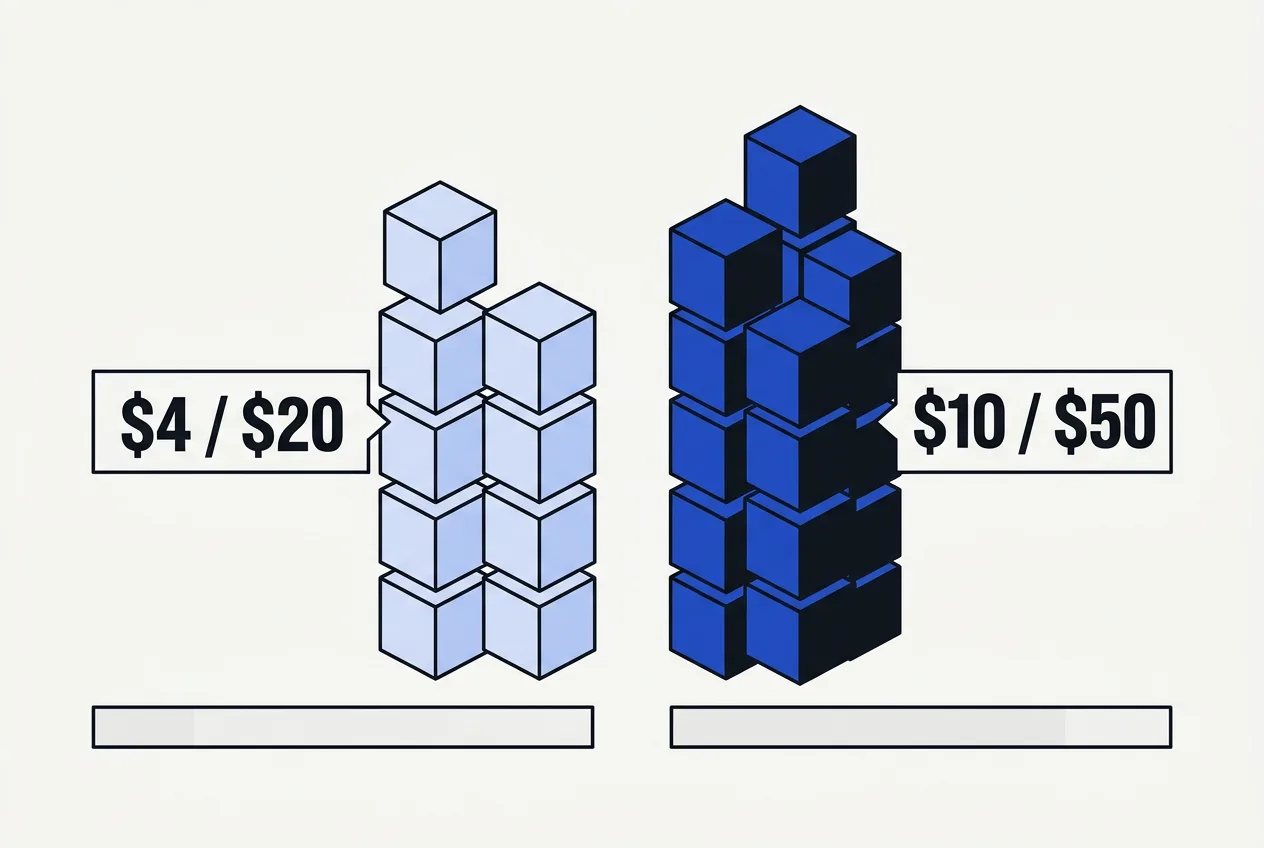
Official list pricing per million tokens shows clear tier differences. Claude Opus 5.5 costs four dollars input and twenty dollars output. GPT-6 Astra lists at ten dollars input and fifty dollars output, while GPT-6.1 Sol and Gemini 4 Argon both start at two dollars input and ten dollars output, with the latter price scheduled to rise after December 2026. Grok 4.7 from xAI charges two dollars input and six dollars output, doubling beyond two hundred thousand prompt tokens.
Mid-tier options reduce expense. Claude Sonnet 5.5 costs two dollars input and ten dollars output. DeepSeek V4 variants range from 0.15 to 0.66 dollars input and 0.60 to 1.98 dollars output. GPT-6 Luna sits at 0.10 dollars input and 0.50 dollars output. Batch processing and caching, which can reduce input prices by half or more, are now standard features across providers.
| Model | Input $/M | Output $/M | Typical RPM (standard tier) | TPM limit range |
|---|---|---|---|---|
| Claude Opus 5.5 | 4 | 20 | 1K–10K | 2M–10M |
| GPT-6 Astra | 10 | 50 | 5K–15K | 1M–40M |
| Gemini 4 Argon | 2 | 10 | project-specific | 5M batch |
| Grok 4.7 | 2 | 6 | 150–500 | 50M–100M |
| DeepSeek V4 | 0.15–0.66 | 0.60–1.98 | higher on spend | varies |
Rate limits depend on spend thresholds and account qualification. OpenAI tiers begin at five dollars monthly spend and reach thirty thousand RPM for lower-cost models. Anthropic starts at five hundred dollars and caps Opus or Sonnet at ten thousand RPM with two to ten million input tokens per minute. Google Gemini limits are project-specific, with batch queues at five million tokens for lower tiers. xAI Grok scales from one hundred fifty to five hundred requests per second once cumulative spend exceeds five thousand dollars. Exact per-account values remain dynamic and require direct verification with each provider.
Frequently asked questions
Which model leads the 2026 capability indices?
Claude Opus 5.5 records the top aggregate score near 166.8. GPT-6 Astra and GPT-6.1 Sol sit within one point of that mark.
How do context windows compare across flagships?
Most closed models offer one million to 1.05 million tokens. Selected open-weights releases list up to ten million tokens.
What is the lowest production-grade input price?
Several DeepSeek and Qwen variants fall below 0.50 dollars per million input tokens when batch or cached pricing applies.
Do rate limits change with spend?
Yes. OpenAI, Anthropic and xAI all raise RPM and TPM caps once monthly or cumulative spend crosses defined thresholds.
Comments 9