Best AI Models 2026: Claude Opus 5.5 vs GPT-6 Astra, Gemini 4 Argon and Kimi K3.1 Pro
Claude Opus 5.5 currently leads most coding and agentic benchmarks, while GPT-6 Astra excels in math and computer use, Gemini 4 Argon offers strong value on multimodal tasks, and Kimi K3.1 Pro narrows the gap at lower cost.
Best AI models 2026 currently include four frontier releases that differ sharply in strengths, pricing and context handling. Claude Opus 5.5 tops many independent coding and knowledge indices. GPT-6 Astra leads select math and computer-use tests. Gemini 4 Argon and Kimi K3.1 Pro deliver competitive results at lower entry prices.
Current benchmark standings across major indices
Claude Opus 5.5 records the highest scores on Artificial Analysis Intelligence Index at 57.6 under maximum effort and leads LMArena coding at 1,807 as well as LiveBench at 83.2. It also places first or near first on ArtificialWatch coding aggregates and Vals AI at 70.2. These results reflect strong performance in agentic coding and long-context knowledge work.
GPT-6 Astra reaches 97.6 percent on FrontierMath Tier 4 and 96 percent on GPQA Diamond, plus 72.6 percent on OSWorld 2.0 offline computer-use tasks. Its Artificial Analysis Intelligence Index sits at 52.7. Gemini 4 Argon scores 69.2 on Vals Index and leads some finance and legal runs while posting 77.9 on DeepSWE v1.1. Kimi K3.1 Pro reaches 55.1 on Artificial Analysis and 65.7 percent on Terminal-Bench 4.0.
Leaderboards shift with effort settings and task type. Vendor-reported numbers often use maximum effort, so independent aggregates provide more stable comparisons. No model leads every category at once.
Pricing, context windows and output limits
Opus 5.5 offers a 1M-token context and 128K maximum output with API rates of $4 per million input tokens and $20 per million output tokens. Cache reads cost $0.20. GPT-6 Astra uses roughly 1.05M context and 128K output at $10 input and $50 output, with cache near $1. Its cheaper sibling GPT-6.1 Sol reduces rates to $2 and $10.
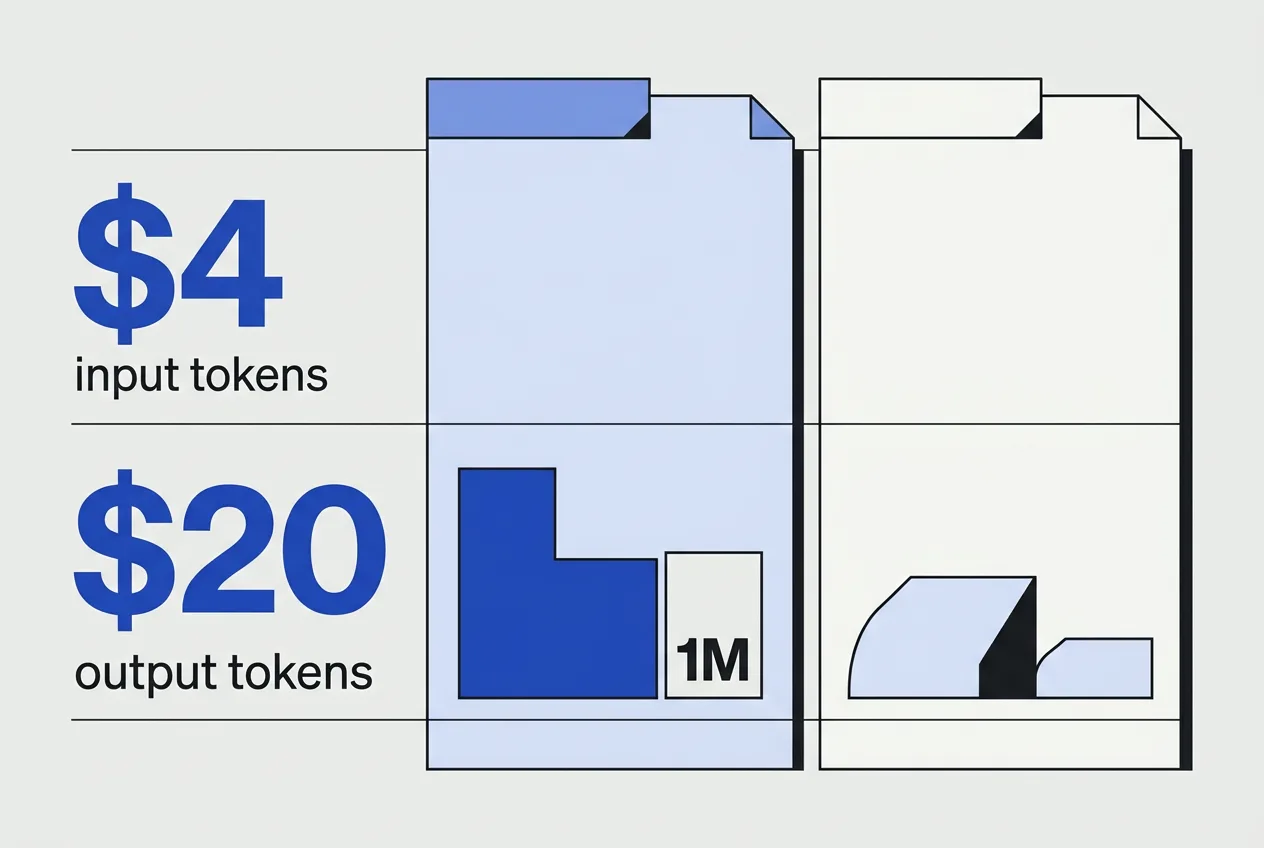
Gemini 4 Argon provides a unified 1M-token context and up to 1M output with introductory pricing of $2 input and $10 output through November 30, 2026, then $4 and $20. Cached tokens run near $0.10 during the intro period. Kimi K3.1 Pro matches the 1M context at $2 input and $10 output with $0.20 cache reads.
| Model | Context | Max Output | Input/Output Price | Key Strength |
|---|---|---|---|---|
| Claude Opus 5.5 | 1M | 128K | $4/$20 | Coding & agentic |
| GPT-6 Astra | 1.05M | 128K | $10/$50 | Math & computer use |
| Gemini 4 Argon | 1M | 1M | $2/$10 (intro) | Multimodal & long output |
| Kimi K3.1 Pro | 1M | 128K | $2/$10 | Agentic value |
Knowledge cutoffs range from March 2026 for Gemini 4 Argon to June 2026 for Opus 5.5. All four models support at least text and image inputs; Gemini 4 Argon adds video and audio while Kimi K3.1 Pro notes video support in some reports. Weights for Kimi K3.1 Pro are scheduled for release around November 4, 2026.
Practical selection for different workloads
Teams focused on software engineering and long-document analysis often start with Opus 5.5 because of its benchmark lead and lower price than Astra. Users needing heavy math, science or browser-based computer use may prefer Astra despite higher cost. Gemini 4 Argon suits workloads that combine video, PDF and extended output at the current introductory rate.
Kimi K3.1 Pro provides a lower-cost option that closes much of the gap on agentic and coding tasks while remaining competitive on the Artificial Analysis Index. Many organizations test multiple models on their specific prompts rather than relying on aggregate scores alone. Cheaper variants such as Claude Sonnet 5.5 and GPT-6.1 Sol further reduce spend for routine tasks.
Future updates, weight releases and post-intro pricing changes will continue to shift relative value. Regular checks of independent leaderboards remain necessary for accurate selection.
Frequently asked questions
Which model leads most coding benchmarks in October 2026?
Claude Opus 5.5 records the top or near-top scores on LMArena coding, LiveBench and multiple ArtificialWatch indices. It also leads the Artificial Analysis Intelligence Index at 57.6 under maximum effort.
How do the context windows compare across these models?
Opus 5.5, Gemini 4 Argon and Kimi K3.1 Pro each support 1M tokens. GPT-6 Astra reaches approximately 1.05M. Gemini 4 Argon allows up to 1M output tokens via long decode.
What are the current API prices for GPT-6 Astra?
GPT-6 Astra lists at $10 per million input tokens and $50 per million output tokens. Cache reads cost around $1 per million. A lower-cost sibling, GPT-6.1 Sol, reduces rates to $2 and $10.
Does Gemini 4 Argon keep its introductory pricing after November 2026?
Introductory rates of $2 input and $10 output end November 30, 2026. Standard pricing then rises to $4 input and $20 output.
Comments 2