Bull Wallet review: Privacy features, Lightning fees and 2026 comparisons
Bull Wallet offers self-custodial Bitcoin and Lightning support through Liquid Network swaps, with Payjoin privacy and no KYC requirements for core functions.

Bull Wallet review shows a self-custodial mobile app focused on Bitcoin privacy and Lightning payments without channel management. Launched worldwide on iOS and Android in October 2025 by Bull Bitcoin, the app combines on-chain BTC, Liquid Network support, and Lightning invoices processed through Boltz atomic swaps. Users gain access to confidential transactions and coin control tools while keeping full control of keys.
Bull Wallet review of core privacy tools and network support
The app integrates Payjoin V2 as the first wallet to do so in late 2024, with payjoin-by-default for on-chain trades through the optional Bull Bitcoin exchange added in November 2026. No account, email, or phone number is required for wallet functions, and the software collects no user data or IP addresses. Tor integration, an in-app secure keyboard for seed phrases, UTXO labeling, and freeze options further reduce exposure during transactions.
Support spans Bitcoin on-chain, Liquid L-BTC with confidential transactions, and Lightning invoices received directly into Liquid balances. Coldcard hardware wallet compatibility arrived in 2025 updates, alongside BIP39 seeds, descriptor wallets, and watch-only mode. The open-source codebase on GitHub allows verification, with reproducible builds listed on the roadmap.
Recent fixes restored Lightning and Liquid functionality after network issues in October 2026. Optional exchange features include AutoBuy and limit orders up to five, settled via SEPA where available, but core wallet operations remain independent of any account.
Fees, Lightning swaps and comparisons to other wallets
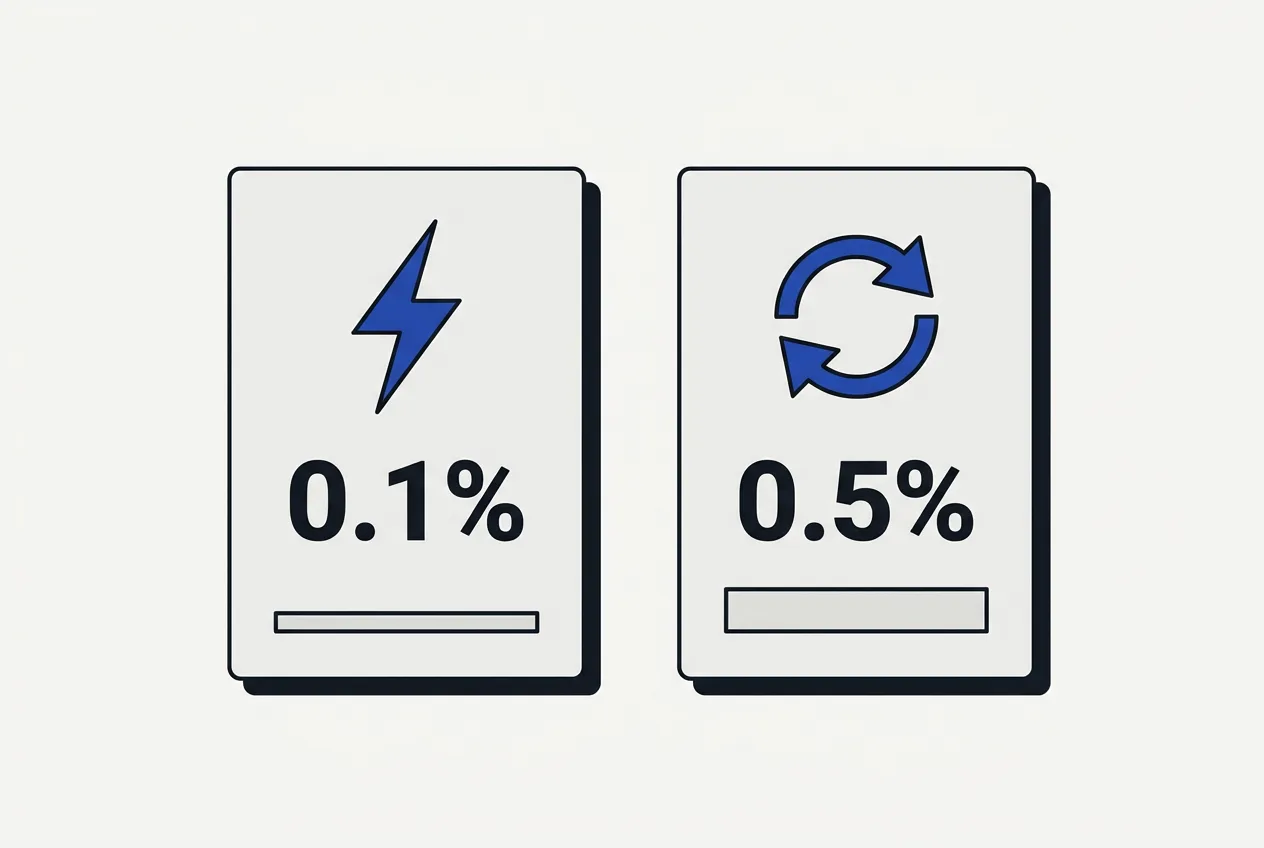
Bull Bitcoin charges no commission on Boltz swaps that handle Lightning to Liquid or on-chain moves. Boltz protocol fees typically range from 0.1 percent for receiving into Liquid to 0.5 percent when sending Lightning from Liquid, plus standard miner fees. On-chain transactions use mempool estimates with replace-by-fee support and user presets for control.
An Auto Transfer setting moves excess L-BTC to on-chain BTC at a chosen threshold, avoiding manual channel liquidity management common in native Lightning wallets. This approach simplifies use but introduces swap fees instead of routing costs.
| Wallet | Lightning approach | Typical fees | Privacy extras | Channel management |
|---|---|---|---|---|
| Bull Wallet | Liquid swaps via Boltz | 0.1-0.5% + miner fees | Payjoin V2, Tor, coin control | None required |
| Phoenix | On-device node | ~0.4% send + routing | Basic UTXO tools | User handled |
| Breez | LSP-managed | Low routing after setup | Limited | LSP assisted |
| Muun | Submarine swaps | Variable on-chain | Standard | None |
Compared with Phoenix and Breez, Bull Wallet removes liquidity tasks but adds swap costs and multi-network support. Muun shares the swap model yet lacks the exchange Payjoin integration and Liquid confidential transactions offered here. Users seeking minimal setup and stronger default privacy for on-chain activity find distinct advantages in the 2026 feature set.
Planned updates include multisig with miniscript, LN addresses, silent payments, and Ark support. These additions would extend the current focus on verifiable, non-custodial Bitcoin handling across networks.
Frequently asked questions
Does Bull Wallet require an account for basic use?
No account, email, or phone is needed for sending, receiving, or storing Bitcoin. Core functions operate without registration or data sharing.
How does Bull Wallet handle Lightning payments without channels?
The app routes Lightning invoices through Boltz atomic swaps to and from Liquid balances. Users avoid opening or managing channels while receiving payments directly into L-BTC.
What are the main fees in Bull Wallet?
Bull Bitcoin adds no commission. Boltz swap fees range 0.1 to 0.5 percent depending on direction, plus network miner fees on Bitcoin and Liquid transactions.
How does Bull Wallet compare to Phoenix or Breez for privacy?
It provides Payjoin V2 by default, Tor support, and UTXO controls not standard in Phoenix or Breez. Swap fees replace routing fees but add multi-network options.
Comments 2