Bybit Review 2026: Trading Volume Reaches $17B With 90 Million Users
Bybit reached 90 million registered users in November 2026 while posting daily volumes between $17.6 billion and $21.6 billion. The platform offers spot, perpetuals, TradFi products and a range of security certifications.
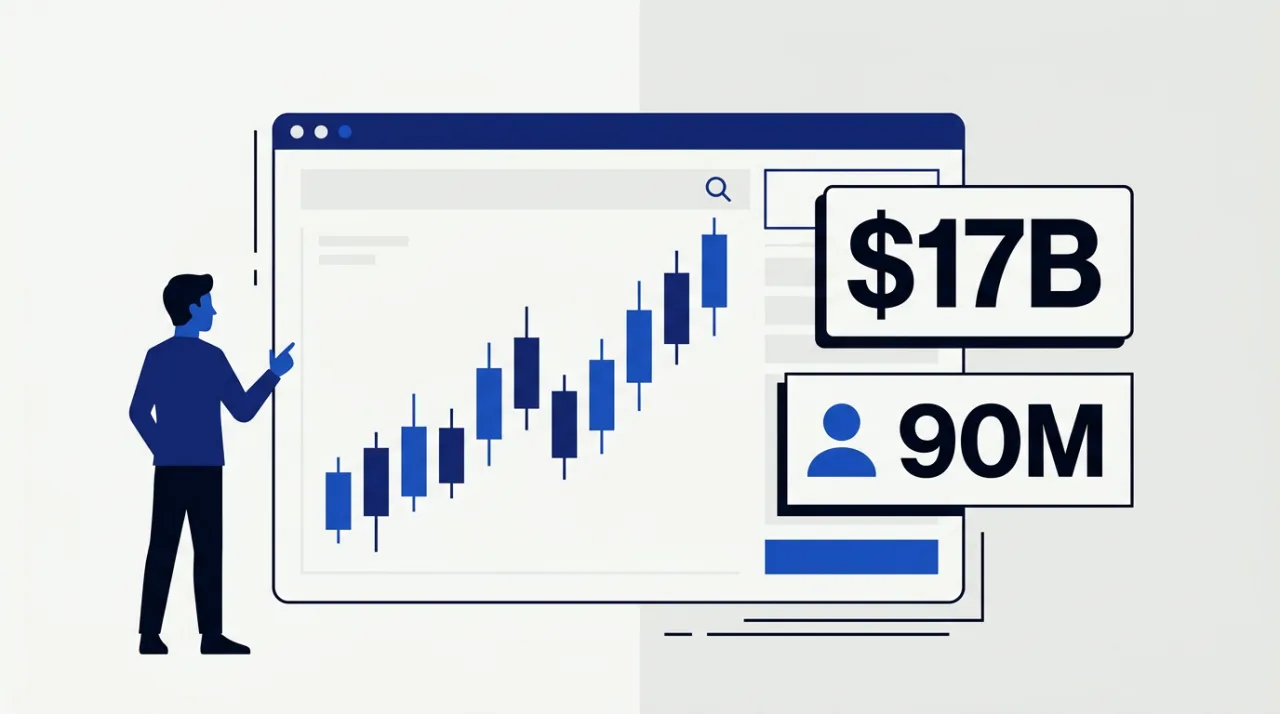
Bybit recorded 24-hour trading volumes between $17.6 billion and $21.6 billion as of late November 2026. Futures and perpetual contracts accounted for roughly 83 percent of that activity, with spot trading making up the remaining 17 percent. The exchange ranks around fourth among centralized platforms by volume, behind Binance and OKX.
Registered users passed 90 million on November 20, 2026. The figure reflects cumulative sign-ups rather than active traders. Earlier milestones showed approximately 80 million users in October 2026, with the company targeting 100 million.
Bybit Review 2026: Platform Features and Fee Structure
The exchange supports spot trading, perpetual contracts with leverage up to 150x on Bitcoin, options, copy trading, automated bots and Earn products. A Unified Trading Account allows seamless movement between derivatives and spot positions. Bybit Card has issued more than 4 million units, while Bybit Pay connects to over 5,000 merchants across 15 countries. Bybit AI provides access to more than 600 integrated services. Traditional finance offerings launched in stages during 2026 and now include over 600 TradFi perpetual products plus more than 1,000 U.S. stocks and ETFs. Cumulative TradFi perpetual volume exceeded $180 billion by October 2026.
Base fees for spot crypto pairs stand at 0.10 percent for both maker and taker orders. Paying fees in MNT can reduce the rate to 0.075 percent. Certain USDC pairs offer a 50 percent discount on taker fees. Perpetual and futures contracts carry 0.02 percent maker and 0.055 percent taker fees at the lowest tier, with MNT payments lowering those to approximately 0.018 percent and 0.0495 percent. Withdrawal fees vary by network; examples include 1.3 USDT for TRC20 transfers and 0.15 USDT for BEP20. Deposits and internal transfers remain free. Higher VIP tiers unlock further reductions.
Traders often compare Bybit fees against other derivatives-focused platforms. The table below summarizes base rates for the lowest tier:
| Product | Maker | Taker | Notes |
|---|---|---|---|
| Spot (crypto pairs) | 0.10% | 0.10% | Lower with MNT |
| Perpetuals/Futures | 0.02% | 0.055% | Lower with MNT or higher tier |
| Withdrawals | Network fee | Network fee | Some options free |
Bybit Security Measures and Regulatory Status
Bybit publishes monthly Proof of Reserves reports using Merkle tree methodology audited by Hacken. The 41st report, based on an October 27, 2026 snapshot, showed approximately $17.3 billion in assets across 50 cryptocurrencies with coverage ratios above 100 percent, including 102 percent for BTC and 112 percent for USDT. The company holds SOC 2 Type II, ISO 27001 and PCI DSS certifications. Bybit EU GmbH received MiCA CASP authorization from Austria’s FMA in May 2025, allowing passporting to 29 EEA countries. A Dubai VARA VASP license for spot and exchange services was granted in October 2026. Additional approvals cover jurisdictions including the Cayman Islands and Indonesia. The platform remains unavailable to residents of the United States, Canada and Singapore.

In February 2025 a supply-chain attack attributed to North Korea’s Lazarus group resulted in a $1.46 billion cold-wallet theft. The exchange replenished user funds from its own reserves and continued normal operations while pursuing recovery. No comparable incidents have been reported since. Users should note that Proof of Reserves audits provide a snapshot view and do not guarantee real-time solvency. Account-level security still depends on individual practices such as enabling two-factor authentication and using withdrawal whitelists.
Potential users evaluating Bybit review 2026 materials should verify current license status in their region and review the latest Proof of Reserves report before depositing funds. The platform’s combination of high throughput claims, TradFi product expansion and ongoing regulatory filings positions it as a competitive option for derivatives traders, yet it carries the standard risks associated with centralized custody.
Frequently asked questions
What was Bybit’s 24-hour trading volume in November 2026?
Daily volumes ranged between $17.6 billion and $21.6 billion, with futures and perpetuals comprising about 83 percent of activity.
How many users does Bybit have in 2026?
The exchange surpassed 90 million registered users on November 20, 2026, up from roughly 80 million the previous month.
What are the base trading fees on Bybit?
Spot pairs start at 0.10 percent maker and taker. Perpetual contracts start at 0.02 percent maker and 0.055 percent taker, with discounts available when paying in MNT or at higher VIP levels.
Does Bybit publish Proof of Reserves reports?
Yes. Monthly Merkle-tree audits audited by Hacken show reserves exceeding 100 percent for major assets such as BTC and USDT.
Which regulatory licenses does Bybit hold?
The platform holds MiCA CASP authorization in the EEA and a VARA VASP license in Dubai, along with approvals in several other jurisdictions.
Comments 2