CFTC Crypto Exchange Regulation Sets Federal Oversight Path for Leveraged Trading
The CFTC's October 2026 proposals create a voluntary federal path for crypto platforms offering leveraged trades, replacing fragmented state rules with tailored oversight.
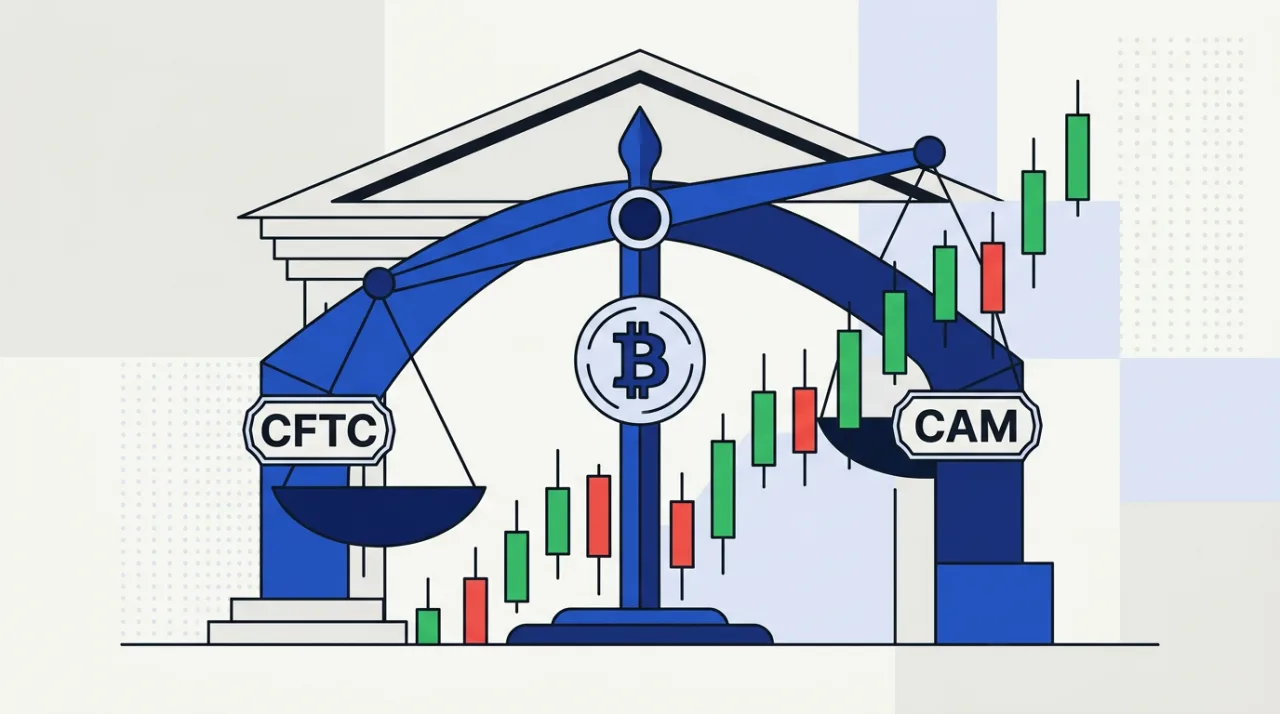
The CFTC advanced a single federal regulatory framework for crypto exchanges on October 5, 2026, through an Advance Notice of Proposed Rulemaking. Regulation CTX and Regulation CAM target retail transactions that involve leverage, margin, or financing while leaving ordinary spot trading under state licenses. Platforms seeking to offer leveraged products gain a unified federal option under existing Commodity Exchange Act authority.
CFTC Crypto Exchange Regulation Key Proposals
The framework introduces crypto asset markets as a new subcategory of designated contract markets. These CAMs would follow adapted core principles plus specific rules on custody, clearing, and operations. Existing designated contract markets could also list crypto asset transactions. The rules focus on retail trades with leverage or margin; fully paid spot transactions remain outside unless leverage appears in the offering.
Proposed requirements include proof-of-reserves for pooled customer assets, controls against market manipulation, and standards for listing tokens that carry manipulation risk. Trades would route through futures commission merchants that meet Bank Secrecy Act standards. No fixed leverage limits appear in the notice, though each product needs CFTC staff review before launch. The 60-day comment period runs until December 14, 2026.
Platforms that register under the new structure would face higher compliance costs than state money transmitter licenses but gain permission for leveraged products nationwide. Spot-only exchanges see no direct change. The proposals follow the Senate's September 2026 failure to pass the CLARITY Act and build on earlier CFTC-SEC interpretations that placed Bitcoin and Ether under CFTC jurisdiction.
Industry Impact and Practical Steps for Platforms
Exchanges that currently offer margin or financing can evaluate registration as a CAM or as an FCM and DCO to operate under one federal regime. This route may attract more institutional users by demonstrating standardized custody and clearing practices. Platforms limited to spot trading continue under existing state requirements and avoid added federal obligations.
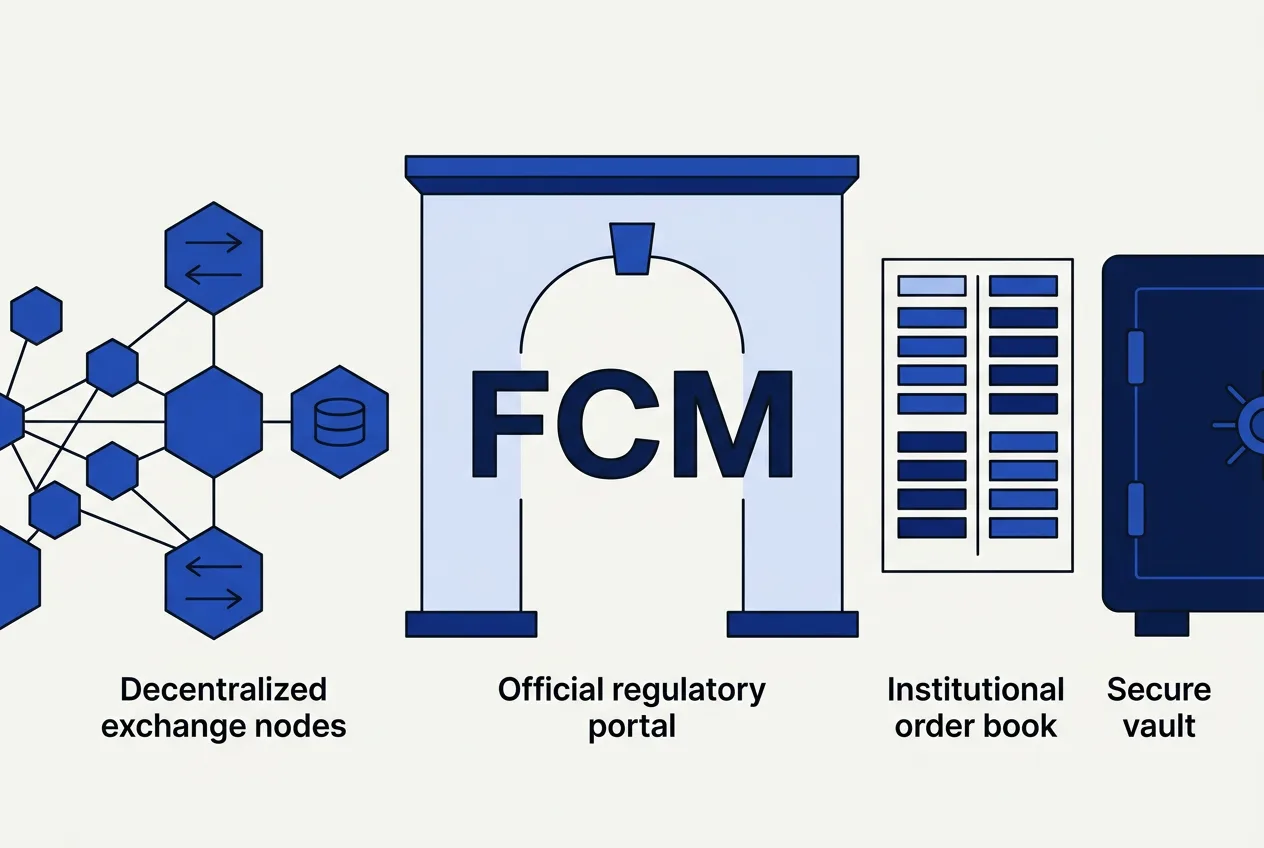
Key operational changes under consideration include mandatory FCM intermediation, regular proof-of-reserves audits, and pre-approval for token listings. Exchanges must also implement anti-manipulation systems tailored to crypto volatility. Smaller venues may find the compliance burden heavier, while larger operators with existing futures infrastructure could adapt more quickly.
Legal challenges remain possible, and midterm election results could affect final rule timing. Platforms should track the comment period and prepare internal custody and clearing documentation now. The voluntary nature of the framework means exchanges retain the option to stay with state licensing if they drop leverage features.
| Aspect | State Licensing Path | Proposed CFTC CAM Path |
|---|---|---|
| Leverage allowed | Limited or prohibited in many states | Permitted with CFTC clearance |
| Geographic scope | State-by-state | National |
| Custody rules | Varies by state | Proof-of-reserves required |
| Clearing | Not standardized | FCM and DCO standards |
Frequently asked questions
What transactions fall under the new CFTC crypto rules?
The proposals cover retail crypto asset transactions that include leverage, margin, or financing. Fully paid spot trades without leverage stay under state money transmitter rules unless leverage is offered alongside them.
When can platforms expect final rules?
The 60-day comment period ends December 14, 2026. Any subsequent proposed rules would follow after review, with possible influence from November 2026 election outcomes.
How does the framework differ from the failed CLARITY Act?
The CFTC action uses existing Commodity Exchange Act authority and targets only leveraged products. Broader spot-market federal rules would still require new legislation.
What registration options exist for platforms?
Exchanges may register as crypto asset markets under adapted DCM principles or as futures commission merchants and derivatives clearing organizations. Both paths require compliance with custody and clearing standards.
Comments 15