Claude Fable 5.2 Leads Anthropic Frontier Models for Long-Horizon Technical Tasks
Claude Fable 5.2 and Mythos 5.2 deliver 1M-token context and strong gains on agentic coding and scientific benchmarks after the November 2026 release.
Claude Fable 5.2 provides a 1-million-token context window and adaptive thinking for extended technical projects. Released on 9 November 2026 alongside Mythos 5.2, the models target multi-step coding, research and agent workloads that run for hours or days. Both share the same core architecture and pricing while differing mainly in safeguard levels.
Claude Fable 5.2 Technical Specifications and Safeguards
The models accept text and image inputs and produce text outputs with a maximum of 128,000 output tokens. Knowledge cutoff sits at June 2026. Adaptive thinking runs by default at high effort and can be adjusted through the effort parameter. Model identifiers are claude-fable-5-2 for the standard version and claude-mythos-5-2 for the restricted variant.
Fable 5.2 applies stronger cybersecurity and biology safeguards than the 5.1 generation, reducing unnecessary blocks by roughly 55 percent. Requests that trigger blocks are routed to Opus models. Mythos 5.2 removes some of these restrictions for organizations that pass Cyber Verification or Life Sciences Verification programs. Both versions include the strongest distillation protections released by Anthropic to date, with typical data retention of 30 days.
Practical use favors Fable 5.2 for orchestration roles and Mythos 5.2 for vetted high-stakes cyber or biology research. Independent testers note clearer step-by-step explanations compared with earlier releases, though results vary with task length and chosen effort setting.
Claude Fable 5.2 Pricing, Availability and Performance Benchmarks
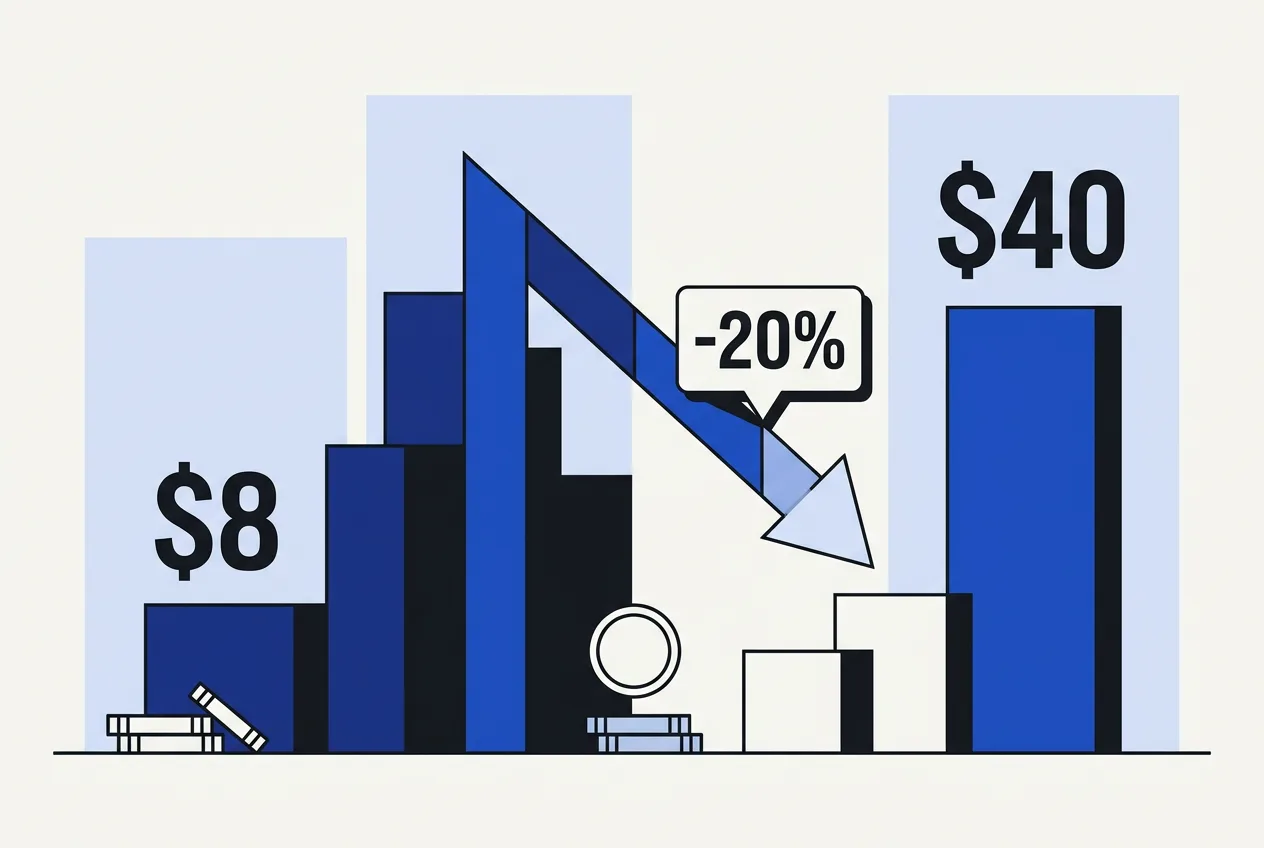
Standard API pricing is $8 per million input tokens and $40 per million output tokens, 20 percent lower than the 5.1 rates. Cache reads cost $0.20 per million tokens. Batch API halves the price to $4 and $20. Fast mode, which can reach 2.5 times the output speed, costs $16 and $80. The same rates apply to both Fable 5.2 and Mythos 5.2.
Fable 5.2 is generally available through the Claude API, Amazon Bedrock, Google Cloud, Microsoft Foundry and paid Claude plans. Mythos 5.2 access requires approval through the Cyber Verification Program, Life Sciences Verification Program or Claude Enterprise Security tier. Launch promotions were active on paid Claude plans at release.
Benchmark gains appear most clearly on long-horizon tasks. The table below summarizes selected scores at highest effort against Opus 5.5.
| Benchmark | Fable 5.2 | Opus 5.5 |
|---|---|---|
| FrontierCode 2.0 | 49.1% | 45.5% |
| FrontierSWE v2 | 69.9% | 62.3% |
| Terminal-Bench-Science 0.1 | 74.6% | 58.7% |
| Remote Labor Index | 41.3% | 21.3% |
| OSWorld 2.1 | 89.3% | 87.2% |
| Humanity’s Last Exam (tools) | 74.2% | 67.7% |
Mythos 5.2 records higher results on specialized cyber and biology tests such as CVE Rediscovery at 89.6 percent and CyScenarioBench at 76.3 percent. Output speed improved up to 30 percent over the 5.1 models. Users should test on their own workloads because cost per completed task rises at maximum effort settings.
Recommended Workflows and Evaluation Steps
Anthropic suggests beginning with Opus 5.5 for routine queries and moving to Fable 5.2 or Mythos 5.2 when sessions become open-ended or require sustained agent behavior. Typical applications include agentic coding pipelines, multi-day research agents, complex mathematical derivations and robotics simulation loops.
Start by setting effort to medium and measuring token usage on representative tasks. Increase to high only when the extra accuracy justifies the cost. Keep a fallback path to Opus 5.5 for shorter subtasks. Monitor cache write charges if prompts exceed a few hundred thousand tokens, and consider batch API for offline jobs that tolerate 50 percent lower pricing.
Organizations handling sensitive cyber or biology data must complete verification before accessing Mythos 5.2. All users should review output for factual drift on sessions longer than several hours and maintain separate verification steps for critical results.
Frequently asked questions
What is the context window size of Claude Fable 5.2?
Both Fable 5.2 and Mythos 5.2 support a 1-million-token context window with a 128,000-token output limit. The window covers text and image inputs.
How much does Claude Fable 5.2 cost per million tokens?
Standard rates are $8 input and $40 output. Batch API reduces this to $4 and $20. Fast mode doubles the output price to $80.
Who can access Claude Mythos 5.2?
Mythos 5.2 requires approval through the Cyber Verification Program, Life Sciences Verification Program or Claude Enterprise Security. Fable 5.2 remains open on the standard API and partner platforms.
How does Fable 5.2 compare with Opus 5.5 on long tasks?
Fable 5.2 shows gains on extended agentic benchmarks such as Remote Labor Index and Terminal-Bench-Science. Results depend on effort setting and task duration.
Comments 3