Cloud Storage Comparison 2026 Reveals Pricing and Security Tradeoffs Across Major Providers
Major cloud storage services in 2026 differ sharply in pricing models, encryption strength and integration depth. This guide compares the practical options for individuals and teams.
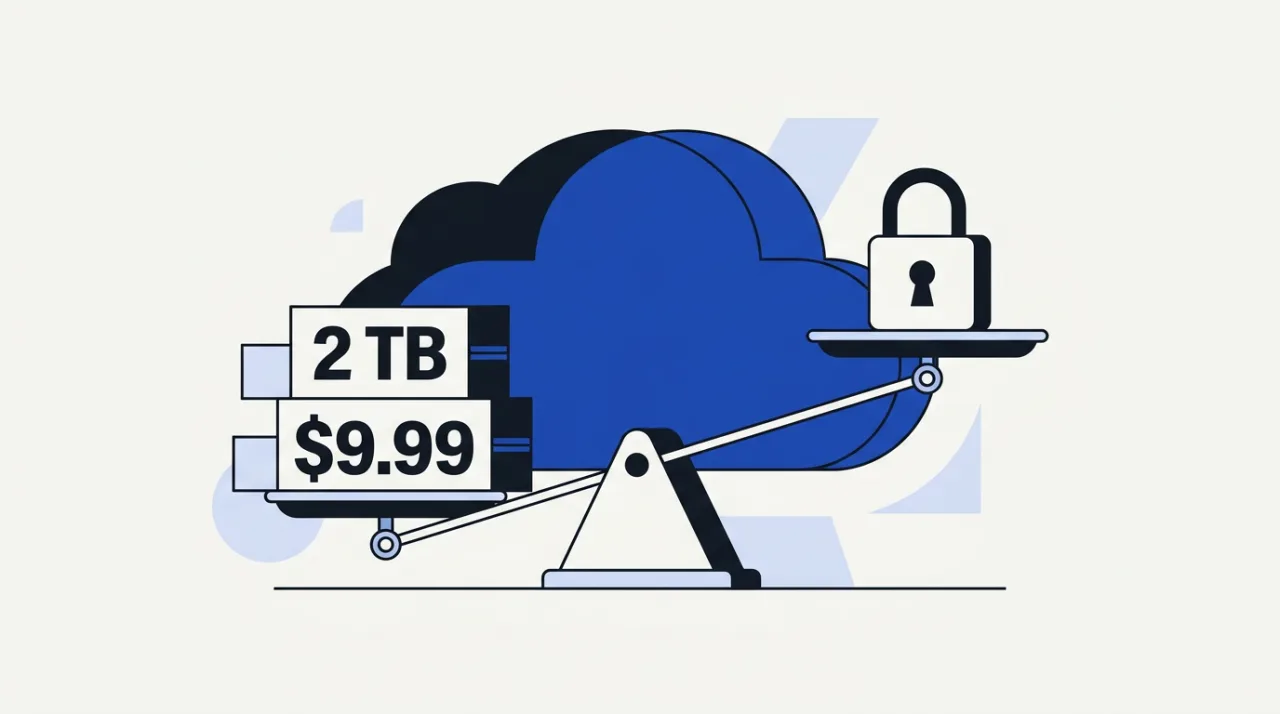
Cloud storage comparison 2026 shows that users must weigh storage allowances, encryption type and per-user costs before choosing a service. Free tiers range from 2 GB on Dropbox to 20 GB on MEGA, while paid plans start around $5–12 per month for 2 TB. Lifetime options appear on pCloud and Internxt but require careful review of account duration terms.
Teams seeking collaboration tools often select Google Workspace or Microsoft 365 bundles, while privacy-focused users turn to zero-knowledge providers such as Sync.com and Proton Drive. All listed services support standard desktop and mobile apps on Windows, macOS, Linux, iOS and Android.
Cloud Storage Comparison 2026 Pricing and Storage Limits
Google One starts at roughly $1.99 per month for 100 GB and reaches $9.99 per month for 2 TB. Microsoft 365 Personal bundles 1 TB with Office apps for about $6.99 monthly or $99.99 yearly. Dropbox Plus lists 2 TB at $9.99–11.99 per month when paid yearly.
pCloud offers a 2 TB plan for $99.99 annually or a one-time $499 lifetime fee. MEGA charges about $11 per month for 2 TB. Box Business plans begin near $15 per user per month with pooled storage that grows on higher tiers. Internxt and Proton Drive provide smaller free allowances and paid tiers from $4–12 monthly, with occasional lifetime bundles around €435 for 3 TB.
Most providers include 30-day or longer file versioning and link-based sharing. Business plans add admin controls, audit logs and single sign-on. Storage is often pooled across users on Workspace and Microsoft 365, while Dropbox and Box tie capacity more directly to seats.
| Service | Free Tier | 2 TB Paid Price | Lifetime Option |
|---|---|---|---|
| Google One | 15 GB | $9.99/mo | None |
| OneDrive | 5 GB | $6.99–99.99/yr (bundle) | None |
| Dropbox | 2 GB | $9.99–11.99/mo | None |
| pCloud | 10 GB | $99.99/yr | $499 |
| MEGA | 20 GB | $11/mo | None |
Encryption Standards and Cross-Platform File Transfers
Every major service encrypts data in transit with TLS and at rest with AES-256. Zero-knowledge encryption, where the provider cannot access file contents, ships by default on Sync.com, Internxt, MEGA and Proton Drive. pCloud offers it as an optional paid folder. Google Drive, OneDrive, Dropbox and Box rely on server-side encryption that permits provider access under legal request.
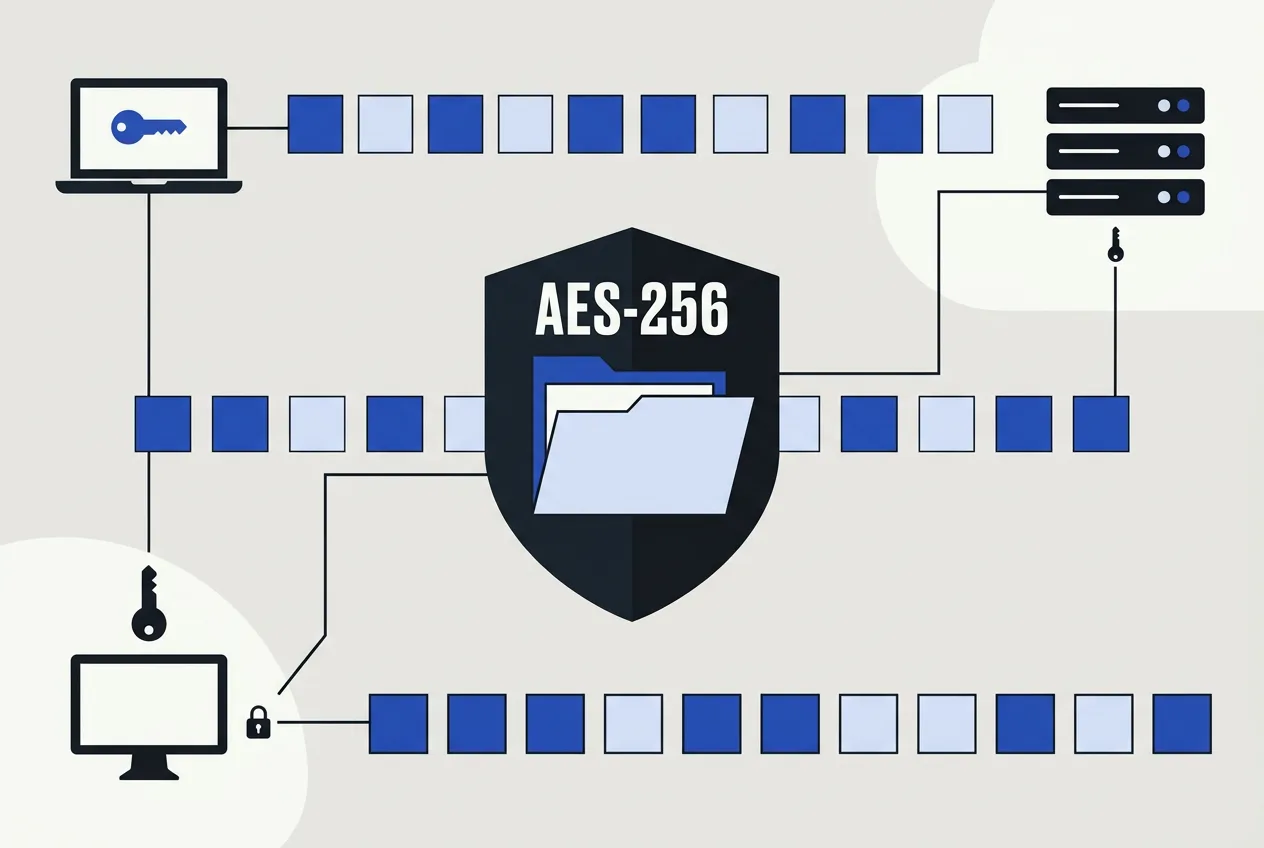
Compliance certifications include GDPR, SOC 2 and ISO 27001 across the board. Box adds HIPAA and FedRAMP support for regulated industries. Two-factor authentication is available on all accounts, though enforcement varies by plan.
Cross-platform transfers rely on native clients and WebDAV or rclone support on some tools. Dropbox Smart Sync and Google Drive File Stream allow selective local caching. Large-file handling performs similarly, with typical 500 MB uploads completing in roughly three and a half minutes on tested connections. Internxt adds explicit WebDAV compatibility for automated scripts.
Real-time co-editing works best inside Google Docs or Microsoft Office when files stay inside the respective ecosystem. Box emphasizes workflow approvals and e-signature add-ons. Media playback features appear in pCloud, while Dropbox and OneDrive focus on reliable background sync across devices.
Frequently asked questions
Which service offers the largest free storage tier in 2026?
MEGA provides 20 GB free. Google Drive follows with 15 GB shared across Gmail and Photos, while Dropbox starts at only 2 GB.
Do lifetime plans still exist for cloud storage?
pCloud sells a 2 TB lifetime plan for a one-time $499 fee. Internxt offers similar multi-year bundles on certain tiers, though account duration rules apply.
Which providers deliver zero-knowledge encryption by default?
Sync.com, Internxt, MEGA and Proton Drive encrypt files so the company cannot read them. pCloud adds the same capability through a paid Crypto folder option.
How do cross-platform transfer speeds compare?
Dropbox, pCloud and Google Drive complete a 500 MB upload in about three and a half minutes under typical test conditions. Native clients handle background sync on Windows, macOS, Linux, iOS and Android.
Comments 1