Crypto Hardware Wallet Security 2026: Keystone Breach, Ledger Implant and Protections
October 2026 saw separate incidents at Keystone and Ledger that exposed customer data and tampered devices, prompting renewed focus on purchase channels and verification steps.
Crypto hardware wallet security 2026 came under scrutiny after two distinct October incidents affected Keystone and Ledger users. Keystone reported unauthorized website access that exposed order and contact data, while Ledger confirmed hardware implants in devices sold by one Southeast Asian reseller. These events left private keys and recovery phrases untouched yet highlighted risks in supply chains and e-commerce records.
Both cases followed earlier data issues at other wallet providers and led to immediate pauses in sales, customer notifications, and calls for stricter verification. No model guarantees full protection against physical tampering or phishing enabled by leaked addresses. Users must buy only from direct or authorized sources and treat any unsolicited contact as suspicious.
Keystone website breach and exposed records
On October 20, 2026, Keystone detected unauthorized access to its site hosted on Shopify. Confirmation came three days later through API logs, and public disclosure followed on October 24. The breach revealed customer names, email and phone numbers, shipping addresses, and order details including purchased items and prices.
Payment information, wallet passwords, private keys, and recovery phrases remained outside the exposed dataset. Keystone blocked the intrusion, applied patches, and began an internal investigation while notifying affected customers by email. The company warned recipients about follow-on phishing attempts that might reference refunds or device replacements and instructed users to verify all communications through official channels only.
No attacker identity or total number of affected customers has been released. A full incident report remains pending. The event matches a pattern seen at other hardware wallet firms where logistics and order data leaks create opportunities for targeted social engineering without direct access to seed material.
Ledger reseller implant case and hardware comparisons
Ledger opened an investigation on October 9, 2026, after reports of drained wallets linked to devices from authorized reseller CryptoBilis operating in Indonesia, Malaysia, and the Philippines. By October 10 the firm confirmed that at least one device contained an unauthorized microcontroller inside the enclosure. The implant read the 24-word recovery phrase from the screen during initial setup and transmitted it over LTE without altering the Secure Element or transaction signing process.
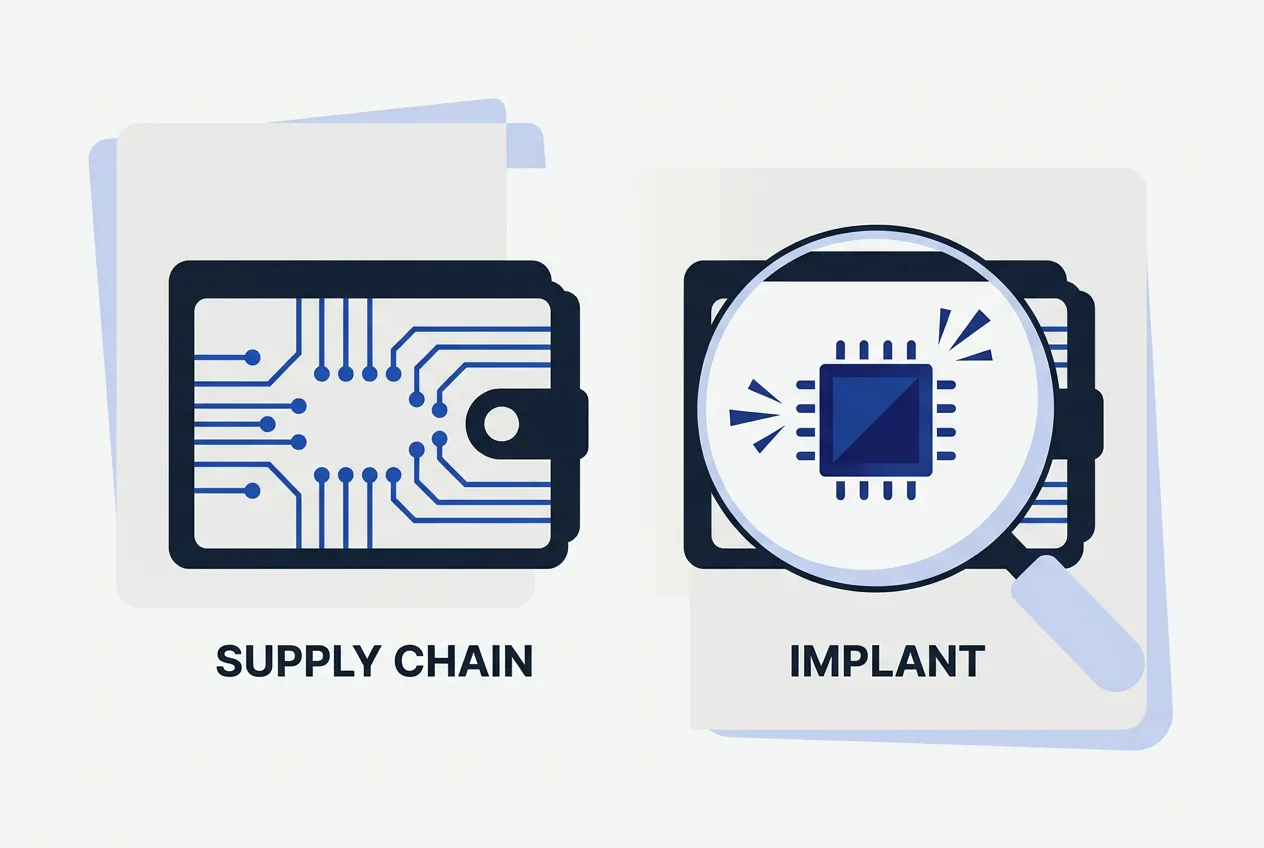
All confirmed incidents traced back to CryptoBilis units; devices sold directly by Ledger showed no compromise. On-chain estimates placed drained funds between 86 and 102 million dollars across more than 300 wallets, primarily in TRON USDT, BTC, and ETH, with Tether freezing roughly 10 million USDT. CryptoBilis halted hardware sales and shipments. Ledger advised buyers of unused devices purchased in the prior 90 days to avoid initialization and to move any already-set-up funds to fresh devices with new seeds.
MediaMarkt Saturn suspended European Ledger sales after a German report, and Trezor tightened its own reseller policies. The table below summarizes key differences among three major models in 2026.
| Model | Secure Element | Air-gapped Options | Asset Support | Supply-chain Notes |
|---|---|---|---|---|
| Ledger | Closed firmware, EAL5+/6+ | Bluetooth/NFC models | Approximately 5,500 coins | Reseller implant confirmed in one partner |
| Trezor | Open firmware, EAL6+ on Safe series | QR and microSD on some lines | Broad but fewer than Ledger | Policy tightening after Ledger reports |
| Keystone | Focus on open elements | QR and microSD emphasis | Competitive range | Website data breach only |
Across providers the consistent advice remains the same: purchase directly or from verified authorized sellers, inspect devices before setup, never share seeds, and consider passphrases or multi-signature setups for larger holdings. Ongoing monitoring of official announcements and avoidance of unsolicited messages reduces exposure from data leaks.
Frequently asked questions
What information was exposed in the Keystone incident?
Names, email and phone contacts, shipping addresses, and order details were accessed. Payment data, passwords, private keys, and recovery phrases were not included in the breach.
How did the Ledger implant work?
A microcontroller inside the device enclosure captured the recovery phrase displayed on screen during setup and sent it via LTE. The Secure Element and normal transaction flow remained unchanged.
Which wallets were affected by the Ledger reseller issue?
Only devices sold through CryptoBilis in Southeast Asia showed the implant. Ledger direct sales and other resellers reported no confirmed cases as of October 25, 2026.
What steps should users take after these incidents?
Buy only from official or authorized channels, verify devices before first use, avoid initializing recent unused purchases from suspect sellers, and move funds to new seeds if any device was already set up.
Comments 6