Deutsche Bank crypto custody adds Crypto Finance wallet infrastructure for institutions
Deutsche Bank launched its digital asset custody service in November 2026, integrating Crypto Finance wallet infrastructure under a multi-provider model for institutional clients across Europe.
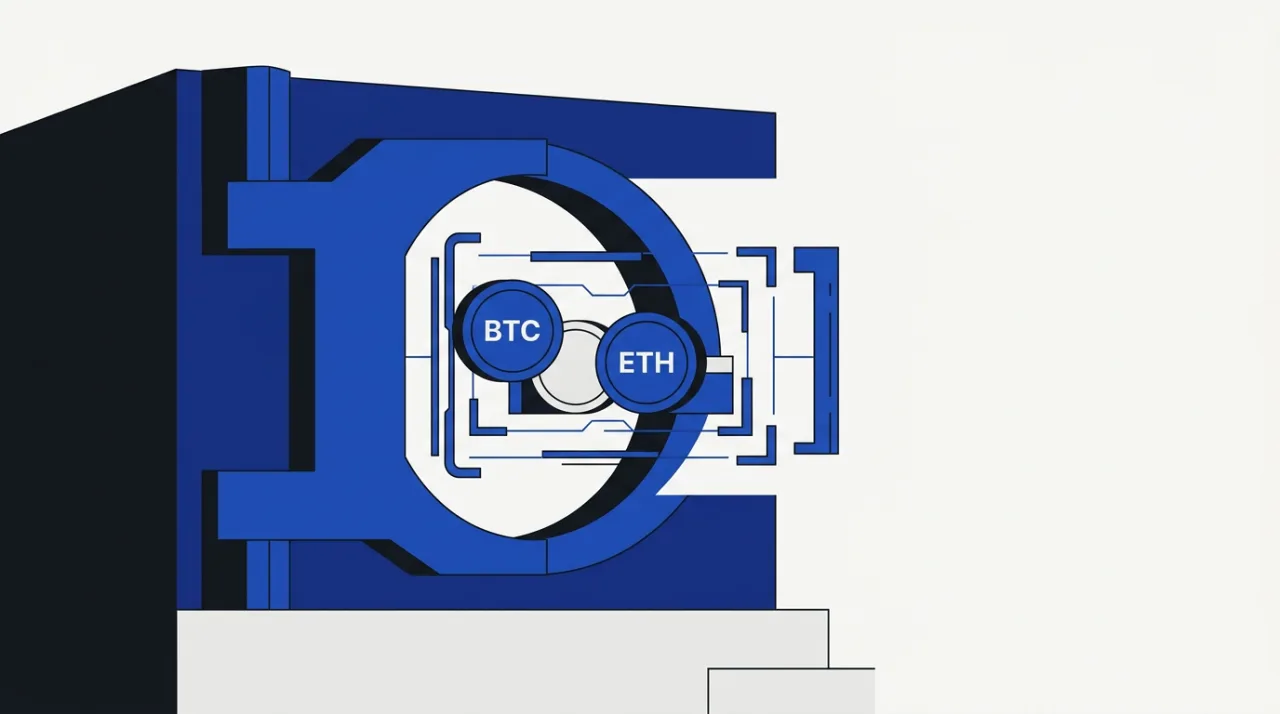
Deutsche Bank crypto custody service went live on 11 November 2026 for institutional and corporate clients in Europe. The offering focuses on secure storage and transfers of Bitcoin, Ether and selected stablecoins without providing trading or exchange functions.
Clients access the service through the Autobahn platform and Corporate Bank Portal. The bank retains full control over private keys and transaction approvals while working with specialist providers for infrastructure.
Deutsche Bank crypto custody service launch details and supported assets
The service received BaFin authorization under MiCA in October 2026 and targets professional clients such as asset managers, hedge funds, custodians and sovereign institutions. It operates initially in Germany with passporting rights across approximately 30 EEA countries.
Supported assets at launch include Bitcoin, Ether, USDC, EURC and EURAU. Tokenized financial instruments remain on the roadmap. No deposit guarantee schemes cover the crypto holdings.
Transfers to third parties and internal movements between warm and cold storage are available. The bank manages wallet infrastructure and private keys directly.
Institutional features, security controls and Crypto Finance partnership
Private keys reside in Hardware Security Modules with options for warm and cold storage. Additional controls include multi-factor authentication, segregation of client assets, customizable multi-person approval workflows and redundant backup systems.
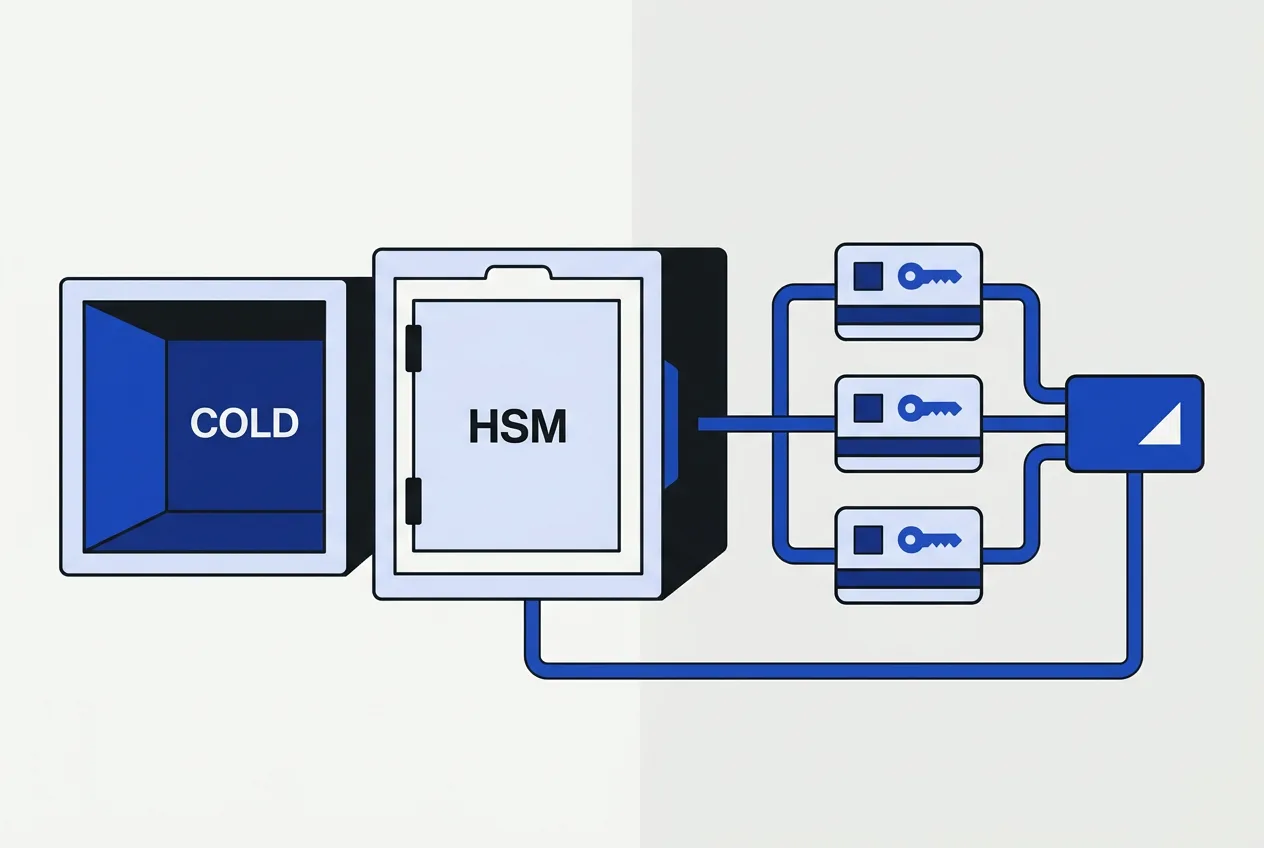
On 17 November 2026 Deutsche Bank announced a partnership with Crypto Finance, a subsidiary of Deutsche Börse Group. The Swiss firm supplies wallet infrastructure under a multi-provider arrangement that also includes Taurus and Bitpanda Enterprise. Deutsche Bank keeps governance and transaction lifecycle oversight within its own framework.
Crypto Finance operates under FINMA and BaFin oversight with an early MiCA license. The initial scope covers custody with potential later expansion into stablecoin payments and tokenized securities.
Multi-provider comparison for institutional digital asset custody
Deutsche Bank combines internal governance with specialized technology providers to meet regulatory and scalability requirements. The approach differs from single-vendor models by keeping client asset segregation and approval processes under bank control.
| Provider | Key Features | Regulatory Status | Client Key Control Options |
|---|---|---|---|
| Crypto Finance | Regulated wallet infrastructure, HSM storage | FINMA, BaFin, early MiCA | Bank retains primary control |
| Taurus | HSM and MPC custody technology | Swiss regulated | Client-owned keys in selected models |
| Bitpanda Enterprise | Modular HSM infrastructure, governance workflows, on-premises deployment | EU regulated entities | Client-controlled keys available |
Typical institutional users evaluate these setups against their internal compliance policies and risk tolerance. Fees and assets under management for the Deutsche Bank service have not been disclosed publicly.
Expansion plans include additional assets based on client demand and potential rollout to major Asian financial centers in 2027. Integration with tokenized products through the existing MoU with Deutsche Asset Management is also under consideration.
Frequently asked questions
Which assets does Deutsche Bank crypto custody support at launch?
Bitcoin, Ether, USDC, EURC and EURAU are available. Additional tokenized instruments are planned based on client requests.
How does the Crypto Finance partnership affect client control?
Deutsche Bank maintains governance over wallets and approvals. Crypto Finance supplies the underlying infrastructure within the bank's security and compliance framework.
Are crypto assets held by Deutsche Bank covered by deposit protection?
No deposit-guarantee schemes apply to the crypto holdings. Clients rely on the bank's operational controls and regulatory authorizations.
What security measures protect institutional keys?
Hardware Security Modules, warm and cold storage, multi-factor authentication and multi-person approval workflows are in place. Client assets remain segregated from bank assets.
Comments 2