Domain Registrar Comparison 2026: Fees, Renewals, Transfers and ICANN Rules
Renewal prices, transfer rules and ICANN requirements differ sharply between registrars. Focus on long-term costs and policy compliance rather than first-year offers.

Domain registrar comparison 2026 shows that initial discounts rarely reflect total ownership cost. Renewal rates, transfer mechanics and mandatory ICANN obligations determine the real expense and risk over multiple years.
Verisign raised the .com wholesale price to $10.97 plus the $0.20 ICANN fee effective November 1, 2026. Most registrars will pass part or all of that increase to customers.
Domain Registrar Comparison 2026 Renewal Pricing
Renewal fees form the largest part of long-term ownership cost. Registrars that advertise low first-year prices often raise rates on subsequent years, so total spend over three to ten years provides a clearer picture.
Current October 2026 renewal figures for .com domains at low-markup providers are Spaceship at $9.98–$10.18, Cloudflare Registrar at $10.46 (at-cost, nameserver requirement), Porkbun at $11.08 flat and Dynadot at $10.88 flat. These prices sit close to the new wholesale floor and leave limited room for further cuts.
Multi-year prepayment locks in current rates before the November increase takes effect at most registrars. Free WHOIS privacy remains standard across these providers, though Cloudflare requires its own nameservers to maintain the at-cost rate.
| Registrar | .com Renewal (Oct 2026) | Key Conditions |
|---|---|---|
| Spaceship | $9.98–$10.18 | Standard privacy included |
| Cloudflare Registrar | $10.46 | At-cost, uses Cloudflare nameservers |
| Porkbun | $11.08 | Flat rate, free privacy |
| Dynadot | $10.88 | Flat rate, free privacy |
Price-comparison tools such as TLDHub and DomainOffer track daily changes across hundreds of extensions and help identify the lowest renewal for a specific TLD.
Domain Transfer Fees 2026 and ICANN Transfer Locks
A transfer to a new registrar typically costs the equivalent of one year of registration at the gaining registrar and adds one year to the expiration date. Leaving the current registrar carries no fee.
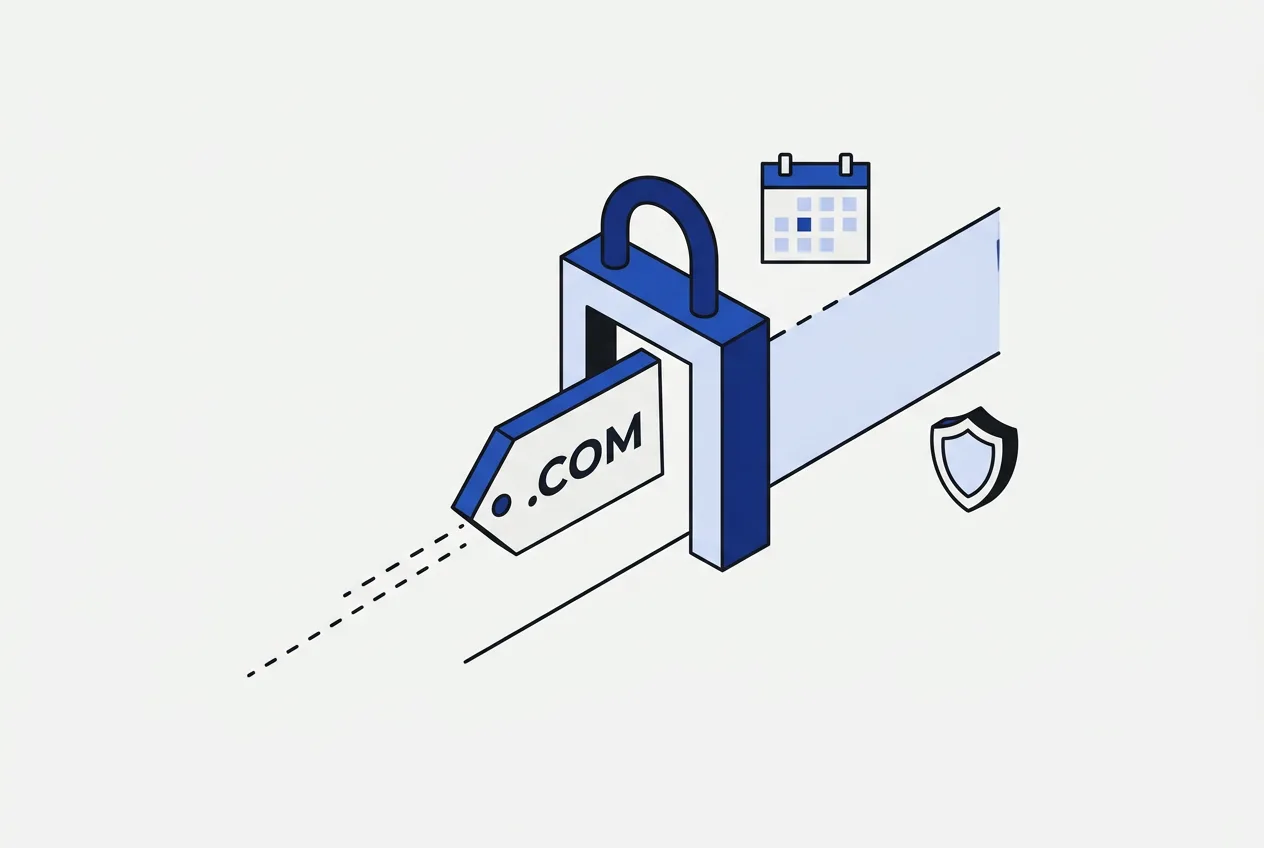
ICANN rules impose a 60-day lock after initial registration, any prior transfer, or most registrant contact changes. The domain must be unlocked and accompanied by a valid auth/EPP code before a transfer can proceed.
Transfer Policy reforms that could shorten some locks remain under discussion. Users planning moves after November 2026 should verify current lock periods at both the losing and gaining registrars before starting the process.
ICANN Registrar Requirements and Accreditation
Every ICANN-accredited registrar must operate under the Registrar Accreditation Agreement. Obligations include annual accreditation fees around $4,000, data escrow, RDAP/WHOIS publication, DNS abuse mitigation and specific fee reporting structures.
Accreditation status can be checked directly on the ICANN website. Non-accredited providers fall outside these protections and may expose registrants to higher operational risk.
Reviewing a registrar’s history of passing through wholesale price increases, its support for standard transfer procedures and its consistent inclusion of privacy services provides a practical filter when building a shortlist from the comparison table above.
Frequently asked questions
How much will .com renewals rise after November 2026?
Wholesale price moves to $11.17 total. Retail increases vary by registrar but most low-markup providers are expected to adjust within one to two dollars of the new floor.
Can I avoid the 60-day transfer lock?
The lock applies automatically after registration, prior transfer or contact changes under current ICANN rules. Shortening the period is part of ongoing policy discussions but not yet implemented.
Does Cloudflare Registrar require its nameservers?
Yes. The at-cost pricing applies only when domains use Cloudflare nameservers; switching away removes the pricing benefit.
Are WHOIS privacy services still free at low-cost registrars?
Spaceship, Porkbun, Dynadot and Namecheap continue to include privacy at no extra charge for most TLDs as of October 2026.
Comments 4