Emerging Project Management Tools 2026: Plane, Linear, Fibery and AI Agent Integrations Compared
Plane, Linear and Fibery stand out among emerging project management tools in 2026 for their AI agent capabilities, workflow flexibility and deployment options.
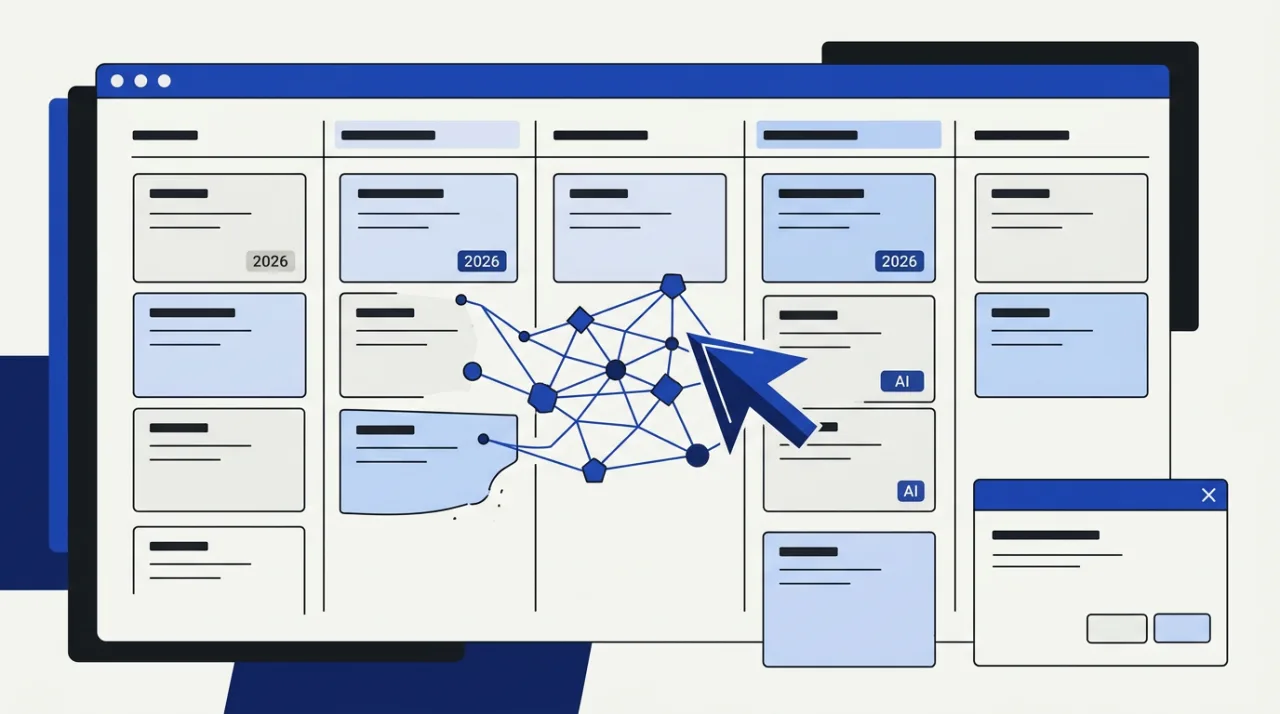
Teams evaluating emerging project management tools 2026 now face three distinct options that combine core issue tracking with AI agents and flexible data models. Linear targets engineering speed, Plane emphasizes open-source control, and Fibery focuses on relational customization. Each integrates AI agents through the Model Context Protocol for external tool connections.
Selection depends on team size, need for self-hosting, and tolerance for setup time. Pricing ranges from free tiers with usage limits to paid seats at $6–16 per user monthly. All three support cycles, roadmaps and bidirectional integrations with GitHub and Slack.
Linear AI Agents and Developer Workflows
Linear provides keyboard-driven navigation and tight GitHub synchronization that suits engineering teams handling high issue volumes. Its Triage Intelligence suggests assignees and labels on Business plans, while the Linear Agent handles issue creation, updates and summaries across all tiers including Free. Loops enable recurring agent workflows triggered by Slack messages or GitHub events.
Code Intelligence adds cloud-based editing and PR creation with model routing support. The polished interface delivers fast performance, yet customization remains limited and self-hosting is unavailable. Pricing starts at Free for 250 issues and two teams, then $10 per user monthly for Basic and $16 for Business when billed yearly.
Users report strong results for product and engineering squads that prioritize velocity over extensive database relations. The absence of Gantt or spreadsheet views restricts use in non-technical departments.
Plane Open-Source Flexibility and Fibery Customization
Plane operates as an AGPL-licensed alternative with native AI agents for triage, standups and delivery risk assessment. Agents act as workspace members with configurable instructions and scoped project access. Cloud and self-hosted deployments are both supported, with a free tier covering unlimited self-hosted users or up to roughly twelve cloud users. Pro seats cost $6–7 monthly.
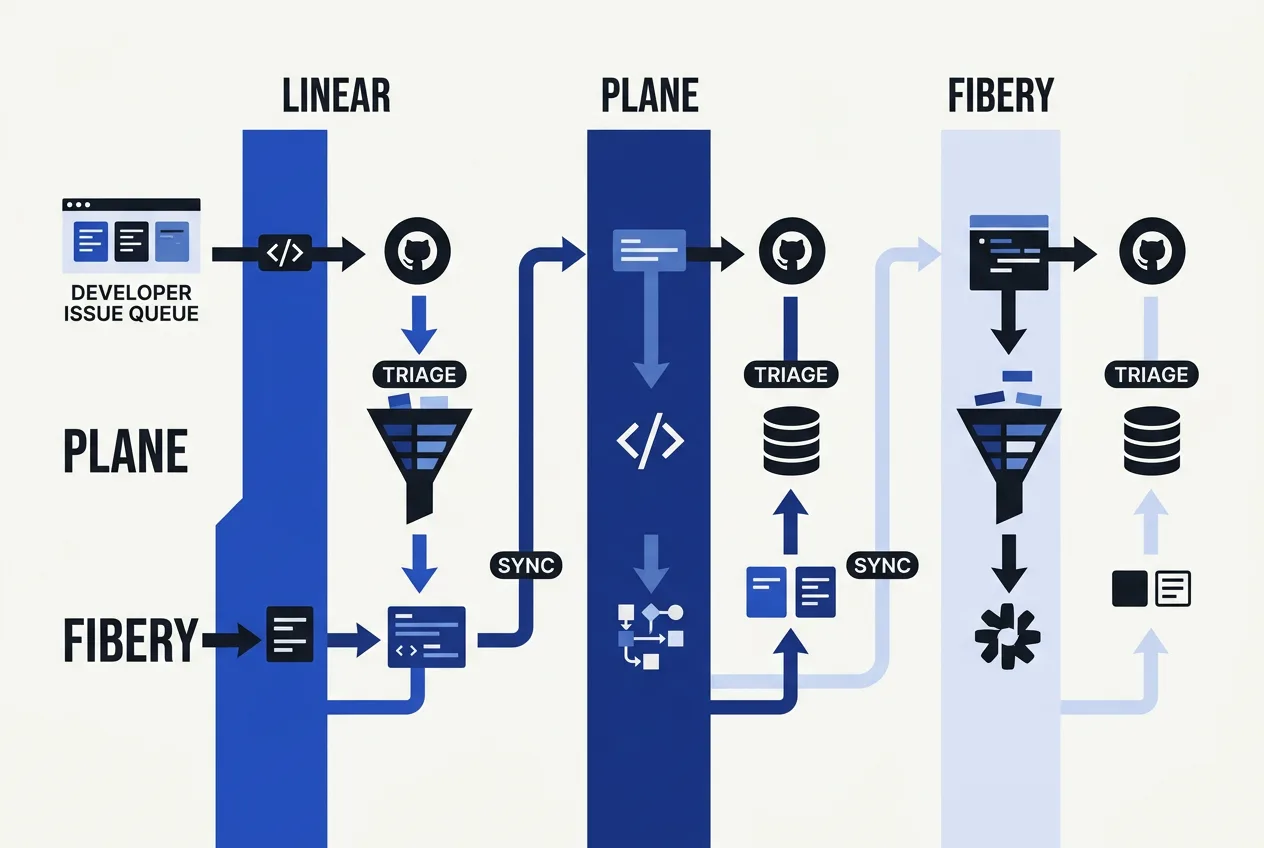
Fibery functions as a relational database platform where teams define custom entities, formulas and relations across projects, customers and research records. Its rebuilt AI Agent includes web search, model selection and whiteboard generation, plus beta AI Connectors that sync external data. Standard pricing sits at $12 per user monthly with metered AI credits. Free access covers ten users and ten databases.
Plane suits groups that value data sovereignty and connected knowledge bases. Fibery fits organizations requiring bespoke workflows that span multiple departments, though initial configuration demands more time than the other two platforms.
AI Agent Integrations Comparison
All three tools embed agents that perform triage, automation and data manipulation rather than requiring separate AI platforms. Linear supplies the most refined in-app agent and coding sessions. Plane offers scoped native agents with MCP connectors. Fibery emphasizes connectors and MCP access for external clients such as Claude.
| Tool | AI Agent Strengths | Deployment | Best For | Limitations |
|---|---|---|---|---|
| Linear | Triage Intelligence, Loops, coding sessions | Cloud only | Engineering speed | Higher cost, limited views |
| Plane | Configurable agents, MCP, scoped access | Cloud and self-hosted | Open-source control | Fewer polished UI features |
| Fibery | Relational AI, connectors, whiteboards | Cloud | Custom data models | Setup time required |
Trends in 2026 show growing adoption of agentic workflows that reduce repetitive tasks and MCP interoperability for extensibility. No platform dominates every scenario. Engineering teams often choose Linear for immediate productivity gains. Groups needing sovereignty select Plane. Teams managing complex relational data adopt Fibery.
Frequently asked questions
Which tool offers the lowest entry cost for small teams?
Plane provides a free tier with unlimited self-hosted users or up to about twelve cloud seats. Linear limits free access to 250 issues, while Fibery caps free use at ten users and ten databases.
Do these platforms support self-hosting?
Only Plane currently offers self-hosted deployment under its AGPL license. Linear and Fibery operate exclusively in the cloud.
How do the AI agents differ in scope?
Linear agents focus on triage and coding tasks. Plane agents act as scoped workspace members with event triggers. Fibery agents handle relational queries and external data connectors.
What are typical use cases for each platform?
Linear fits fast-moving engineering teams. Plane serves groups that prioritize open-source control and data ownership. Fibery works for organizations that need highly customized relational workflows across projects and departments.
Comments 3