Filecoin Onchain Cloud 2026: Features, Pricing and Developer Integrations
Filecoin Onchain Cloud provides verifiable decentralized storage built on the Filecoin network. It combines warm and cold tiers with programmable payments and proof mechanisms.
Filecoin Onchain Cloud launched its mainnet in March 2026 after testnet deployment in late 2025. The platform adds programmable layers to Filecoin storage through the Filecoin Virtual Machine, enabling onchain verification of data possession and direct payment settlement.
Users gain access to two storage tiers that address different access patterns. All operations generate auditable records on Chain ID 314 without requiring centralized intermediaries.
Filecoin Onchain Cloud Core Services and Verification
The platform runs two primary storage services. Filecoin Warm Storage Service keeps data unsealed for lower-latency retrieval and uses Proof of Data Possession to confirm holdings through daily randomized challenges. Filecoin Cold Storage Service applies standard Proof of Replication for archival datasets that tolerate slower access.
Both services integrate with Filecoin Pay for payments. This system supports streaming or one-time transfers settled only after verified delivery, using USDFC as the main stablecoin along with FIL and other ERC-20 tokens. Filecoin Beam adds caching layers that reduce retrieval times to milliseconds for frequently requested content.
Developers receive cryptographic guarantees that data remains intact without downloading entire files. Onchain explorers track proof submissions and payment rail status in real time. The setup removes vendor lock-in because storage deals operate through smart contracts rather than proprietary accounts.
Developer Tools, Pricing and Use Cases
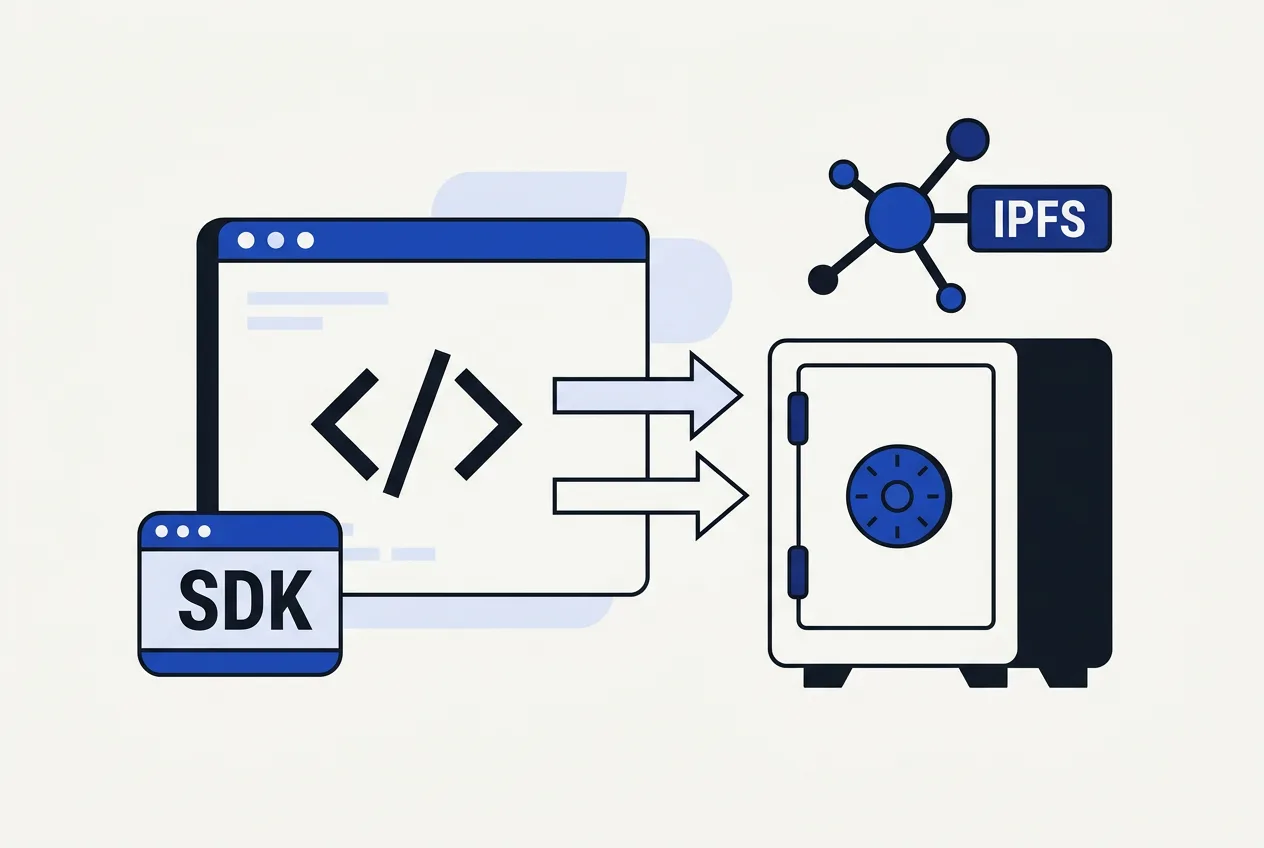
Synapse SDK handles uploads, provider selection, and payment management in TypeScript, with additional libraries available for Python and Go. Filecoin Pin extends standard IPFS tooling with onchain persistence proofs, allowing existing IPFS applications to migrate without code changes. Community GitHub Actions and explorers simplify monitoring of datasets and proof compliance.
Storage pricing starts at approximately $2.50 per TiB per month for each independent copy in the warm tier, plus a $0.12 monthly fee per dataset for ongoing proofs. Egress through Filecoin Beam reaches up to $14 per TiB when cache hits are low. No charges apply to empty datasets. These rates sit below many centralized providers once egress and verification costs are included.
| Feature | Filecoin Onchain Cloud | Traditional Cloud Storage |
|---|---|---|
| Data verification | Onchain PDP proofs daily | Provider-controlled logs |
| Payment model | Programmable rails, settle on proof | Fixed recurring invoices |
| Ownership | User-controlled contracts | Account-based access |
| Retrieval latency | Beam cache for ms access | CDN-dependent |
Early adoption shows roughly 157 paying customers managing 830 datasets by November 2026, with total stored volume exceeding 49 TiB in earlier snapshots. Projects in AI data pipelines, decentralized autonomous organizations, and compliance archiving have integrated the platform. Integrations with ENS and Monad demonstrate use for verifiable record keeping where audit trails matter.
Teams planning migrations should test Synapse SDK against their dataset sizes first. Monitoring the public status page helps track provider success rates, which the network aims to keep above 95 percent. Privacy extensions such as optional encryption modules remain under active development for agent-based workloads.
Frequently asked questions
How does Filecoin Onchain Cloud differ from standard Filecoin storage?
It adds warm storage tiers, onchain payment rails, and daily Proof of Data Possession checks. These features enable programmable access and verification not present in the base cold storage model.
What payment options does Filecoin Pay support?
Filecoin Pay accepts USDFC stablecoin as primary along with FIL and ERC-20 tokens. Payments settle only after cryptographic verification of data possession or retrieval.
Which SDKs are available for Filecoin Onchain Cloud?
The Synapse SDK covers TypeScript with Python and Go variants in development. It manages uploads, provider selection, and payment rail setup in a single interface.
What storage costs apply to Filecoin Warm Storage Service?
Base rates start near $2.50 per TiB monthly per copy plus $0.12 per dataset for proofs. Egress via Filecoin Beam adds up to $14 per TiB when cache usage is limited.
Comments 7