Gemini 4 Carbon 2026 Features Benchmarks and Practical Use Cases
Gemini 4 Carbon tops recent intelligence indices while Genie 4 adds native audio and longer scene coherence. Access remains limited to vetted users.
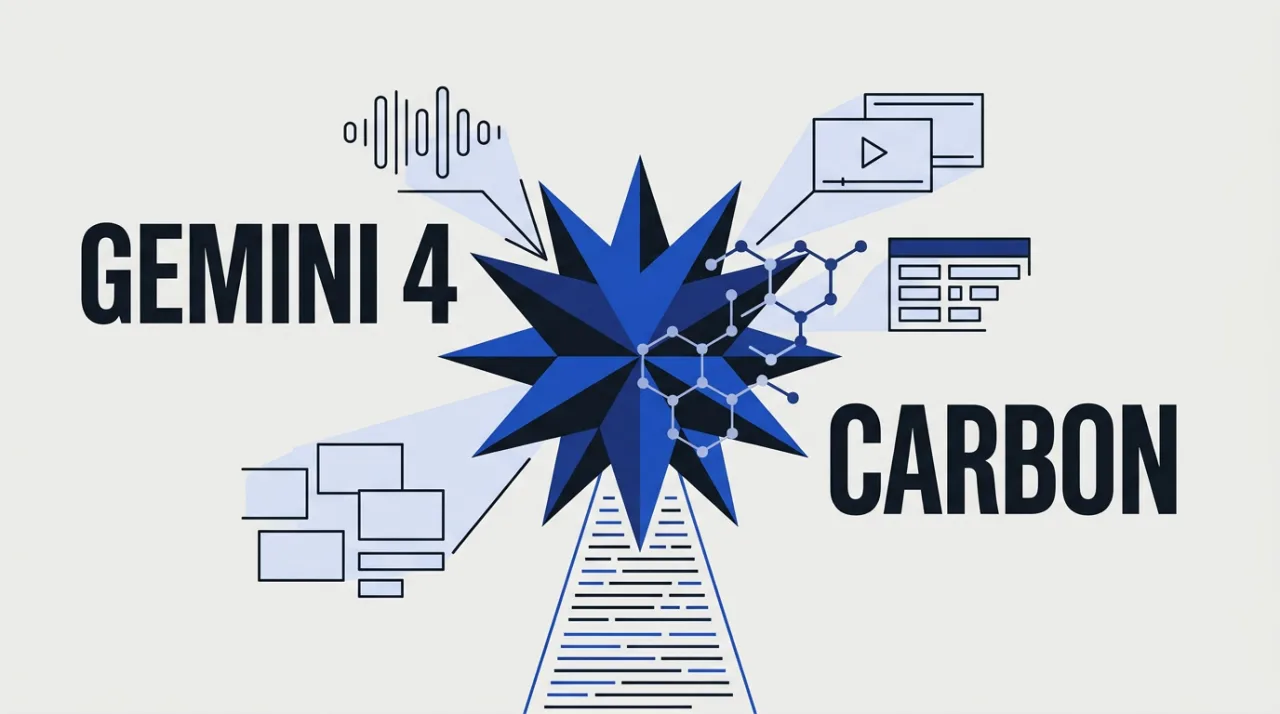
Gemini 4 Carbon 2026 delivers the strongest performance yet from Google DeepMind on long-horizon agentic work and cybersecurity defense. Announced October 28, it follows Gemini 4 Argon by two weeks and carries a 1-million-token context window with multimodal input support. Genie 4, released one day earlier, extends world-model simulation with real-time audio and improved physics.
Gemini 4 Carbon 2026 Specifications and Rollout Limits
Carbon accepts text, images, video, and audio while outputting text only. Introductory API rates stand at $2 per million input tokens and $10 per million output tokens, with cached inputs discounted 95 percent. The window doubles after the introductory period. Access begins with participants in the Fairwind Program focused on cyber defense, followed by gradual expansion to additional partners. No consumer or broad developer release date has been published.
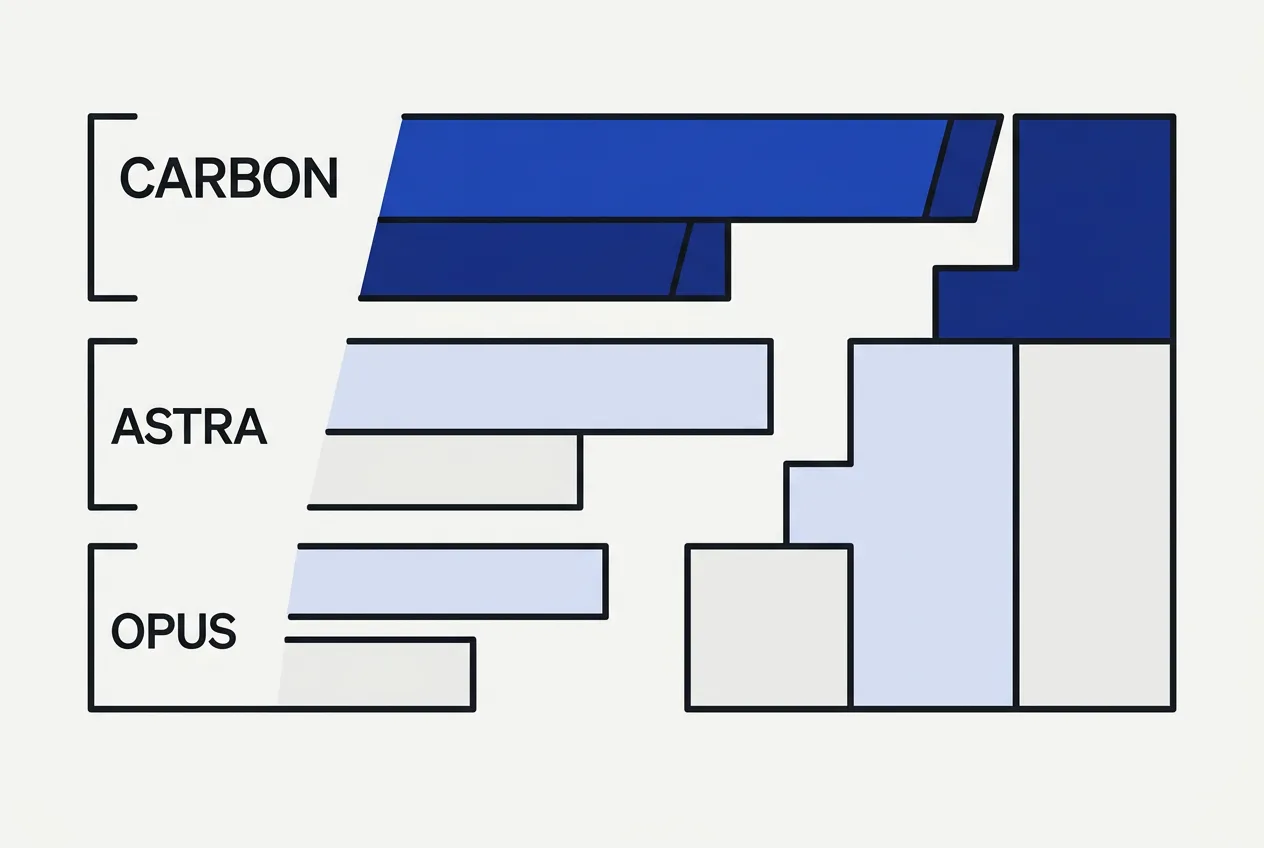
Google reports Carbon achieves 59 on the Artificial Analysis Intelligence Index v5.0, ahead of Claude Opus 5.5 at 58 and GPT-6 Astra at 57. It leads 15 of 17 benchmarks in the company’s internal table. Cybersecurity results without guardrails include 88.2 percent on SEC-bench Pro, 54.8 percent on ExploitGym, and 71.0 percent on CWE-bench. Chrome engineering teams recorded more than ten times higher rates of high-quality patches compared with non-Google models. Carbon trails GPT-6 Astra on FrontierSWE 2 and Claude Opus 5.5 on OSWorld-2.1 computer-use tasks.
Long-context performance reaches 96.2 percent on GraphWalks at 256K–1M tokens. Science and math scores include 80.0 percent on RiemannBench and approximately 64.8 percent on Terminal-Bench-Science. The model supports multi-day autonomous coding workflows and complex professional automation in finance and legal domains.
Genie 4 World Model Updates and Integration
Genie 4 generates photorealistic, steerable 3D environments with native audio including ambient sounds, music, and dialogue. Scene coherence extends to two minutes, twice the duration reported for Genie 3. Physics simulation covers aerodynamics and collisions, while human movement and conversation appear more natural. The model integrates Gemini Omni for visual generation and lighter Gemini variants for reasoning and coherence checks.
Current deployment is limited to research-preview testers. Expansion to Google AI Ultra subscribers and early Gemini API partners is scheduled for the coming weeks. No quantitative benchmarks or pricing details have been released. Qualitative gains focus on real-time steering during live scene adjustments.
Practical applications include robotics training inside safe virtual environments, game prototyping, and pre-visualization for film production. Journalists and educators can convert static archival images into explorable historical simulations. Manufacturing teams use the model to test engineering scenarios before physical builds. Hybrid workflows combine Genie 4 output with Gemini planning layers for consistent narrative control.
Comparison with Competing Frontier Models
Against GPT-6 Astra, Carbon records higher overall index scores yet lower results on software-engineering-specific tests. Claude Opus 5.5 retains an edge on certain computer-use benchmarks. The two-week iteration from Argon to Carbon illustrates Google’s accelerated release cadence amid competition from OpenAI and Anthropic. Both Gemini 4 Carbon and Genie 4 emphasize phased safety testing before wider distribution, a pattern also visible in prior frontier releases.
Users planning adoption should track the end of introductory API pricing and the publication of independent model cards. Monitoring the Fairwind Program expansion provides the clearest signal for when broader access may open.
Frequently asked questions
When will Gemini 4 Carbon become available to developers?
Initial access is restricted to vetted participants in the Fairwind Program. Broader rollout to developers and businesses follows without a published date.
How does Genie 4 differ from Genie 3?
Genie 4 adds native audio generation, doubles scene coherence time to two minutes, and improves physics and human movement realism.
What benchmarks show Gemini 4 Carbon leading?
It leads the Artificial Analysis Intelligence Index at 59 and tops 15 of 17 internal Google comparisons, particularly in long-context and cybersecurity tasks.
Can Genie 4 run independently of other Gemini models?
It integrates Gemini Omni for visuals and lighter Gemini variants for reasoning, so standalone use is not currently supported.
Comments 1