Gemini 4 Hydrogen 2026: Features, Pricing and Agent Workflow Comparisons
Gemini 4 Hydrogen launched November 12, 2026 as Google’s cost-efficient model for coding and agent tasks with a 1M-token context window and flat API rates.
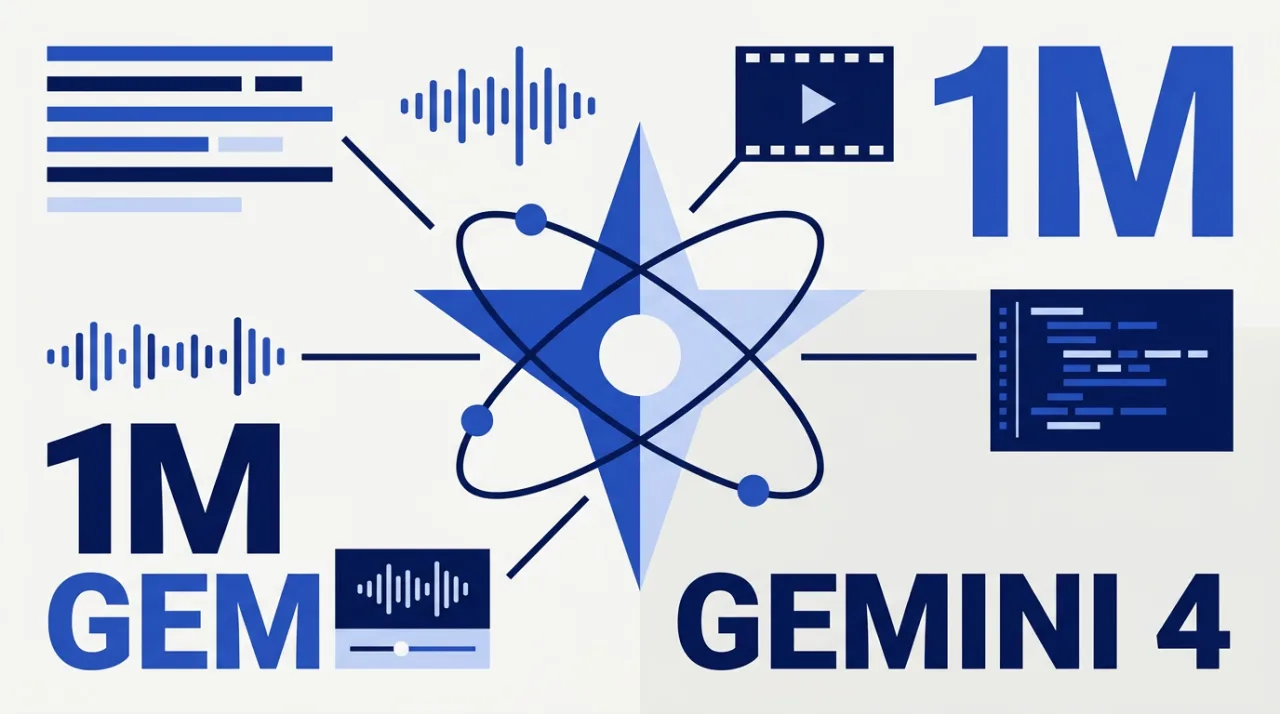
Gemini 4 Hydrogen launched on November 12, 2026 as the fast, low-cost member of the Gemini 4 family. It targets everyday coding, tool use and agent loops while Carbon and Argon handle longer reasoning tasks. The model replaces Gemini 3.8 Flash across Google surfaces on day one.
Gemini 4 Hydrogen Core Features and Benchmarks
The model ships with a unified 1,048,576-token context window that covers input, thinking and output tokens. It accepts text, images, audio, video and PDFs natively. Four thinking levels let users trade quality against latency and cost, with the default set at high.
Google reports a score of 51 on the Artificial Analysis Intelligence Index at the high setting and 54 at xhigh. Terminal-Bench 4.1 results reach 57 percent, more than three times the 18.2 percent posted by the prior Flash model. The model also leads on Vals Tax Agent, AutomationBench-AA and Agents’ Last Exam at 71.6 percent.
Practical gains include roughly 2.5 times faster execution than Gemini 3.8 Flash at the high thinking level and more than five times fewer fabricated claims. It ranks fifth on Agent Arena and performs strongly on SWE-sweep, iterative debugging and multimodal knowledge work. Knowledge cutoff stands at March 2026 and the model identifier is gemini-4-hydrogen.
- 1,048,576-token context window
- Native multimodal support for text, image, audio, video and PDF
- Four tunable thinking levels
- Model ID: gemini-4-hydrogen
- Adapted from Gemini 4 Carbon architecture
Gemini 4 Hydrogen API Pricing and Rollout
API pricing remains flat across the full 1M context: $1.50 per million input tokens and $7.50 per million output tokens, with thinking tokens billed as output. Cached input costs $0.075 per million tokens. Batch and flex tiers sit at $0.75 and $3.75 respectively, while priority access reaches $2.70 and $13.50. A free rate-limited tier exists inside AI Studio.
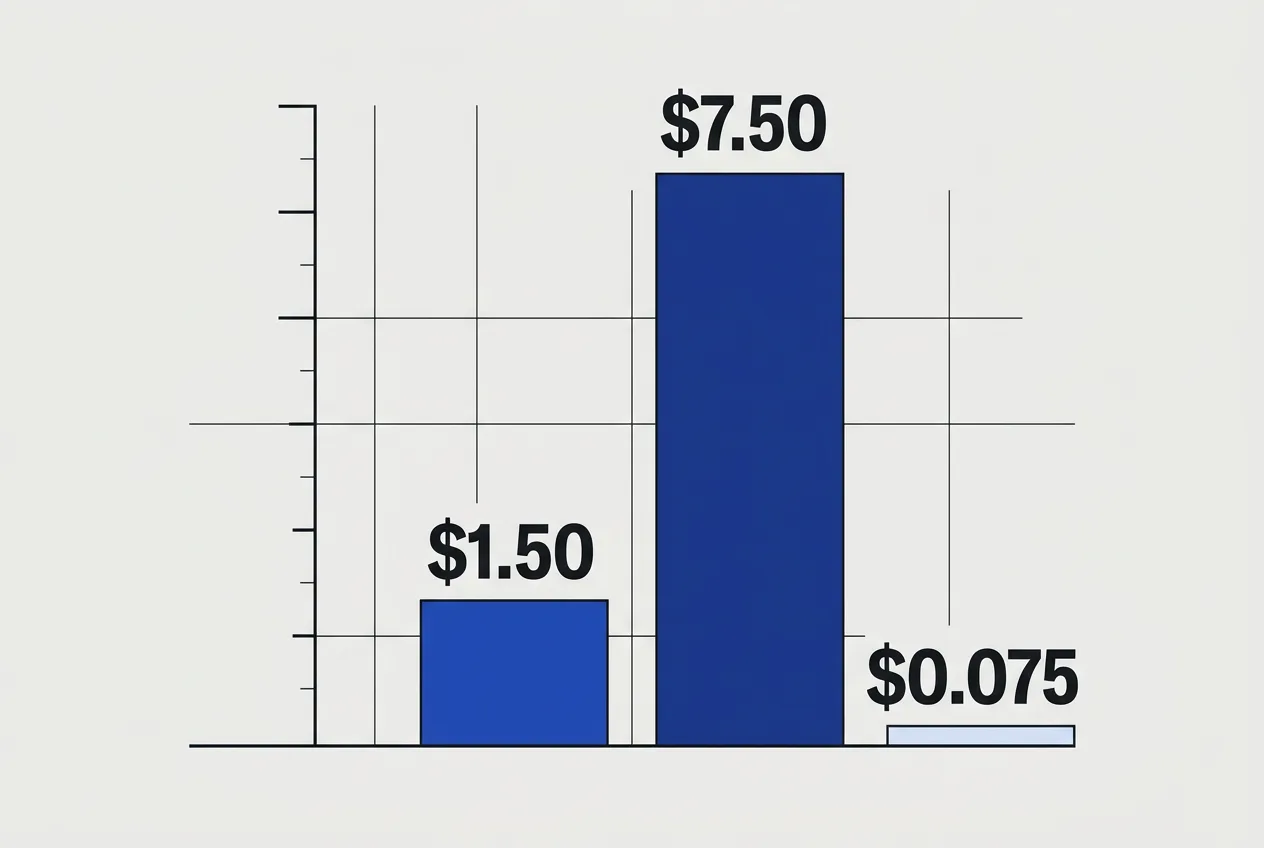
Availability began globally on launch day through Gemini API, AI Studio, Android Studio, the Gemini app model picker, Google Search, Gemini for business and Antigravity for Pro and Ultra subscribers. Free users receive the model via auto-select when it matches the task. The model replaces 3.8 Flash in most surfaces and stands as the cheapest Gemini 4 option.
| Model | Input per MTok | Output per MTok | Context | Target Use |
|---|---|---|---|---|
| Gemini 4 Hydrogen | $1.50 | $7.50 | 1M | Daily agent execution |
| Gemini 3.8 Flash | $1.50 | $7.50 | 1M | Legacy Flash tasks |
| Gemini 4 Carbon | $3.00 | $15.00 | 1M | Long-horizon planning |
Further price or tier changes for other Gemini 4 models are scheduled for December 1 and January 1. A full safety report remains pending.
Agent Workflow Comparisons and Multi-Model Use
Gemini 4 Hydrogen functions as the daily execution engine inside agentic loops. It handles tool calls, code changes, verification steps and error recovery efficiently. In multi-model setups it pairs with Carbon or Argon for planning, then executes the resulting steps at lower token cost and latency.
Antigravity Orchestrator routes tasks automatically within a single session. One documented pattern sends planning to Carbon and testing or iteration to Hydrogen, producing near-frontier success rates while cutting total tokens and response time. The model can also operate alone or as a sub-agent for parallel tool use and codebase navigation.
Compared with Gemini 3.8 Flash it delivers higher benchmark scores on agent tasks and fewer hallucinations at identical API rates. Compared with frontier siblings it trades some long-horizon depth for speed and lower cost on repetitive or verification-heavy work. Users gain most when they assign planning to heavier models and execution to Hydrogen inside the same workflow.
Frequently asked questions
When did Gemini 4 Hydrogen become available?
The model launched globally on November 12, 2026 through Gemini API, AI Studio, the Gemini app and Google Search. Free users receive it via auto-select where appropriate.
What is the context window size of Gemini 4 Hydrogen?
It supports a unified 1,048,576-token window that includes input, thinking and output. The window stays flat for all pricing tiers.
How does Gemini 4 Hydrogen compare to Gemini 3.8 Flash on agent tasks?
It scores more than three times higher on Terminal-Bench 4.1 and shows over five times fewer fabricated claims while running 2.5 times faster at the high thinking level.
Can Gemini 4 Hydrogen run in multi-model agent setups?
Yes. Antigravity Orchestrator routes planning to Carbon or Argon and execution to Hydrogen inside one session, lowering overall tokens and latency.
Comments 14