Gemini 4 Neon Review: Pricing, Features, Context Length and Benchmark Comparisons
Gemini 4 Neon offers a 1M-token context window, $3 input and $15 output pricing per million tokens, and strong results on coding and long-context benchmarks.

Gemini 4 Neon launched on November 18, 2026, as the middle option in Google’s Gemini 4 line. It targets complex coding, analytical work and enterprise tasks with performance between the slower Carbon variant and the faster Hydrogen model.
Users access the model through the Gemini API, Google AI Studio, Android Studio, Antigravity and the Gemini app for Pro and Ultra subscribers. The rollout emphasizes developer and enterprise use cases with no free tier available.
Gemini 4 Neon Review: Core Specifications and Pricing
The model ships with a unified 1,048,576-token context window that covers both input and output at a single price. Default synchronous output reaches 65,536 tokens, while background long decode supports up to the full context. Supported inputs include text, images, audio, video and PDFs. Four thinking levels let users adjust speed versus depth.
Standard API pricing stands at $3 per million input tokens with $0.15 for cached input and $15 per million output tokens. Batch jobs receive roughly 50 percent discounts. No major price changes have been announced for Neon after November 30, unlike sibling models that move to higher rates. Context caching operates implicitly without separate configuration.
Knowledge cutoff sits at March 2026. The model remains closed-weight and runs only on Google infrastructure. Agentic capabilities include function calling, computer use and orchestration of sub-agents such as Hydrogen.
Benchmarks and Comparisons with Claude Opus 5.5 and GPT-6.2 Sol
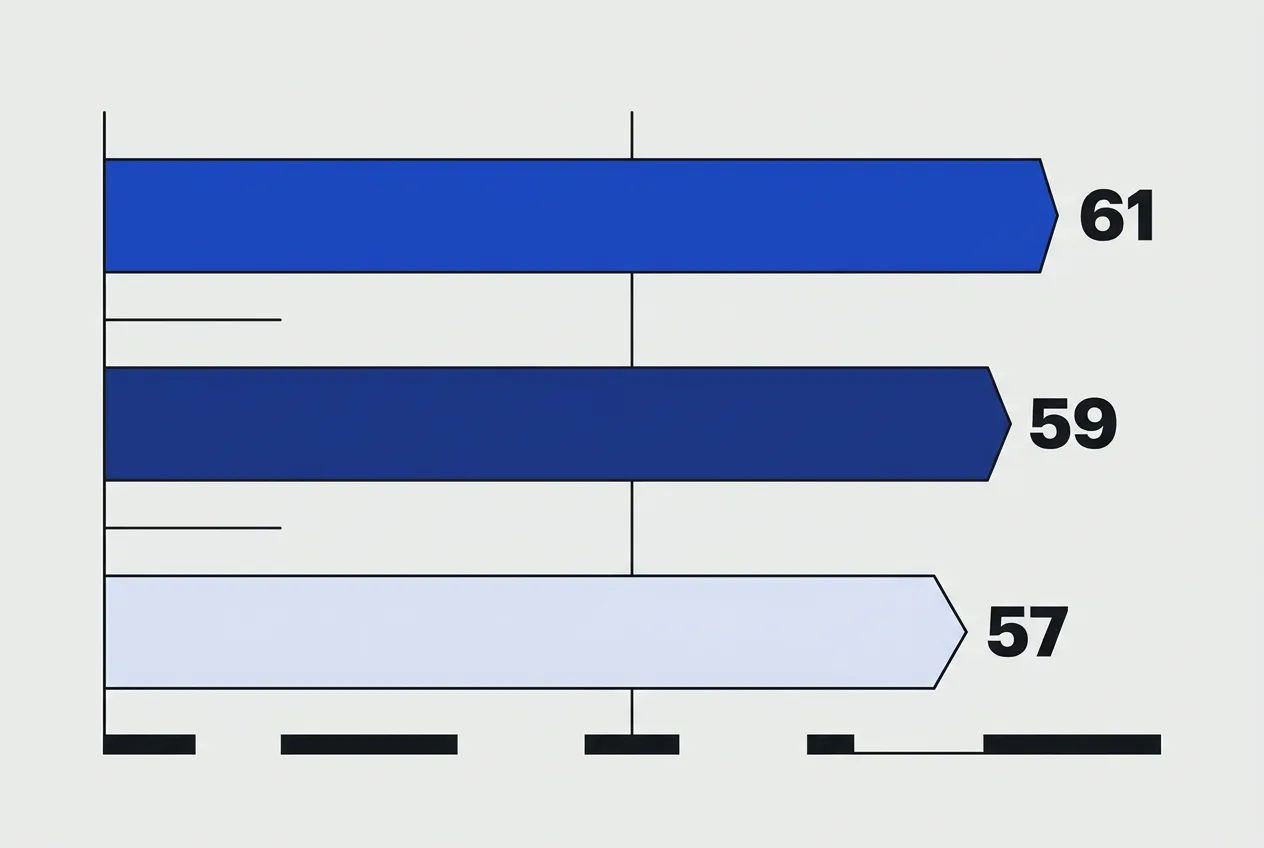
On the AA Intelligence Index v5.0.1, Gemini 4 Neon scores 61 at the XHigh setting, ahead of Opus 5.5 at 59 and Sol at 57. Vals Index v2.2 places it at 70.9 percent. It leads the AA Coding Agent Index at 58.6 and records 65.4 percent on CursorBench 4.1 and 65.2 percent on Terminal-Bench 4.1.
Additional scores include 46.2 percent on FrontierCode 2.0 and 39.0 percent on SWE-sweep. Long-context performance reaches 95.2 percent on GraphWalks at 256K–1M tokens. Science and math results show 84.0 percent on RiemannBench and 70.5 percent on Terminal-Bench-Science.
| Metric | Gemini 4 Neon | Claude Opus 5.5 | GPT-6.2 Sol |
|---|---|---|---|
| AA Intelligence Index | 61 | 59 | 57 |
| Vals Index v2.2 | 70.9% | — | — |
| AA Coding Agent Index | 58.6 | — | — |
| CursorBench 4.1 | 65.4% | — | — |
Per-task cost runs 50–80 percent lower than several frontier rivals while delivering three times the speed of Carbon at roughly 60 percent of the cost. The model ranks second on Agent Arena for steerability and posts top marks on Legal Research, Tax Agent and AutomationBench evaluations. Cybersecurity benchmarks include 70.7 percent on CWE-Bench v2 and 90.5 percent on SEC-bench Pro.
Practical Use Cases and Limitations
Developers apply Neon to multi-file refactoring, long-document synthesis and science workflows where the 1M context reduces context splitting. Enterprise teams use the four thinking levels to balance latency and accuracy on agentic tasks. A dedicated “Neon for cyber” variant is entering limited release through the Fairwind Program.
Drawbacks include the absence of a free tier and reliance on Google hosting only. Some coding benchmarks still trail the absolute leaders, and independent verification of Google-reported numbers continues. Safety features cover low refusal rates and prompt-injection resistance, though a full external safety report remains pending.
Teams evaluating frontier models should test Neon against current workloads on the paid API tier to measure real token costs and output quality before wider deployment.
Frequently asked questions
What is the context window size of Gemini 4 Neon?
Gemini 4 Neon uses a single 1,048,576-token context window shared across input and output. Default synchronous output caps at 65,536 tokens, with background decoding available for the full length.
How much does Gemini 4 Neon cost via API?
Standard pricing is $3 per million input tokens and $15 per million output tokens. Cached input drops to $0.15, and batch jobs receive approximately 50 percent discounts.
How does Gemini 4 Neon compare to Claude Opus 5.5 on intelligence benchmarks?
On the AA Intelligence Index v5.0.1, Neon scores 61 at XHigh versus 59 for Opus 5.5. It also leads several coding-agent indexes where direct numbers for Opus remain unreported in current data.
When did Gemini 4 Neon become available?
The model rolled out on November 18, 2026, through Google AI Studio, the Gemini API and the Gemini app for paid subscribers.
Comments 2