Google Cloud Storage Outage October 2026 Write Latency Issues and Regional Effects
The October 2026 Google Cloud Storage outage hit write operations in us-central1 for roughly 18 hours. This analysis covers the timeline, causes, and practical steps to limit similar risks.
The Google Cloud Storage outage October 2026 produced elevated write latencies and HTTP 503 errors mainly in the us-central1 region. The incident lasted from October 8 to October 9 and affected upload operations while leaving other regions and read-heavy workloads largely intact.
Users relying on GCS for data ingestion saw timeouts and slower successful writes. Service returned to normal by October 9 with no further incidents reported through October 17.
Timeline and Symptoms of the Google Cloud Storage Outage October 2026
The primary incident window opened around 04:00 US/Pacific on October 8 and closed at 16:30 the same day, spanning 12.5 hours. A follow-up event in the us-central1-b zone began at 04:05 on October 9 and ended at 09:46, adding another 5 hours and 41 minutes. Combined, the two periods created an 18-hour window of degraded performance.
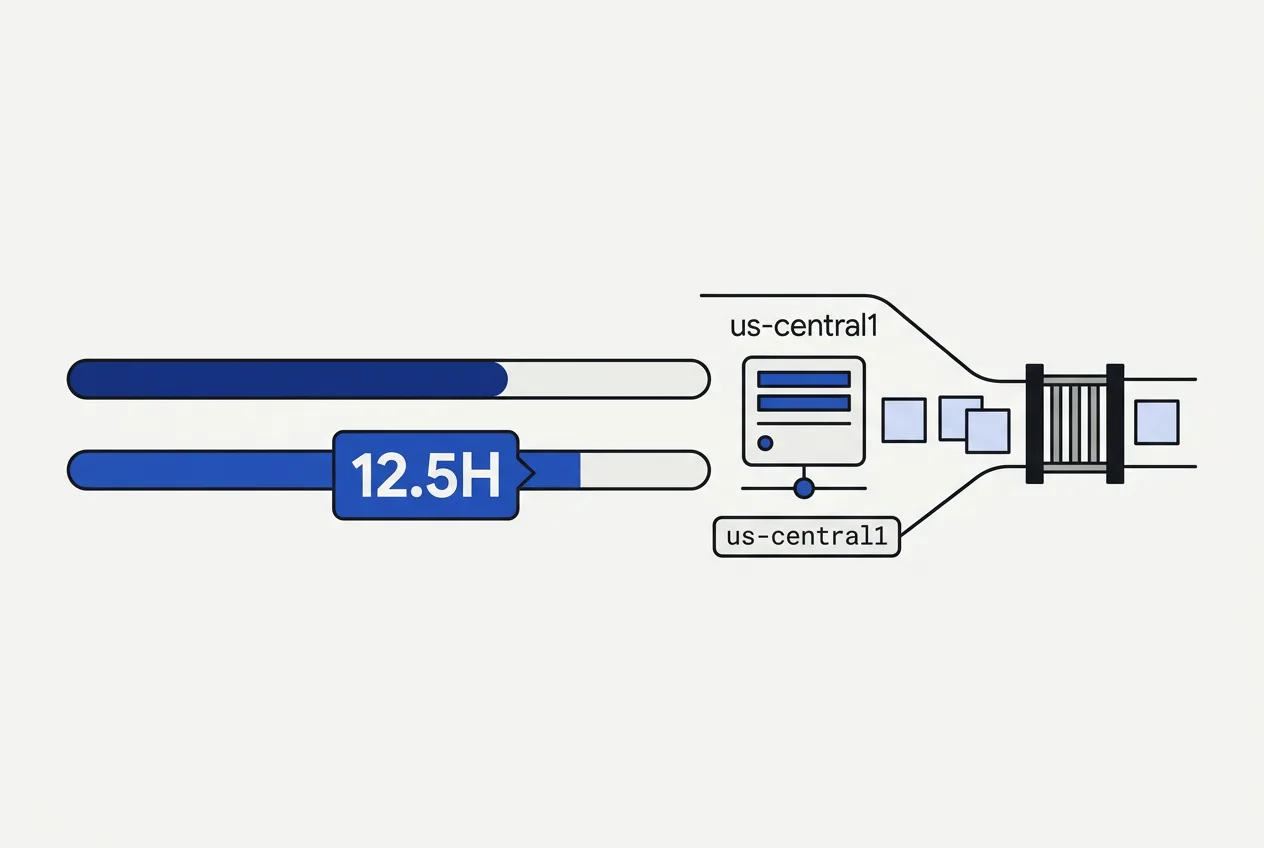
Symptoms centered on WriteObject and upload calls. Clients received frequent 503 UNAVAILABLE responses and connection timeouts. Successful writes showed markedly higher latency. A smaller number of read requests also experienced delays. No other GCS regions reported comparable problems.
Downstream services such as data pipelines in tools like Temporal and Mixpanel recorded ingestion delays. No widespread data loss occurred. Monitoring dashboards from multiple providers confirmed full recovery by the end of October 9.
| Period | Region/Zone | Duration | Main Symptoms |
|---|---|---|---|
| Oct 8, 04:00–16:30 PT | us-central1 | 12.5 hours | Write timeouts, 503 errors, elevated latency |
| Oct 9, 04:05–09:46 PT | us-central1-b | 5 hours 41 min | Recurring write errors |
Root Cause, Mitigation, and User Actions
Google attributed the outage to a localized capacity shortfall on specific storage nodes in us-central1. A load-balancing configuration change intended to improve traffic sorting bypassed capacity checks and caused resource exhaustion. A concurrent metadata database problem added further errors. The October 9 recurrence stemmed from an incomplete rollback of an upload planner feature.
Engineers responded by draining traffic from overloaded nodes, disabling the faulty optimization, rolling back the metadata update, and restoring even traffic distribution. These steps returned the service to normal operation.
Users can reduce exposure to similar single-region issues by storing critical data across multiple regions and maintaining automated failover logic. Regular latency monitoring with synthetic uploads helps detect problems early. Testing retry and backoff policies under simulated load reveals weak points before they affect production workloads. Maintaining copies in alternative providers or on-premises storage provides an additional layer of resilience during cloud storage events.
Google stated it will apply stricter validation of load-balancing changes in smaller regions first and strengthen architecture to enforce capacity limits. These changes aim to prevent future bypass of safeguards and improve handling of traffic spikes.
Frequently asked questions
How long did the Google Cloud Storage outage October 2026 last?
The main incident ran for 12.5 hours on October 8, with a second 5-hour-41-minute event on October 9. Service returned to normal the same day.
Which operations were most affected during the GCS outage?
WriteObject and upload requests saw the highest error rates and latency. Read operations experienced only minor delays in a subset of cases.
What steps can users take after the Google Cloud Storage outage October 2026?
Multi-region replication, automated failover, and continuous latency monitoring reduce risk. Testing retry logic and keeping backups outside a single provider also help.
Did the outage cause permanent data loss?
No broad data loss was reported. Most issues involved temporary timeouts and slower writes rather than corruption or deletion of stored objects.
Comments 2