Google Quick Share SDK 2026 Brings Third-Party App Integration for Secure File Sharing
The Google Quick Share SDK for Android and iOS will let developers embed local P2P file sharing and Tap to Share into apps starting in 2027, with end-to-end encryption and no internet required.
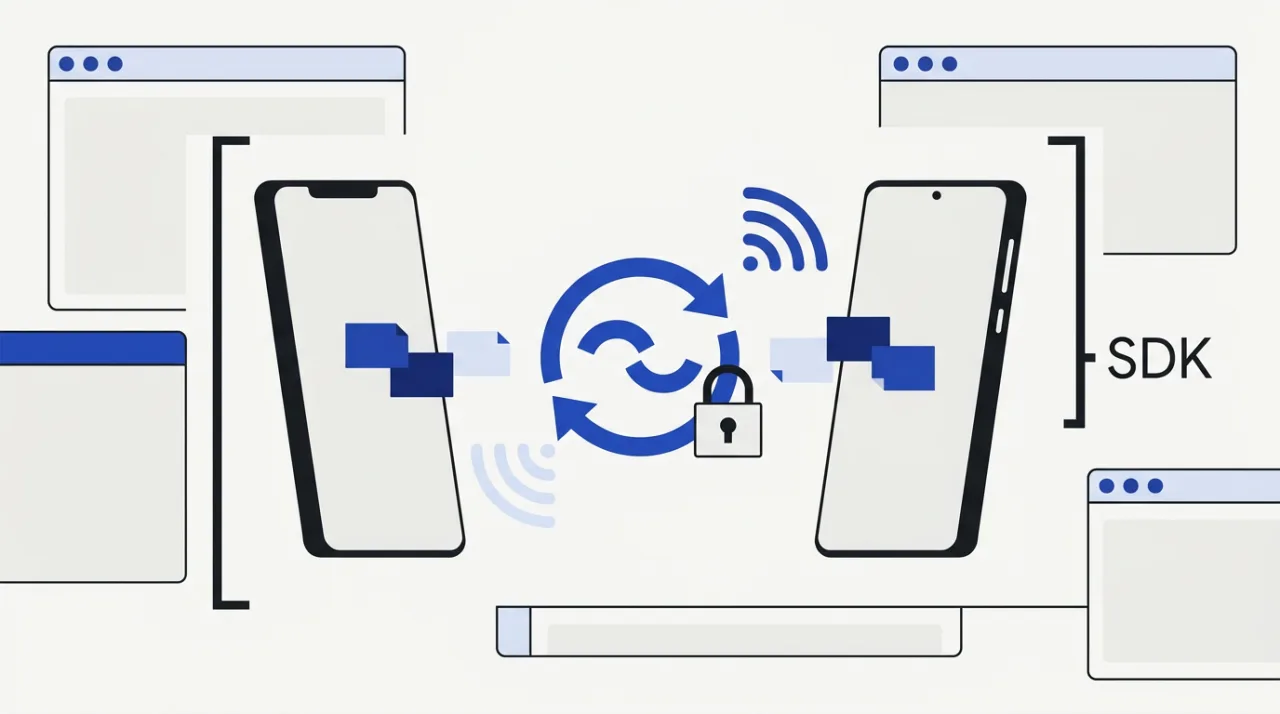
Google Quick Share SDK 2026 introduces a way for third-party developers to add direct peer-to-peer file transfers inside their Android and iOS applications. Announced at the Android Dev Summit in early November 2026, the SDKs target release in the first half of 2027. Users will see an in-app bottom sheet for sharing instead of switching to the system share sheet.
Integration reportedly takes around 20 lines of code. The feature builds on existing Quick Share interoperability that already works across Android, ChromeOS, Windows, and select Apple devices via AirDrop compatibility. No developer backend or internet connection is needed for transfers.
Google Quick Share SDK Features and Technical Specifications
The SDK supports end-to-end encryption for all local network transfers. Transfers can run fully offline using Wi-Fi Direct or automatic hotspot creation for maximum speed and low latency. Photos and videos transfer without compression, preserving original quality. Apps can mark sensitive files so previews appear masked in the sharing interface.
Tap to Share via NFC initiates sessions on supported hardware. The iOS SDK extends similar local P2P capabilities to iPhone and iPad apps. Existing system-level Quick Share remains unchanged and available alongside any SDK integration.
Key advantages include bypassing the full-screen Quick Share UI while keeping transfers inside the originating app. Developers avoid building custom sharing infrastructure. Risks center on adoption speed and the lack of public documentation or exact OS requirements at announcement.
- End-to-end encryption on local transfers
- Automatic Wi-Fi Direct and hotspot fallback
- Original quality for media files
- Offline operation only
- NFC Tap to Share support
- Masked previews for flagged content
Comparison of Quick Share SDK With System Sharing and AirDrop
Developers choosing the SDK gain in-app control over the sharing flow. The system Quick Share sheet still routes users outside the app for the full interface. AirDrop offers similar local P2P on Apple devices but lacks the cross-platform reach to Android, Windows, and ChromeOS that Quick Share provides.
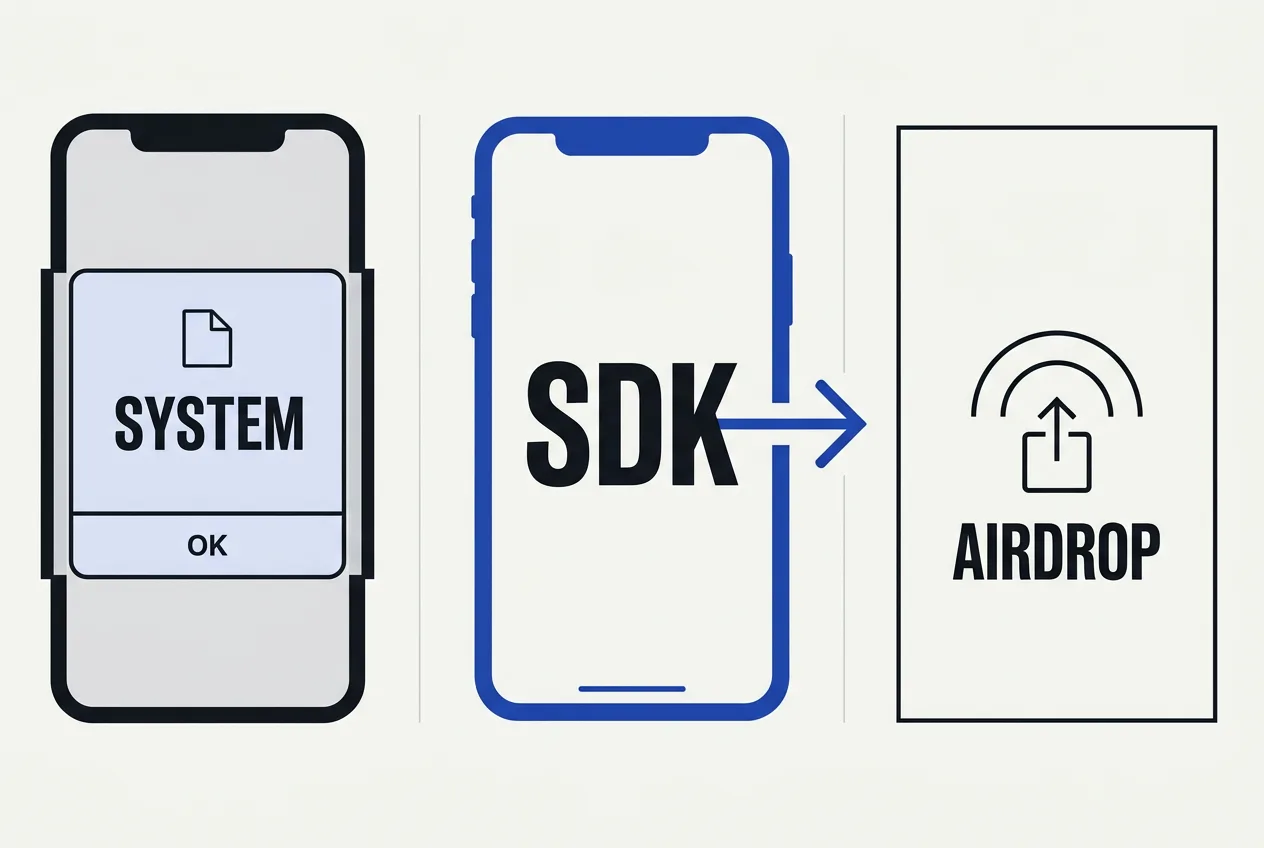
Integration effort stays minimal compared with building custom P2P stacks. The table below outlines core differences across the three options.
| Feature | Quick Share SDK | System Quick Share | AirDrop |
|---|---|---|---|
| In-app bottom sheet | Yes | No | No |
| End-to-end encryption | Yes | Yes | Yes |
| Cross-platform (Android/Windows) | Yes | Yes | Limited |
| Original media quality | Yes | Yes | Yes |
| Offline only | Yes | Yes | Yes |
| Third-party app support | Planned 2027 | N/A | N/A |
Typical use cases include photo editing apps that let users share projects directly, or productivity tools that transfer documents between nearby devices without leaving the interface. Developers should monitor Google developer documentation for final OS version requirements and any Play Services dependencies once the SDK becomes available.
Release Timeline and Developer Adoption Considerations
SDKs for Android and iOS are scheduled for H1 2027. Third-party apps using the new integration could reach users in the second half of 2027. No public beta or detailed pricing information has been released.
Existing Quick Share functionality continues to evolve independently. Broader AirDrop compatibility and Tap to Share gestures rolled out earlier in 2026 on Pixel devices and selected hardware. The SDK simply extends the same local transfer engine to custom applications without requiring operating system changes.
Teams evaluating the SDK should plan testing across Android and iOS versions once documentation appears. Adoption will depend on how quickly major apps add the bottom-sheet interface and whether users notice measurable improvements in speed or convenience over the system sheet. Uncertainties remain around exact hardware minimums and whether any developer fees will apply.
Frequently asked questions
When will third-party apps be able to use the Google Quick Share SDK?
The Android and iOS SDKs are scheduled for release in the first half of 2027. Apps that integrate the code could appear in the second half of 2027 once testing completes.
Does the Quick Share SDK require an internet connection?
No. All transfers operate locally using Wi-Fi Direct or automatic hotspot creation. No cellular data or internet access is needed for the file exchange itself.
How much code is required to add Quick Share to an existing app?
Google documentation indicates roughly 20 lines of code for basic integration. The SDK supplies the in-app bottom sheet and handles the underlying P2P connection.
Will the SDK support original quality photo and video transfers?
Yes. The SDK explicitly avoids compression for media files. Users receive the same original files they would obtain through the system Quick Share feature.
Comments 12