ICANN 2026 New gTLD Round Draws 1,615 Applications with PwC Screening Ahead
ICANN received 1,615 active applications for the 2026 new gTLD round from 481 applicants. PwC now handles background screening before contention resolution begins.
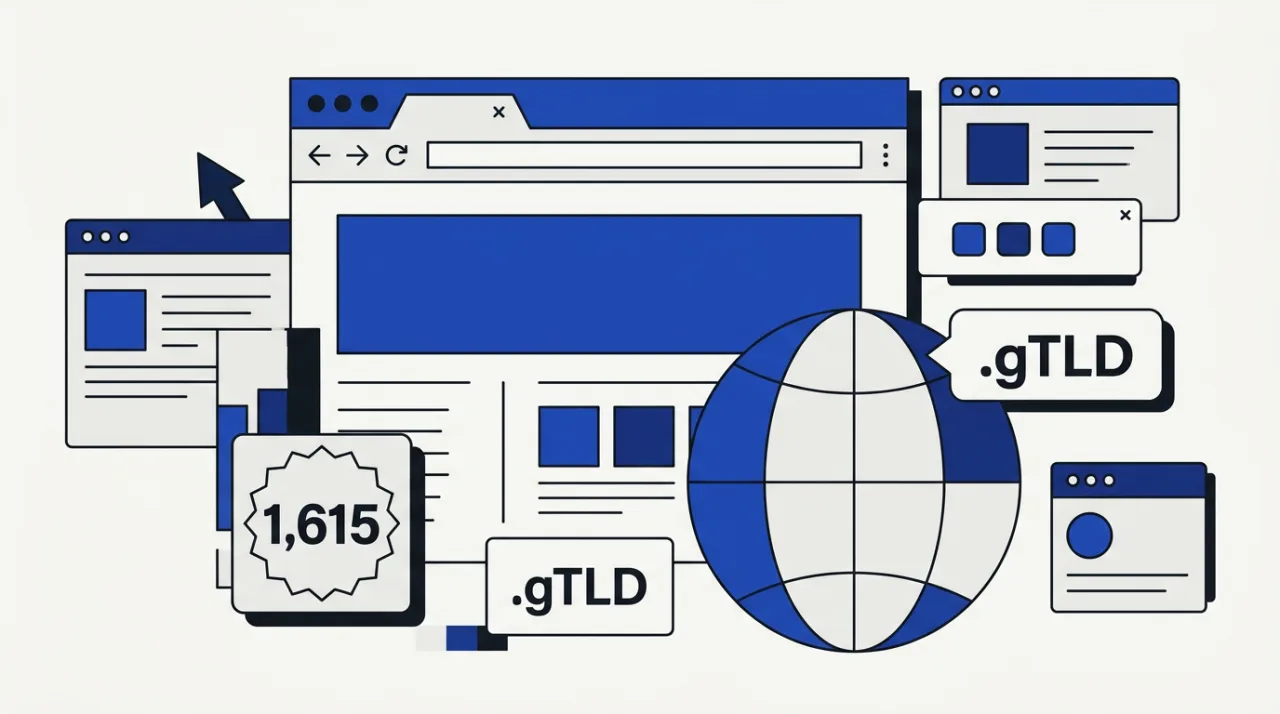
The ICANN 2026 new gTLD round received 1,615 active applications after the 12 August 2026 deadline. This figure covers submissions from 481 distinct applicants and sets the stage for evaluation that begins with mandatory background checks.
Applicants submitted 1,663 strings initially, with 1,616 confirmed paid by late September. One application dropped before Reveal Day on 7 October 2026. The round follows the 2012 process that produced 1,930 applications and ultimately delegated more than 1,200 new domains.
ICANN 2026 New gTLD Round Application Breakdown and Contention Sets
North American entities filed 864 applications, followed by 506 from Europe, 218 from Asia-Pacific, 16 from Africa, and 11 from Latin America and the Caribbean. Among the total, 333 are brand applications, 16 are community-based, 15 self-identified as geographic, 51 used the Applicant Support Program, 21 are internationalized domain names, and 9 are variants of existing strings.
Contention affects more than half the pool. 891 applications sit in 263 preliminary contention sets. The largest set involves the string .agent, which drew 13 applicants including OpenAI, Google, and Meta. Final contention sets and confirmed strings will be published on String Confirmation Day, 17 November 2026.
Eligible applicants may replace their string during the Replacement Period that runs 8–21 October 2026. Those who withdraw by 27 November 2026 receive a 65 percent refund. The Community Input and Objections Period opens on 17 November 2026 and closes 16 March 2027.
| Metric | 2012 Round | 2026 Round (as of Oct 2026) |
|---|---|---|
| Applications received | 1,930 | 1,615 active |
| Applicants | ~1,000 | 481 |
| Contention sets | ~230 | 263 preliminary |
| Brand applications | ~500 | 333 |
PwC Background Screening and Timeline for Registrars
On 15 October 2026 ICANN named PricewaterhouseCoopers Advisory Services LLC as the sole provider for mandatory background screening. PwC will examine corporate standing, ownership structures, public records, and eligibility criteria listed in the 2026 Applicant Guidebook. The contract resulted from a competitive RFP launched in November 2025.

Screening protects the integrity of the DNS by confirming that applicants meet financial, technical, and legal thresholds. Results feed into the String Evaluation phase, which ICANN expects to last approximately 180 days. The Prioritization Draw is scheduled for the first half of 2027.
Registrars have no direct obligations during the current phase. New gTLDs reach delegation only after successful evaluation, contracting, and launch preparation. Portfolio managers should track contention outcomes, objection filings, and delegation announcements to plan integration work and registrar-reseller agreements. Public application data is available on ICANN’s Application Publication and Statistics site for detailed review of strings, applicants, and contention groups.
Concentration among large registry operators remains visible: Identity Digital submitted 216 applications. Smaller entities and supported applicants will face the same screening and evaluation path as major applicants. Monitoring the 17 November 2026 String Confirmation Day provides the next concrete checkpoint for timeline updates.
Frequently asked questions
When will final strings and contention sets be published?
String Confirmation Day is set for 17 November 2026. On that date ICANN will release the final list of strings and updated contention sets after the Replacement Period closes.
What does PwC screening cover for 2026 applicants?
PwC reviews corporate standing, ownership details, public records, and compliance with the 2026 Applicant Guidebook eligibility rules. The check is mandatory for all applicants.
How many applications face contention?
891 applications fall into 263 preliminary contention sets. More than half of all applications are contested, with the .agent string drawing the largest set of 13 applicants.
What should registrars monitor next?
Registrars should follow the 17 November 2026 String Confirmation Day, objection deadlines in March 2027, and the results of the Prioritization Draw in the first half of 2027 to schedule integration work.
Comments 15