Infomaniak S3 Storage 2026: Features Pricing and Sovereign Cloud Comparison
Infomaniak launched its native S3-compatible object storage on November 5, 2026, built on Ceph with full API support and Swiss data residency guarantees.
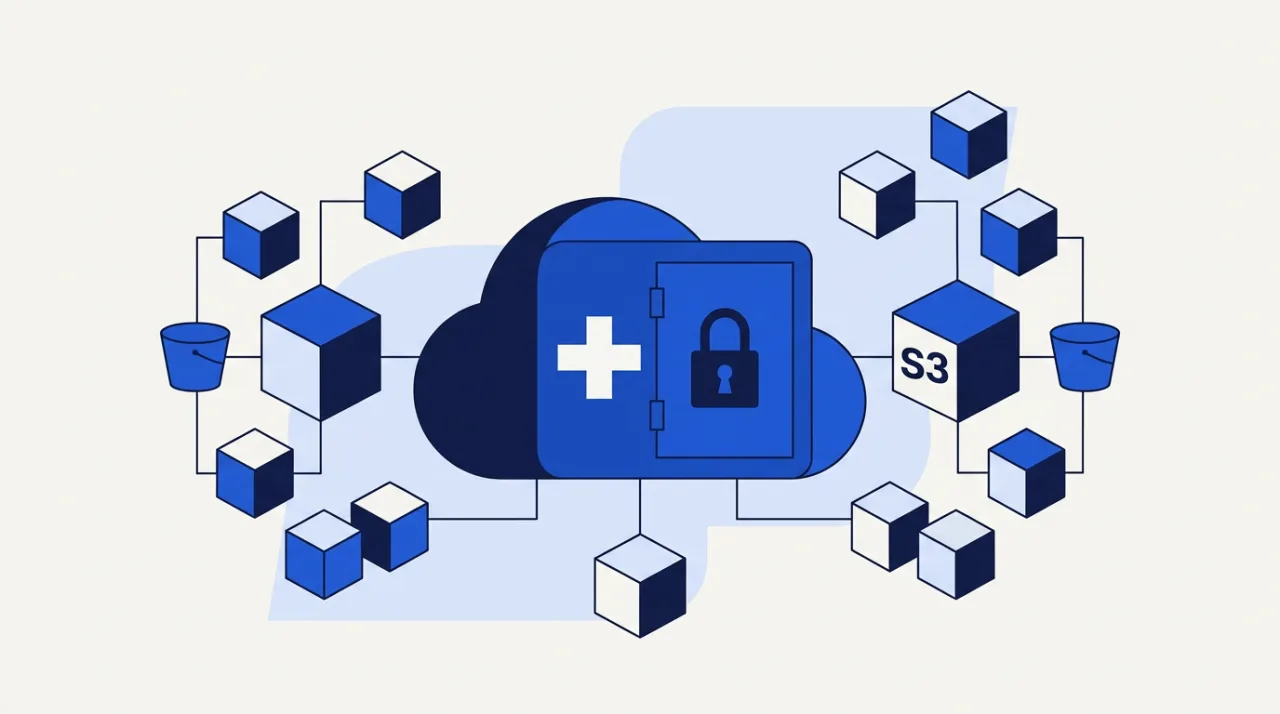
Infomaniak introduced its native S3-compatible object storage service on November 5, 2026, within its sovereign Public Cloud offering. The service runs on Ceph and provides full compatibility with standard tools such as AWS CLI, boto3, rclone and Terraform. Organizations seeking predictable European storage costs and strict data residency now have a documented option that avoids the variable request and egress fees common with hyperscalers.
Key Features and Technical Capabilities
The platform supports Object Lock in both GOVERNANCE and COMPLIANCE modes, versioning for retention of prior object states, and SSE-C encryption managed by the customer. Multi-AZ distribution is standard, with an optional replication feature that automatically copies data to a second Swiss data center. Bucket policies, signed URLs and metadata tagging function as expected for S3 workloads, while the Filestash visual explorer allows direct browsing without additional client software.
Unlimited object size is achieved through multipart uploads, and the service carries a 99.9 percent SLA that rises to 99.99 percent when replication is enabled. Existing users of Infomaniak’s SwissTransfer and Swiss Backup services already rely on the same Ceph infrastructure that now powers the public S3 endpoint. New projects are directed to the native S3 service, while the legacy OpenStack Swift endpoint remains available for workloads that do not require full S3 compatibility.
- Full S3 API coverage for AWS CLI, boto3, rclone, s3cmd and Terraform
- Object Lock with GOVERNANCE and COMPLIANCE retention modes
- Versioning and SSE-C encryption at rest and in transit
- Optional cross-region replication within Swiss data centers
- Visual Filestash explorer and metadata tagging support
Pricing Details and Sovereign Cloud Comparison
Storage is billed hourly at approximately €0.000016 per GB, which equates to roughly €11.70 per TB per month. Ten terabytes of outbound traffic are included each month per organization; additional egress costs €0.00973 per GB. No per-request charges apply. Replication and additional versions are billed as extra storage capacity, so one terabyte stored with a single extra version and replication enabled totals about €46.72 per month.
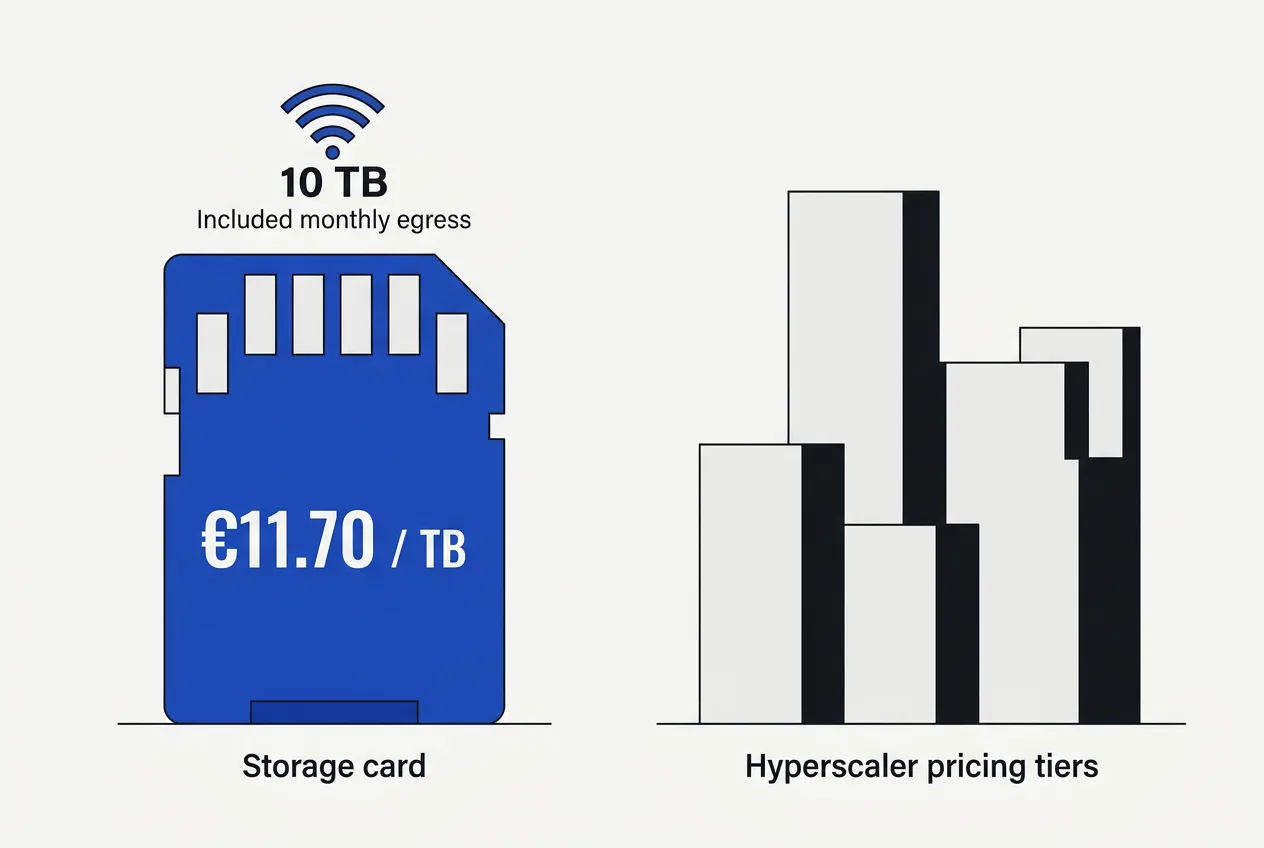
New organizations receive a CHF/EUR 300 Public Cloud credit valid for three months. The pricing model removes the surprise egress and API call costs that frequently appear on AWS S3 invoices. Infomaniak maintains all data in its own Swiss facilities under Swiss law, with ISO 27001, 9001, 14001 and 50001 certifications and 100 percent renewable energy usage.
| Item | Infomaniak S3 Storage | Typical Hyperscaler S3 |
|---|---|---|
| Storage (TB/month) | €11.70 | €20–25 |
| Outbound included | 10 TB/org | 100 GB–1 TB |
| Request fees | None | Yes |
| Data location | Switzerland only | Multi-region global |
| Legal jurisdiction | Swiss law | US CLOUD Act exposure |
Other European providers offer similar residency guarantees, yet Infomaniak’s employee-owned structure and transparent hourly billing differentiate it for teams that require both cost predictability and independence from non-European legal frameworks. Typical workloads include ransomware-protected backups, media archives, AI training datasets and CI/CD artifacts.
Frequently asked questions
When did Infomaniak release its native S3 object storage?
The service became available on November 5, 2026, as a new native Ceph-based offering in the Public Cloud.
What encryption options does Infomaniak S3 storage support?
It supports SSE-C customer-managed encryption for data at rest and in transit. SSE-KMS is not available.
How does replication affect monthly costs?
Replication doubles the storage volume billed; one terabyte with replication and one extra version costs approximately €46.72 per month.
Is Infomaniak S3 storage suitable for regulated workloads?
Data remains in Swiss data centers under Swiss law with GDPR and nFADP compliance plus multiple ISO certifications.
Comments 9