Inkling 2 Small model 2026: Architecture Benchmarks and Open Weights Plans
The Inkling 2 Small model delivers 594B total parameters with 17B active, strong agentic and vision results, and a planned open weights release in November 2026.
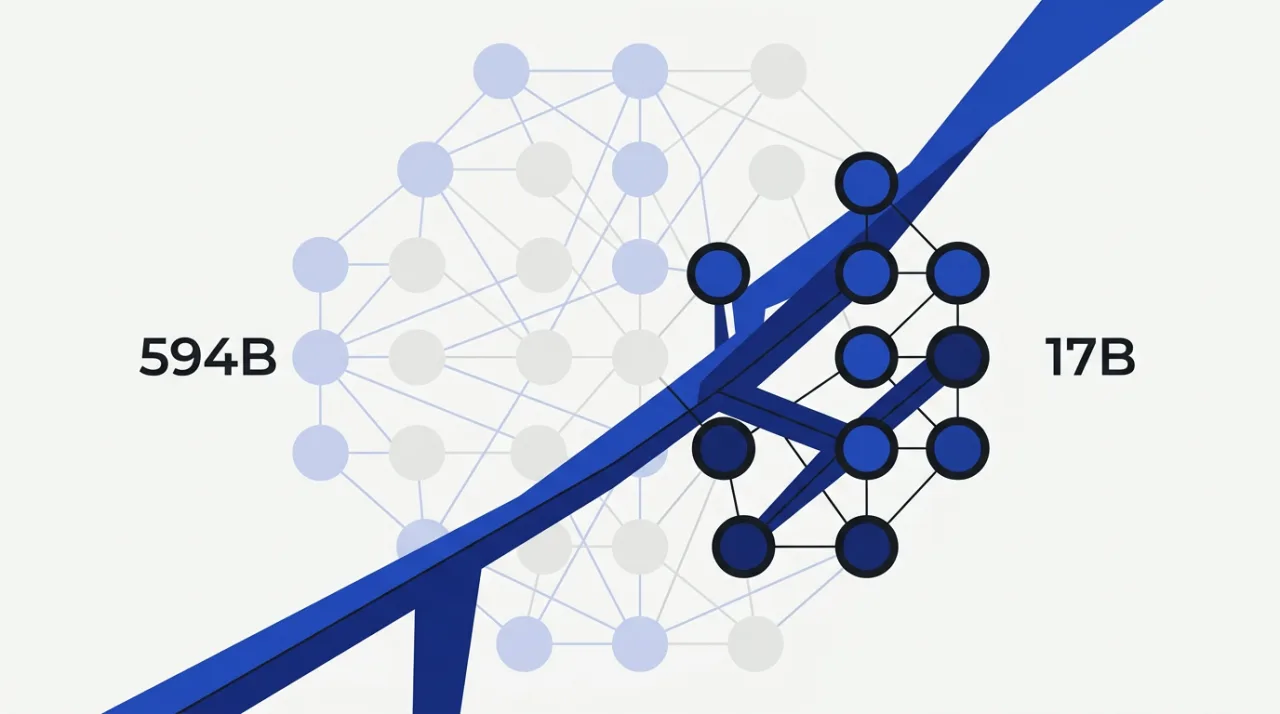
The Inkling 2 Small model arrived on November 5, 2026, from Thinking Machines Lab. It posts an Artificial Analysis Intelligence Index score of 31 and leads several open-weights agentic and vision benchmarks at launch.
Thinking Machines AI positions the model for coding, long-horizon agent workflows, and visual reasoning tasks. Users access it now through the Tinker platform while the company completes safety testing ahead of an Apache 2.0 weights release targeted for around November 12.
Inkling 2 Small model architecture and training approach
The model uses a sparse MoE decoder-only transformer with 48 layers. It contains 594 billion total parameters but activates only 17 billion per token by routing each token to eight of 384 experts. A 292-million-parameter vision encoder handles image inputs, and the system supports up to one million tokens of context.
Training occurred natively in NVFP4 precision on NVIDIA GB300 NVL72 hardware. A single unified reinforcement-learning run processed more than 17 million rollouts over nine days, with emphasis on agentic and long-horizon tasks. The architecture also includes hybrid local and global attention and accepts text-plus-image inputs while producing text outputs.
Compared with the earlier Inkling family, the second-generation model improves instruction following and self-verification. It supports variable reasoning effort at inference time, allowing users to trade compute for accuracy on harder problems.
Benchmarks across coding, vision, and enterprise tasks
Third-party and self-reported scores place the model at or near the top of non-Chinese open-weights systems on several leaderboards. The following table summarizes selected results at launch.
| Benchmark | Score | Notes |
|---|---|---|
| FrontierCode v2.0 | 25.4% | Coding capability |
| SWE-Bench Pro v2 (Hard) | 86.3% | Software engineering |
| MMMU Pro (Std 10) | 81.6% | Multimodal reasoning |
| ScreenSpot Pro | 83.8% | GUI interaction |
| Vals Index | 56.08% | Overall ranking 19 of 34 |
| Finance Agent v2.1 | 67.54% | Top open-weights result |
Additional agentic evaluations show 72.1% on DeepSWE v1.1 and 81.6% on Vibe Code Bench. The model records lower results on some terminal-interaction suites such as Terminal-Bench 4.0 at roughly 13%.
Enterprise-oriented tests include 71.8% on EnterpriseBench-CoreCraft and an AA-Briefcase Elo rating of 1527. These numbers reflect the training focus on controllable effort and reduced misbehavior rather than pure chat performance.
Current access, pricing, and upcoming weights release
Immediate inference, fine-tuning, and sampling run on the Tinker platform. Pricing stands at $0.30 per million input tokens ($0.03 for cached tokens) and $1.00 per million output tokens. Closed weights remain under Tinker Terms of Use until external red-teaming completes.
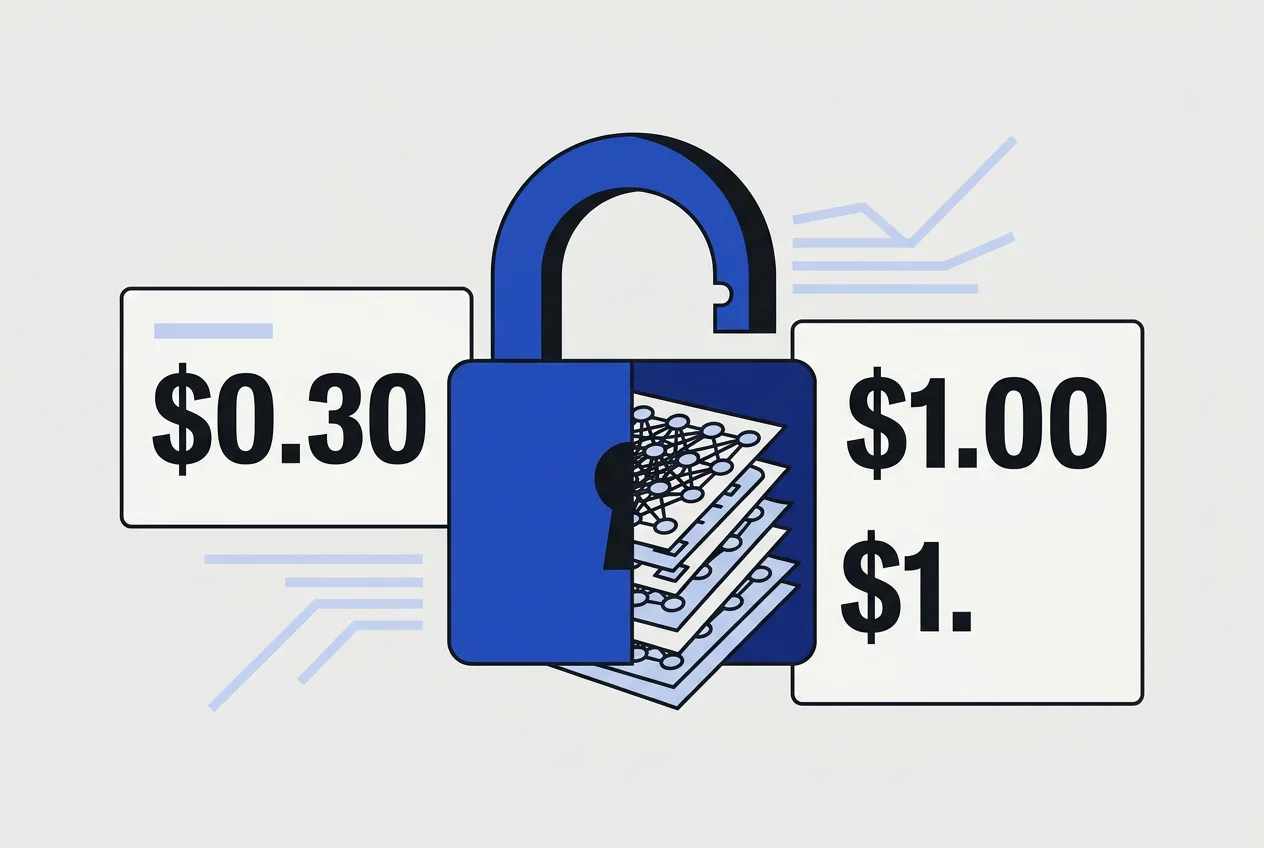
Thinking Machines AI states it will release the weights under Apache 2.0 once safety checks finish, with a target date of approximately November 12, 2026. Fine-tuned checkpoints will accompany the base release. After publication, users expect self-hosting options and broader platform integrations.
Potential downstream uses include autonomous fine-tuning loops, visual code generation, and long-context document agents. Organizations planning local deployments should monitor the exact release date and any usage restrictions that accompany the open weights.
Frequently asked questions
When will the Inkling 2 Small model weights become available?
Thinking Machines AI targets release around November 12, 2026, after external safety testing. The weights will carry an Apache 2.0 license once approved.
What context length does the Inkling 2 Small model support?
The model handles up to one million tokens of context and accepts both text and image inputs.
How does the Inkling 2 Small model compare on coding benchmarks?
It scores 86.3% on SWE-Bench Pro v2 Hard and 25.4% on FrontierCode v2.0, placing it ahead of most non-Chinese open-weights models at launch.
What are the current pricing details on Tinker?
Inference costs $0.30 per million input tokens or $0.03 for cached tokens and $1.00 per million output tokens.
Comments 11