Kimi 3.1 Pro Open Weights Release 2026: Benchmarks Access and Use Cases
Moonshot AI released Kimi K3.1 Pro on October 23, 2026, as a multimodal MoE model with a 1M-token context window and promised open weights by November 4.

Kimi 3.1 Pro open weights are scheduled for release on November 4, 2026, following the October 23 launch of the model by Moonshot AI. The release covers a multimodal mixture-of-experts model with 2.8 trillion total parameters and 104 billion active parameters, plus a 1-million-token context window. A high-speed variant launched at the same time and claims two to three times faster inference.
The model builds on the earlier Kimi K3 base from July 2026 through additional post-training and reinforcement learning across hundreds of domains. Moonshot positions it for full-project coding, parametric 3D work in Blender and CAD tools, end-to-end finance workflows, and agentic tool-use tasks. Multimodal input supports both text and images.
Kimi 3.1 Pro Benchmarks Compared With Leading Models
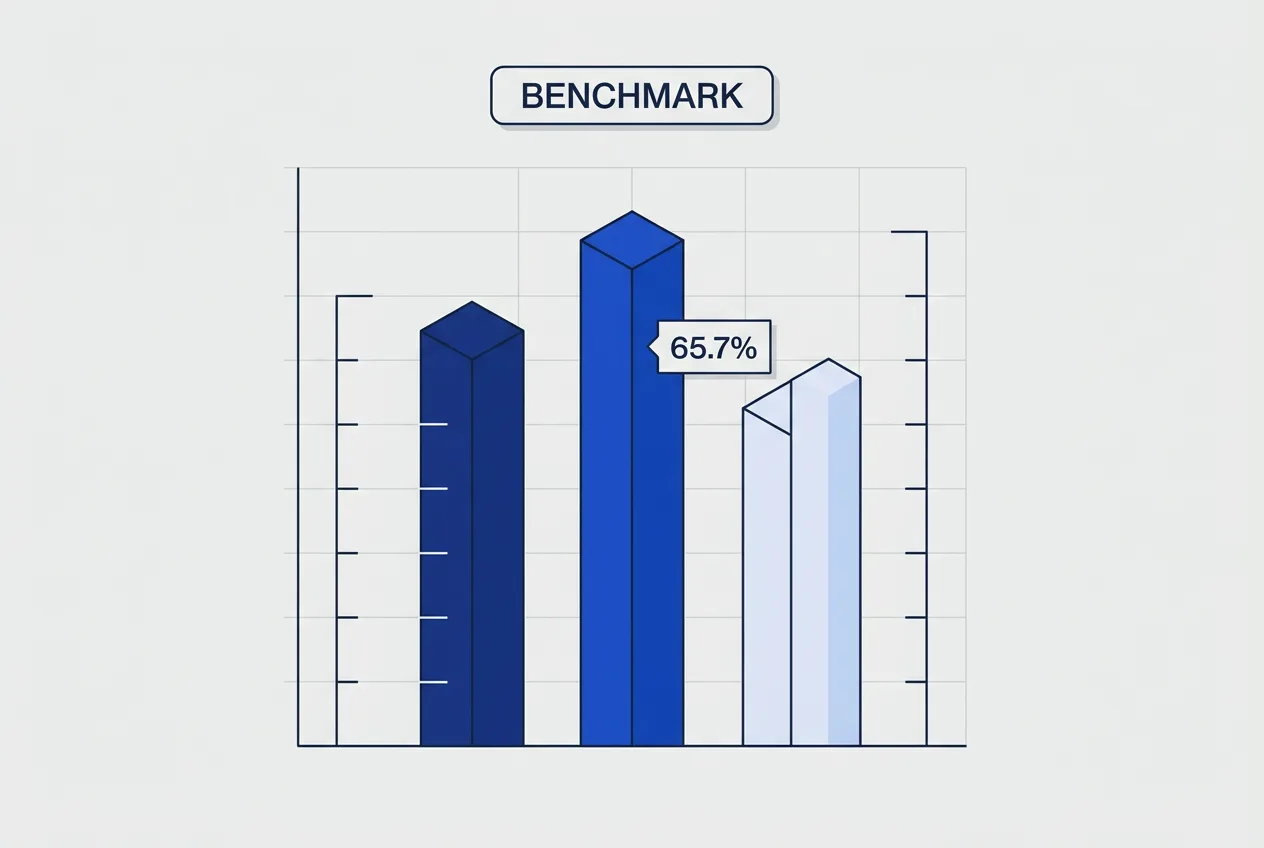
Vendor-reported results place Kimi K3.1 Pro at 65.7 percent on Terminal-Bench 4.0, just behind Claude Opus 5.5 at 66.4 percent and ahead of GPT-6 Astra at 58.2 percent. On SWE-Marathon the model scores 51.7 percent, exceeding Opus 5.5 at 46.3 percent. BenchCAD with tools reaches 92.7 percent, while OfficeQA Pro v2 hits 64.4, a claimed state-of-the-art mark.
Internal Kimi Code Bench 3.0 long-horizon evaluation shows 61.2 percent, up from 55.95 percent on the prior K3 model. Claim-level hallucination rate dropped to 8.3 percent from 23.4 percent. An independent Artificial Analysis Intelligence Index score of 55 ranks the model fourth overall, an 11-point gain over K3 and trailing Opus 5.5 at 58.
Performance stands out on agentic, coding, and finance tasks but remains weaker on certain scientific terminal benchmarks. Moonshot removed cyber-related data from mid-training and reinforcement learning stages in the open-weight version to limit offensive capabilities while preserving general coding utility. On an internal xdev-bench-hard test the open model scores 81.0 percent pass@3, down from 90.5 percent without the removal yet still above the prior K3 result of 33.3 percent.
API Access, Pricing, and Open Weights Timeline
The model is available immediately through the Kimi.ai platform, mobile apps on iOS, Android, and HarmonyOS, the Kimi Work desktop application, Kimi Code, and the Kimi API using model IDs kimi-k3.1-pro and kimi-k3.1-pro-highspeed. The endpoint follows OpenAI compatibility. Enterprise access defaults to off, and zero data retention is offered for API users.
Pricing starts at $2 per million input tokens and $10 per million output tokens, with cached input at $0.20. The high-speed variant costs $4 and $20 respectively. Both tiers sit below the previous K3 API rates. Self-hosting requires substantial hardware; the prior K3 weights measured approximately 1.56 TB, and cluster-scale inference is recommended.
Open weights were promised for November 4, 2026, though no Hugging Face repository appeared as of November 3. The license remains unpublished; the earlier K3 model used a custom Kimi K3 License that imposed revenue thresholds on model-as-a-service providers and required large-scale attribution. Independent benchmark replications, exact hosting requirements, and final license terms are expected after the weights become public.
Practical Use Cases and Deployment Considerations
Developers report strong results on complete game projects in Unity, Unreal Engine, and Godot, plus long-horizon engineering tasks. Finance teams apply the model to modeling, research, and business operations workflows that benefit from the reduced hallucination rate and expanded context. 3D parametric modeling and animation pipelines in Blender and CAD software also show measurable gains.
Users should plan for cluster-scale infrastructure when self-hosting and monitor license terms once released. The deliberate weakening of cyber capabilities in the open version reduces certain offensive risks while retaining broad coding performance. Third-party verification of benchmarks will clarify where the model sits relative to closed frontier systems after the weights appear.
Frequently asked questions
When will Kimi 3.1 Pro open weights be released?
Moonshot AI scheduled the open weights release for November 4, 2026. As of November 3 no repository had appeared, and the final license terms were still unpublished.
How does Kimi K3.1 Pro compare on coding benchmarks?
The model scores 51.7 percent on SWE-Marathon and 61.2 percent on internal long-horizon code evaluation. These figures exceed the prior K3 results and several competing frontier models on the same tests.
What are the API prices for Kimi 3.1 Pro?
Standard pricing is $2 per million input tokens and $10 per million output tokens. The high-speed variant costs twice that amount. Cached input is available at $0.20 per million.
Does the open-weight version retain cyber capabilities?
Moonshot removed cyber-related data from training stages for the open release. Performance on an internal hard benchmark fell from 90.5 percent to 81.0 percent, still above the earlier K3 model.
Comments 12