Nigeria CBN P2P Crypto Rules 2026: New Requirements for Platforms and Users
The Central Bank of Nigeria issued new rules on November 5, 2026 that tighten licensing, capital and identity checks for P2P crypto platforms and stablecoin issuers.
The Central Bank of Nigeria published the Regulations for the Operations of Non-Security Virtual Assets on November 5, 2026. The rules took effect immediately and cover platform-facilitated P2P trading, stablecoin issuance and related services. Operators now face stricter capital, identity verification and licensing obligations.
Nigeria CBN P2P Crypto Rules for Platforms and Users
Section 10 of the regulations requires any platform that provides matching, escrow or settlement for P2P trades to obtain specific CBN approval. Standalone P2P licences do not exist; approval attaches to an existing licence. Purely bilateral transfers without a platform intermediary fall outside the scope.
Platforms must verify that the name and Bank Verification Number on every naira payment account match the verified customer record before releasing tokens. Records must link wallet addresses, payment references, amounts and exchange rates. Third-party or nominee accounts are prohibited. All naira payments must route through CBN-approved banking channels.
Users will see longer settlement times during identity checks. Platforms that fail the BVN match cannot complete the trade. Existing operators have 180 days to apply for the required approval while maintaining current scale under interim conditions.
Capital Requirements and Transition Timeline
Stablecoin issuers must meet new paid-up capital thresholds. Naira-referenced issuers require at least ₦10 billion. Foreign-currency referenced issuers, such as those for USDT or USDC, need ₦15 billion. Other virtual asset service providers, including P2P operators, face a ₦1 billion minimum that cannot be shared with SEC requirements.
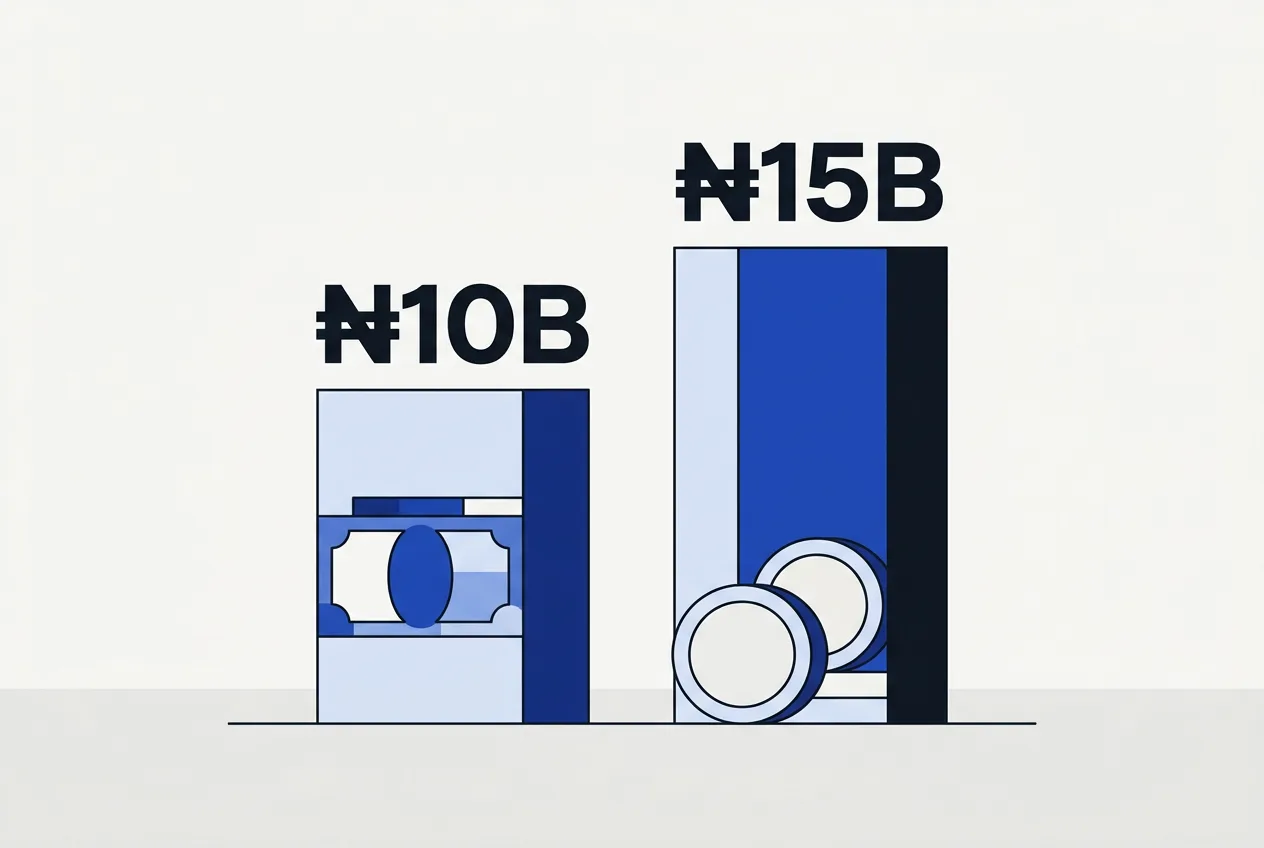
Issuers must maintain 100 percent reserves plus a 2 percent buffer and redeem at par, normally the next business day. Algorithmic stablecoins are banned. All entities must implement AML controls, sanctions screening, transaction monitoring and the Travel Rule, plus wallet freezing capability.
| Entity Type | Minimum Capital (₦) | Reserve Rule |
|---|---|---|
| Class 1 stablecoin (naira) | 10 billion | 100% + 2% buffer |
| Class 2 stablecoin (foreign) | 15 billion | 100% + 2% buffer |
| Other VASPs incl. P2P | 1 billion | N/A |
Operators already active must register with the CBN within 30 days and begin supervisory reporting within 60 days. Full licence applications are due within 180 days. Those that miss the window must cease operations until authorised.
Compliance Steps for Existing Operators
Review current customer onboarding flows against the new BVN matching rule. Update record-keeping systems to capture wallet-to-payment linkages. Confirm that all payment rails used for naira settlement carry CBN approval.
Prepare licence applications covering supported tokens, customer limits and geographic scope. Engage legal and compliance teams to map the 180-day timeline against internal resources. Monitor upcoming CBN circulars on exact application procedures and token approval lists.
Failure to comply risks enforcement action and loss of access to Nigerian users. Market participants should expect temporary reductions in P2P liquidity while platforms adjust systems and obtain approvals.
Frequently asked questions
Do private P2P transfers without a platform need CBN approval?
No. The rules apply only to platform-facilitated services such as matching and escrow. Purely bilateral transfers between individuals remain outside the scope.
What capital must foreign stablecoin issuers hold?
Issuers of foreign-currency referenced stablecoins require ₦15 billion in paid-up capital and must operate through a Nigerian-incorporated licensed entity.
How long do existing platforms have to apply for approval?
Existing operators must register within 30 days, begin reporting within 60 days and submit full applications within 180 days of the November 5, 2026 commencement date.
What identity check applies to every P2P trade?
Platforms must confirm that the name and BVN on the naira payment account exactly match the verified customer before releasing or crediting tokens.
Comments 7