NVIDIA Nemotron 3.5 Super VL Open-Weight Model October 2026: Specs, Benchmarks and Agentic Use Cases
NVIDIA released Nemotron 3.5 Super VL on October 15, 2026. The 120B-parameter open-weight model targets agentic multimodal tasks with strong results on coding, document, and computer-use benchmarks.
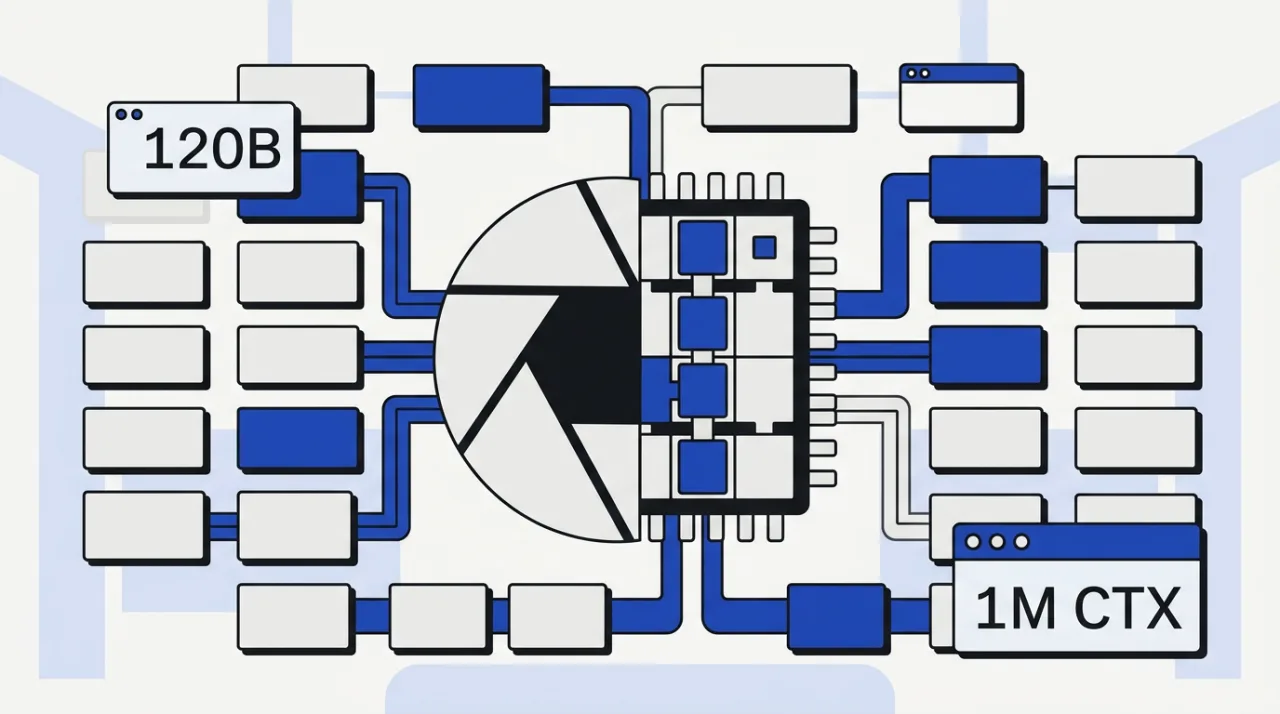
NVIDIA Nemotron 3.5 Super VL launched on October 15, 2026 as an open-weight vision-language model for always-on agents. It combines text, image, document, video, and GUI inputs in a single checkpoint that supports tool calling and structured output. The model runs on one or two high-end GPUs and shows gains over the prior Nemotron 3 generation on agent harnesses.
NVIDIA Nemotron 3.5 Super VL Architecture and Hardware Requirements
The model uses a 120B-parameter Mixture-of-Experts design with 12B active parameters. Its backbone mixes Mamba and Transformer layers and pairs them with the C-RADIOv4 vision encoder. Context length reaches 1 million tokens, which supports long document or multi-turn agent sessions. Available formats include BF16 and the near-lossless NVFP4 quantization.
Inference works on single-GPU hardware such as one H200, one GB200, or two H100 cards. Throughput reaches 600–630 output tokens per second on agentic workloads according to independent tests. Day-zero integration exists in vLLM and SGLang, and the weights are hosted on Hugging Face and NVIDIA NIM.
Training data comprised roughly 26 trillion tokens followed by supervised fine-tuning and reinforcement learning on 3.8 million domain samples. The checkpoint is distilled from the larger Nemotron 3 Ultra and released under the OpenMDW-1.1 license, which permits commercial fine-tuning and on-premise deployment.
Benchmarks and Comparison with Prior Nemotron Releases
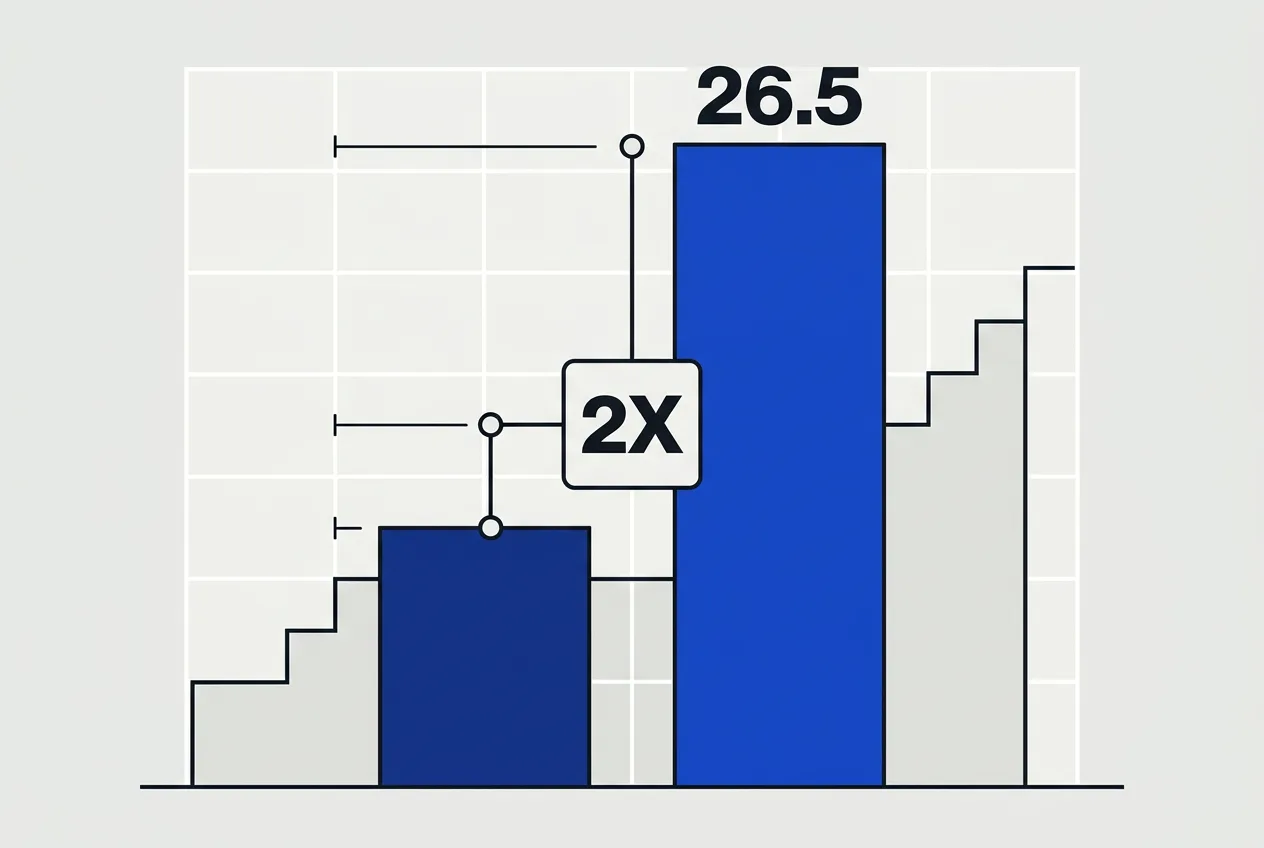
Independent Artificial Analysis Intelligence Index scores place the model at 26–26.5, roughly double the score of the previous Nemotron 3 Super. NVIDIA reports the following NVFP4 results: GPQA-Diamond 89.5–89.9, SWE-Bench Verified 71.1, SWE-Bench Pro 51.8, Terminal-Bench 2.1 60.8–66.7, BrowseComp 77.5–78, and OSWorld-Verified 52.3. On long-horizon agent tasks the model reaches 17.8 on tau3-bench banking.
Agent-specific harnesses show clear lifts. Hermes Bench rises from 56.33 percent with Nemotron 3 Ultra to 63.44 percent. LangChain evaluations move from 84.3 percent to 87.05 percent. Throughput claims of up to five times faster than comparable open models on single-GPU setups appear in early third-party reports.
| Benchmark | Nemotron 3.5 Super VL | Nemotron 3 Ultra |
|---|---|---|
| GPQA-Diamond | 89.5–89.9 | ~45 |
| SWE-Bench Verified | 71.1 | ~38 |
| OSWorld-Verified | 52.3 | ~29 |
| Terminal-Bench 2.1 | 60.8–66.7 | ~34 |
Agentic Workflows and Post-Training Results
The model handles document intelligence, web research, coding agents, cybersecurity triage, financial claims processing, and video analysis in one checkpoint. Post-training with NVIDIA NeMo, SFT, LoRA, or RL on domain data produces gains between 9 and 44 percent on specialized tasks. Companies such as Scale AI report 40 times lower cost and five times lower latency after fine-tuning; Ramp uses the model for receipt processing; AI21 and Alice report 41 percent accuracy improvement in cybersecurity workflows.
Typical deployment steps include loading the NVFP4 checkpoint in vLLM, applying domain-specific LoRA adapters, and exposing the model through a tool-calling endpoint. Open datasets and training recipes released alongside the weights allow teams to replicate these steps without proprietary infrastructure.
Next steps include FP8 and speculative decoding optimizations, the upcoming Bolt E4B edge variant scheduled for October 23, and expanded integration with enterprise agent frameworks. The open weights reduce reliance on closed APIs while enabling on-premise data handling for regulated industries.
Frequently asked questions
What hardware runs NVIDIA Nemotron 3.5 Super VL?
The model fits on a single H200, GB200, or two H100 GPUs. NVFP4 quantization keeps memory use low while preserving accuracy. vLLM and SGLang provide immediate support.
How does Nemotron 3.5 Super VL compare with closed models on agent tasks?
On specialized agent benchmarks the open model exceeds prior Nemotron releases and reaches parity with some closed systems on domain tasks after fine-tuning. Scores such as 71.1 on SWE-Bench Verified illustrate the gap closed since the previous generation.
Can users fine-tune the model for internal data?
Yes. The OpenMDW-1.1 license and released training recipes support SFT, LoRA, and RL. NVIDIA NeMo supplies the tooling, and several enterprise teams have already published domain-specific accuracy lifts.
What input types does the model accept?
It processes text, images, PDFs, charts, video, and GUI screenshots. Output remains text but includes tool calls, JSON, and code. The 1-million-token context supports long document or multi-step agent sessions.
Comments 5