PHP RCE Vulnerability 2026 Exposes Web Hosts to Unauthenticated Exploits
Two critical PHP RCE flaws disclosed on October 21, 2026, require immediate updates on all internet-facing installations.
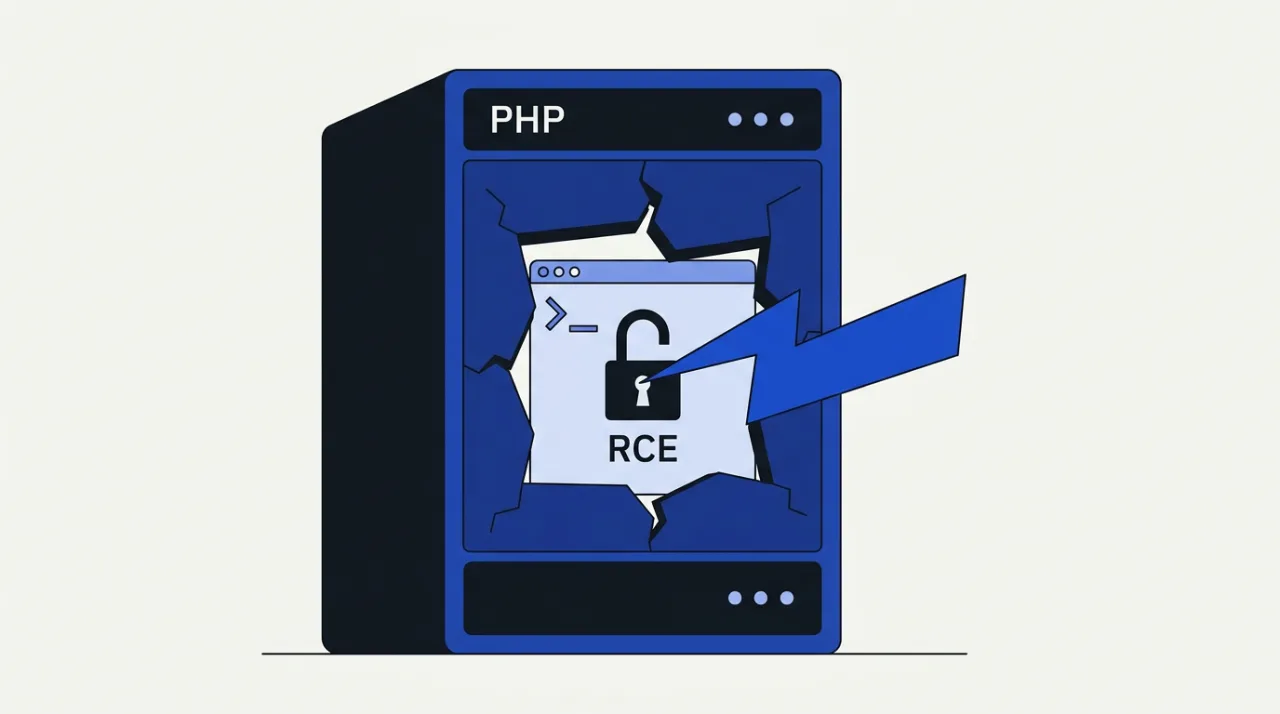
The PHP RCE vulnerability 2026 consists of two unauthenticated remote code execution flaws in the PHP core that affect every web-facing installation. CVE-2026-109618 and CVE-2026-109619 both carry CVSS v4.0 scores of 9.2 and were patched in emergency releases on October 21 at 14:00 UTC. Fixed versions include 8.5.12, 8.4.27, 8.3.36 and 8.2.35; all earlier releases on supported branches remain exposed.
Technical Details Behind the PHP2Shell CVEs
CVE-2026-109618 arises from incomplete cleanup after out-of-memory conditions, leaving partially initialized request structures that subsequent code treats as valid. CVE-2026-109619 stems from stale global and request-owned state persisting after memory release and being reused by later requests on the same worker process. Both vectors allow unauthenticated attackers to execute arbitrary code through crafted requests, notably involving multipart uploads or session upload progress, which remain enabled by default.
No partial mitigations fully address the issues. Disabling session.upload_progress provides only limited protection in narrow cases. Exploitation attempts appeared in the wild within hours of disclosure, with Cloudflare logs showing activity on October 21 and honeypot data recording probes as early as October 17. A follow-up advisory, CVE-2026-115560, addressed an additional session-upload edge case on October 23.
Affected versions span all releases prior to the October 21 patches across branches 8.2 through 8.5. End-of-life branches at or below 8.1 receive no official fixes, though minimal backports exist for 7.4, 8.0 and 8.1 in some distributions. Industry scans estimate more than two million internet-facing PHP hosts remain vulnerable.
Hosting Provider Response and Patching Comparison
Shared and managed hosting platforms control PHP updates at the server level through control panels such as cPanel, Plesk and CloudLinux. Self-managed VPS and dedicated servers shift responsibility to the customer. Most providers applied WAF rules or temporary configuration changes before or immediately after the release, then rolled out updated binaries.

Scaleway initiated emergency maintenance on October 21. Its cPanel and Plesk environments received updated PHP builds by October 22, while classic shared Mutu plans remained in progress at the latest public update. OVHcloud completed patches for PHP 7.4 through 8.5 on web hosting clusters by the evening of October 21, deployed WAF rules, and instructed Bare Metal and VPS customers to apply OS packages or source builds themselves.
| Provider | Plan Type | Patch Status (as of Oct 23) | Customer Action Required |
|---|---|---|---|
| Scaleway | cPanel/Plesk | Complete Oct 22 | None for managed |
| Scaleway | Classic shared | In progress | Monitor status page |
| OVHcloud | Web hosting | Complete Oct 21 | None for managed |
| OVHcloud | Bare Metal/VPS | Provider packages ready | Install via OS or source |
| SiteGround, Hostinger, Kinsta, WP Engine | Managed shared | Complete by Oct 22 | None |
| Cloudways, GoDaddy | Managed | Complete by Oct 22 | None |
Providers with rapid rollouts reported no customer intervention needed on managed plans. Self-managed users must verify running versions with php -v and upgrade through package managers or source compilation. Systems still on EOL branches require migration to supported releases or application of distribution backports where available. Continued scanning and exploitation attempts are expected until patching reaches high coverage.
Frequently asked questions
Which PHP versions received the October 2026 emergency fixes?
The fixes cover 8.5.12, 8.4.27, 8.3.36 and 8.2.35. All earlier releases on these branches remain vulnerable. EOL branches receive no official patches.
Do WAF rules fully protect against the PHP2Shell flaws?
WAF rules reduce exposure but do not eliminate risk. The only complete mitigation is applying the updated PHP binaries on every affected worker process.
What should self-managed VPS users do after October 23?
Check the current PHP version, install the patched packages from the distribution repository or compile from source, then restart the web server and PHP-FPM processes.
How quickly did major hosts complete updates?
OVHcloud finished web hosting clusters within hours on October 21. Scaleway completed cPanel and Plesk environments by October 22, with remaining shared plans still updating at last report.
Comments 8