Project Management Software Comparison 2026: Resource Allocation, AI Features and Integrations
Leading platforms differ sharply in workload forecasting, governed AI agents and connector depth. This comparison outlines concrete capabilities available as of late 2026.

Project management software comparison 2026 shows five established platforms—Asana, monday.com, ClickUp, Wrike and Jira—now center on agentic AI, capacity forecasting and broad ecosystem links rather than basic task lists. Resource allocation tools range from visual workload boards to AI-driven rebalancing suggestions. Integrations extend beyond simple Zapier connections to model context protocol support that lets external agents act on platform data.
Teams evaluating options in 2026 need to weigh how each tool handles skill-based assignment, predictive overload alerts and native connections to development or business suites. Pricing also varies with AI usage often billed through separate credit pools.
Resource Allocation Capabilities Across Tools
monday.com supplies an AI Smart Assigner, Workload Balancer and Resource Directory for Enterprise users. These features match skills to tasks, forecast demand and display capacity views updated in real time. Asana offers workload balancing views plus capacity plans on Advanced and higher tiers, with AI insights that flag rebalancing opportunities across projects.
Wrike provides live workload and capacity dashboards that automatically highlight overloads or shortfalls. Users can query utilization through Copilot in natural language. ClickUp includes workload views and integrated time tracking on paid plans, though forecasting remains less automated than competitors. Jira supports capacity planning views that incorporate PTO and keep-the-lights-on work, plus Rovo AI suggestions for workload adjustments on paid plans.
Most tools now tie resource data to portfolio roll-ups so managers see aggregate utilization without exporting spreadsheets. Over-allocation alerts typically trigger when assigned hours exceed a configurable threshold, usually 80 percent of available capacity. Free tiers restrict these views or limit the number of tracked resources.
| Tool | Resource Views | AI Balancing | Forecasting | Starting Price (annual) |
|---|---|---|---|---|
| monday.com | Workload Balancer, Resource Planner | Smart Assigner | Demand forecasting | $9/user/mo |
| Asana | Workload, Capacity plans | AI insights | Limited | $10.99/user/mo |
| ClickUp | Workload views | Basic | None native | $7/user/mo + AI add-on |
| Wrike | Real-time workload | Overload flagging | Utilization queries | $10/user/mo |
| Jira | Capacity planning | Rovo rebalancing | PTO/KTLO tracking | $9.70/user/mo |
AI Automations, Agents and Integrations
Asana provides more than 30 governed AI Teammates with defined roles, memory and permissions. AI Studio lets Enterprise users build custom agents through a no-code interface for intake triage, risk flagging and workflow execution. monday.com offers custom AI agents that monitor boards, decide on next steps and act within defined guardrails, alongside Sidekick for quick summaries.
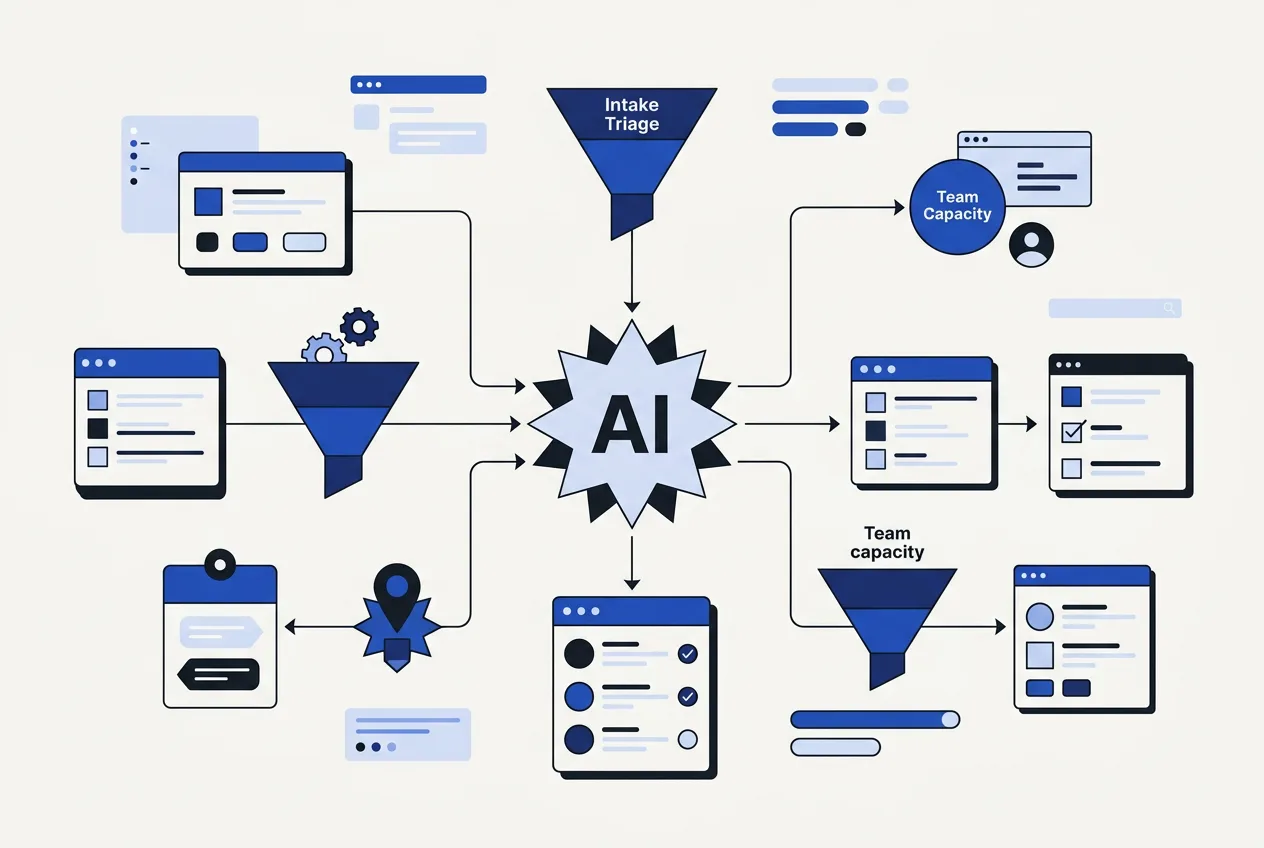
ClickUp Brain² and Super Agents operate across tasks, documents and chat, generating summaries, drafting updates and executing routine actions. Model context protocol support allows external agents to read and modify records. Wrike supplies a governed agent builder focused on risk prediction and request triage, with automations that can be created from plain-language descriptions. Jira Rovo delivers search, chat and agents that draw on the Teamwork Graph for context-aware answers and request resolution.
All five platforms connect to hundreds of external apps through native connectors or middleware such as Zapier. Jira maintains the deepest links inside the Atlassian stack, including Confluence and Bitbucket. monday.com, ClickUp and Wrike emphasize connections to marketing, finance and HR tools. Model context protocol availability in ClickUp, monday.com, Wrike and Atlassian products lets approved external AI systems query and update records without manual exports. Credit metering for AI actions appears on every paid plan, with overage charges applying once monthly allowances are reached.
Frequently asked questions
Which platform offers the strongest resource forecasting in 2026?
monday.com includes demand forecasting and skill-matching in its Enterprise Resource Planner. Asana and Wrike provide utilization alerts but less forward-looking capacity modeling.
Do these tools charge separately for AI usage?
Yes. Asana, monday.com, ClickUp, Wrike and Jira all meter AI requests through credit systems. Overages apply after included allowances are exhausted on paid plans.
Which tool integrates best with development teams?
Jira maintains the tightest connections to Atlassian products and Git-based repositories. The other platforms rely more on Zapier or Make for similar links.
Can external AI agents act inside these platforms?
ClickUp, monday.com, Wrike and Atlassian products support model context protocol, allowing approved external agents to read and modify data under governance rules.
Comments 5