Qwen4-Max 2026: Alibaba AI Model Features, Pricing and 1M Context
Qwen4-Max offers a 1M-token context window, lower API costs than its predecessor, and multimodal input handling through Alibaba Cloud.
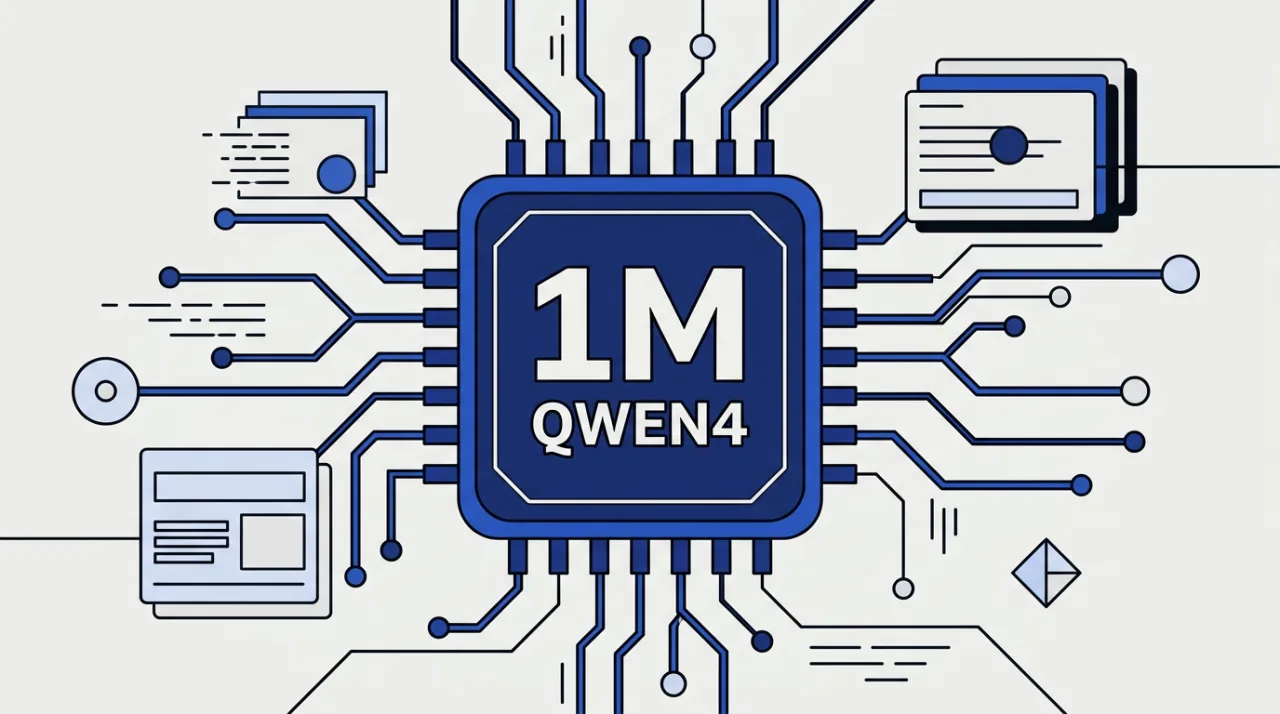
Qwen4-Max reached general availability on November 16, 2026, after a preview that began November 11. The model targets long-horizon agentic work in coding, finance, law, and science with a 1M-token context window and multimodal input support.
Alibaba positions it as the first release in the Qwen4 generation, built on a proprietary sparse MoE architecture. It succeeds Qwen3.8-Max and runs exclusively through QwenCloud API endpoints.
Qwen4-Max Architecture and Core Features
The model uses a 2.4T-parameter backbone with 71B active parameters per token, a 25% reduction from the prior generation at equivalent scale. An additional 328B N-gram embedding parameters improve retrieval efficiency. Upgrades to attention mechanisms, residual connections, and embeddings form the new Qwen4 architecture.
Input accepts text, images, and video while output remains text-only. Tool calling, structured outputs, and web search are available. Reasoning effort defaults to high and can be set to low, high, xhigh, or off. Maximum input reaches 983K–991K tokens depending on thinking mode; maximum output reaches 262K–393K tokens.
Practical applications include multi-document legal review, long codebase refactoring, and extended financial modeling sessions. Users report fewer tokens consumed on repeated tasks because cached inputs cost 70% less than standard rates.
- Configurable reasoning levels for cost control
- Tool calling and structured JSON output
- Video and image understanding alongside text
- Safety filters for cyber and CBRN content
AI API Pricing and Task Cost Reductions
International list pricing on QwenCloud stands at $1.50 per million input tokens and $4.50 per million output tokens. These rates sit 25% below Qwen3.8-Max levels of $2 and $6. Cached input tokens drop to $0.075 per million, a 70% discount. Batch processing frequently offers an additional 50% reduction.
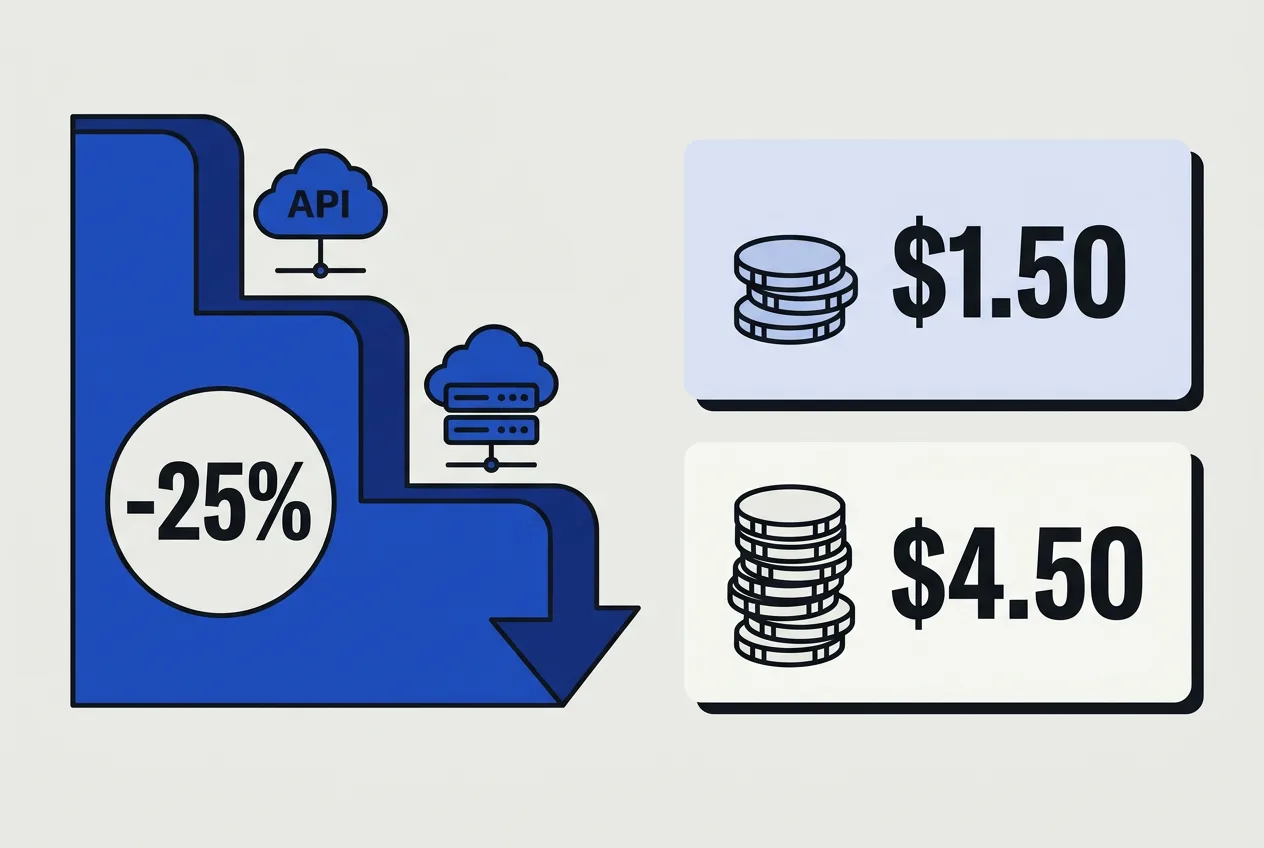
Alibaba reports average task costs on Work360 fell from $4.43 to $1.67, a 58–62% decrease, while token usage dropped 24–49% on benchmarks such as Terminal-Bench 4.0. Regional pricing in some China and global zones averages $1.413 input and $4.24 output.
| Model | Input per 1M | Output per 1M | Cached Input per 1M |
|---|---|---|---|
| Qwen4-Max | $1.50 | $4.50 | $0.075 |
| Qwen3.8-Max | $2.00 | $6.00 | $0.25 |
Access occurs via QwenCloud API with model ID qwen4-max, Token Plans, or Qwen Studio. No open weights are offered for the flagship; smaller open-weight Qwen4 variants are planned but lack release dates.
Large Language Model Comparison on Benchmarks
On agentic and coding tasks, Qwen4-Max records 75.7 on DeepSWE v1.1 and 21.3 on HLAB-Vals-1.1 legal agents. It trails on Terminal-Bench 4.0 with 48.5 and on ProgramBench relative to several US models. The Artificial Analysis Intelligence Index places it near 43, behind Kimi K3.1 Pro at 46 and leaders such as Claude at 59–65.
Independent verification remains limited because the model is closed. Vals Index results keep it competitive among Chinese models. Efficiency gains appear most pronounced on long-context professional workloads where token savings compound over repeated runs.
Enterprises testing the model cite improved throughput on multi-step legal analysis and code migration projects. Smaller Qwen4 models expected later may extend these capabilities to open-source environments once released.
Frequently asked questions
What is the context window size of Qwen4-Max?
The model supports a 1M-token context window. Maximum usable input ranges from 983K to 991K tokens depending on reasoning mode, with output up to 393K tokens.
How does Qwen4-Max pricing compare to Qwen3.8-Max?
List pricing is 25% lower at $1.50 input and $4.50 output per million tokens. Cached input falls to $0.075, and batch jobs often receive a further 50% discount.
Is Qwen4-Max available as open weights?
The flagship model runs only through QwenCloud API. Smaller open-weight Qwen4 variants are planned but have no confirmed timeline or sizes.
Which benchmarks show Qwen4-Max strengths?
It leads on DeepSWE v1.1 at 75.7 and HLAB-Vals-1.1 legal agents at 21.3. Performance trails several US models on Terminal-Bench 4.0 and ProgramBench.
Comments 12