Ransomnews Cloud Exposure Index 2026 Reveals 18 Billion Files in Public Buckets
The Ransomnews Cloud Exposure Index 2026 identified 484,142 publicly listable cloud storage buckets holding roughly 18.05 billion files across major providers.

The Ransomnews Cloud Exposure Index 2026 identified 484,142 publicly listable cloud storage buckets holding roughly 18.05 billion files across major providers. The data, collected by Ransomnews through GrayhatWarfare indexing around October 7, 2026, points to widespread configuration issues that leave credentials, database dumps, and other sensitive material accessible without authentication.
Many of the exposed items predate default public-access blocks now offered by providers. The index captures a population of at-risk buckets rather than confirmed breaches, yet the presence of recent .env files and active backups shows the exposure remains current.
Ransomnews Cloud Exposure Index 2026 Provider Breakdown and Sensitive Content
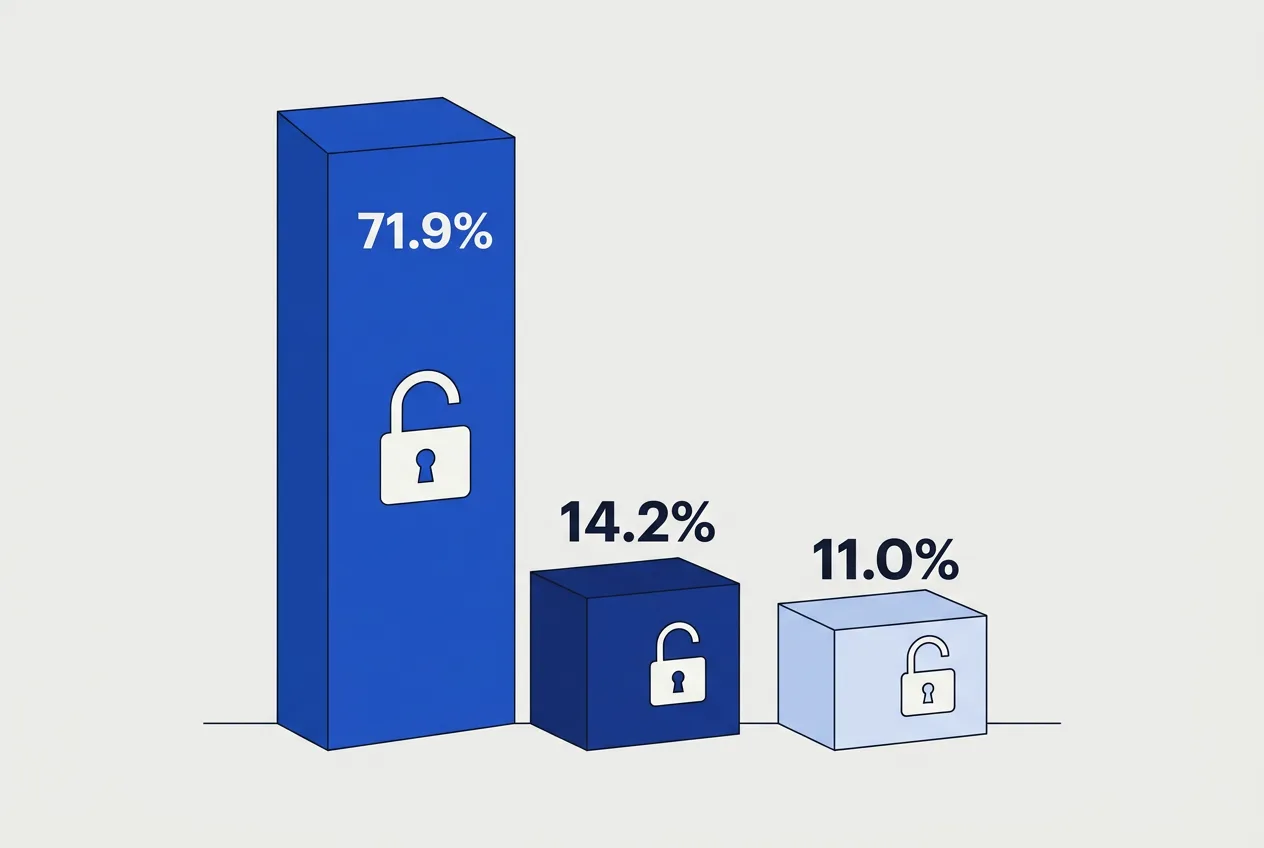
Amazon S3 accounted for 347,984 buckets, or 71.9 percent of the total. Azure Blob Storage followed with 68,532 buckets (14.2 percent), Google Cloud Storage with 53,131 (11.0 percent), DigitalOcean Spaces with 11,069 (2.3 percent), and Alibaba OSS with 3,426 (0.7 percent). Azure showed over-representation in buckets named for backups, HR, logs, and databases, ranging 2.5 to 3.6 times its baseline market share.
Metadata analysis without opening files flagged 321,058 credential or key files. These included approximately 80,495 .env files, of which 67 percent carried 2026 modification dates, along with .pem, .ppk, .tfstate, and .kdbx files. Roughly 4.7 million database and dump files appeared, identified by extensions such as .bak and .sql. Regulated sectors including finance, healthcare, education, government, legal, and HR matched about 10,891 buckets, while retail and e-commerce led with 5,666.
At least 113.6 million files were added in a single seven-day window before September 9. Many buckets appear intentionally public for assets or open datasets, yet the volume of recent credential files and virtual disk images raises the risk of credential theft that can serve as an entry point for ransomware without malware delivery.
| Provider | Buckets | Share |
|---|---|---|
| Amazon S3 | 347,984 | 71.9% |
| Azure Blob | 68,532 | 14.2% |
| Google Cloud Storage | 53,131 | 11.0% |
| DigitalOcean Spaces | 11,069 | 2.3% |
| Alibaba OSS | 3,426 | 0.7% |
Remediation Steps for S3 Bucket Security and Other Providers
Organizations should first enable account-level or organization-level public access blocks. For Amazon S3 this means activating all four Block Public Access settings. Azure users should disallow anonymous access at the storage account level, while Google Cloud users should turn on public access prevention at the project or organization level.
Next, scan existing storage for high-risk file types using tools such as GrayhatWarfare or provider-native inventory features. Look specifically for .env, .sql, .bak, .pem, .tfstate, and virtual disk images. Any discovered credentials must be rotated immediately under the assumption that copies exist outside the organization.
Treat Terraform state files, disk images, and backup archives as secrets. Store them in private buckets with server-side encryption and access logging enabled. Move production backups to isolated storage and verify restore procedures on a regular schedule. Apply least-privilege IAM policies and conduct quarterly audits of bucket policies and ACLs.
Quarterly updates to the Ransomnews Cloud Exposure Index are planned. Teams responsible for regulated-sector buckets should prioritize remediation to reduce the chance of data exposure that could trigger compliance violations.
Frequently asked questions
What does the Ransomnews Cloud Exposure Index 2026 measure?
It counts publicly listable buckets and estimates files inside them using metadata from GrayhatWarfare scans. The latest snapshot recorded 484,142 buckets and 18.05 billion files.
Which provider had the most exposed buckets?
Amazon S3 led with 347,984 buckets, representing 71.9 percent of the total identified in the October 2026 snapshot.
How can teams check their own buckets for exposure?
Enable provider public-access blocks, then run inventory scans for file extensions such as .env, .sql, .pem, and .tfstate. Rotate any discovered secrets immediately.
Does the index include only accidental exposures?
No. Some buckets are intentionally public for datasets or assets. The index flags the overall population containing potential risks rather than confirmed breaches.
Comments 8