Web Hosting Uptime SLA 2026 Comparison of Downtime Credits Across Hosts
Most web hosts guarantee 99.9% monthly uptime. This guide details the actual credit amounts, claim windows and exclusions that apply when those targets are missed.
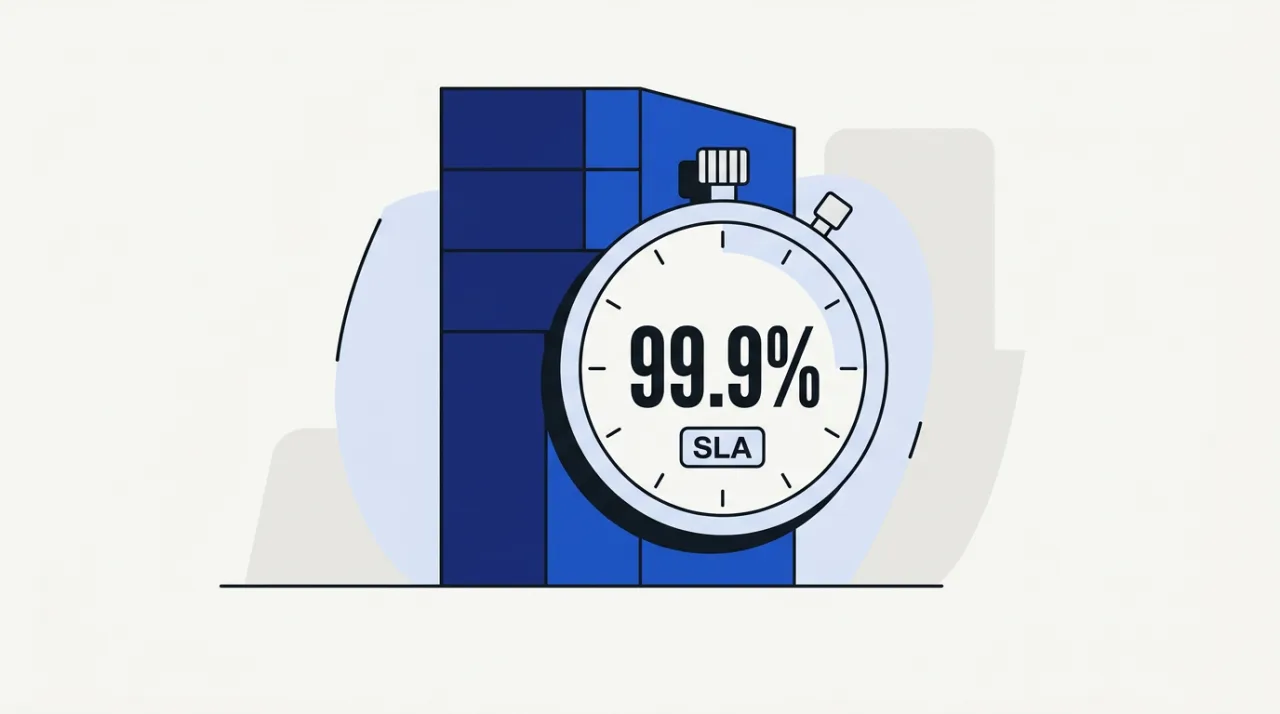
Web hosting uptime SLA commitments in 2026 continue to center on 99.9 percent monthly availability for shared plans, with credits issued only after a formal claim. Higher tiers and cloud services advertise tighter targets such as 99.99 percent, yet the financial remedies remain limited and require user action within strict deadlines.
Independent monitoring frequently records actual performance above advertised levels for established providers. Still, the value of any credit rarely matches lost revenue from an outage, so users must weigh infrastructure choices and backup strategies alongside SLA text.
Web Hosting Uptime SLA Targets and Allowed Downtime Minutes
Shared and managed hosts typically publish a 99.9 percent monthly target. In a 30-day month that allowance equals roughly 43 minutes of downtime. Several providers raise the bar on specific plans: Bluehost lists 99.99 percent for shared accounts measured at the server level, while DreamHost advertises a 100 percent guarantee.
Cloud services differentiate by deployment type. AWS EC2 offers 99.99 percent at the region level when instances run across multiple availability zones, but drops to 99.5 percent for a single instance. Google Compute Engine Premium Tier matches the 99.99 percent multi-zone figure in most regions, and Azure availability sets reach 99.95 percent under qualifying configurations.
These percentages translate directly into minutes. A 99.95 percent SLA permits about 22 minutes of outage, while 99.99 percent limits downtime to roughly four minutes. Providers exclude scheduled maintenance, customer configuration errors, external network issues and force majeure events from the calculation, which narrows the window in which credits can be earned.
Downtime Credit Amounts and Claim Procedures by Provider
Credit policies vary in percentage, cap and deadline. Hostinger issues 5 percent of the monthly fee for any month that falls below 99.9 percent, provided the claim arrives within 30 days. Hosting.com applies 5 percent per confirmed outage hour caused by internal factors, with a maximum of one month’s fee.
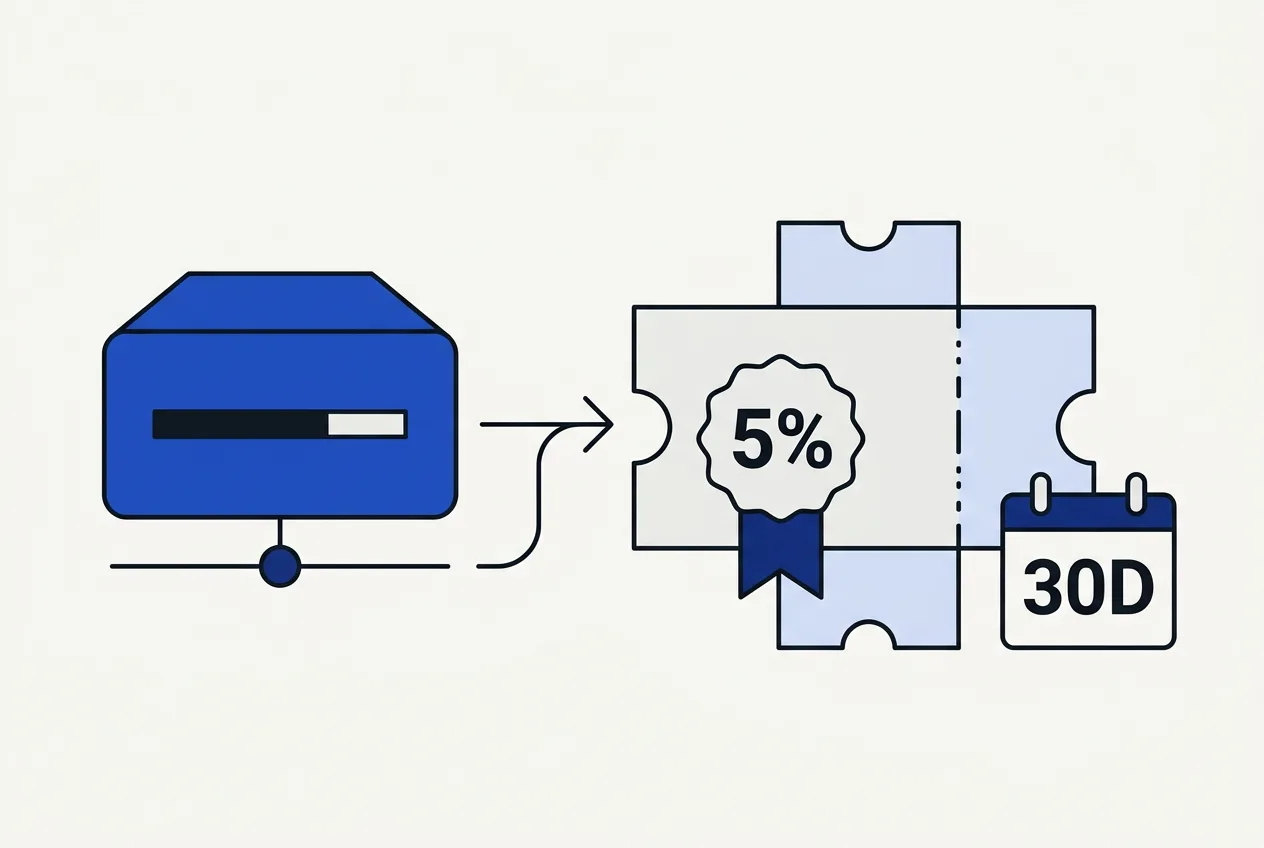
Bluehost caps shared-plan credits at 5 percent of the monthly fee and limits users to one coupon per month, also requiring submission inside 30 days. DreamHost grants one day of hosting credit for each hour or partial hour of interruption, yet the total cannot exceed 10 percent of the next renewal invoice and the claim must be filed within 14 days.
MonsterMegs uses a tiered schedule that begins at 5 percent credit for outages between 45 minutes and 3.5 hours. Cloud providers such as AWS, Google Cloud and Azure calculate credits as percentages of the affected service bill only: 10 percent, 30 percent or 100 percent depending on how far the monthly figure falls short. All credits apply solely to future invoices and cannot be converted to cash.
| Provider | Advertised SLA | Credit Example | Claim Window | Maximum Credit |
|---|---|---|---|---|
| Hostinger | 99.9% | 5% of monthly fee | 30 days | One month |
| Bluehost (shared) | 99.99% | 5% of monthly fee | 30 days | One coupon/month |
| DreamHost | 100% | One day per outage hour | 14 days | 10% of renewal |
| AWS EC2 (multi-AZ) | 99.99% | 10–100% of service bill | 30 days | One month |
| Google Compute Engine | 99.99% | 10–50% of service bill | Varies | One month |
Common exclusions appear across nearly every agreement. Scheduled maintenance announced in advance, customer-side code problems, DDoS attacks and upstream carrier faults do not trigger credits. Most users never submit claims, partly because the process demands timestamped evidence and support tickets within tight windows.
Practical Steps When Reviewing Web Hosting Uptime SLA Documents
Read the full terms rather than the marketing headline. Note the exact measurement method, whether it covers the entire account or only specific servers, and whether credits are automatic or must be requested. Compare the credit cap against the monthly fee to understand the maximum possible recovery.
Set up independent monitoring through services that ping the site every minute. Record outages separately from the provider’s logs, because approval decisions rest with the host. Maintain off-site backups and consider multi-region architecture for sites where even brief downtime carries high cost.
Renewal cycles and plan tiers can alter SLA language, so recheck the agreement after any upgrade. Cloud users should verify whether the quoted percentage applies only to multi-zone deployments, since single-instance targets are materially lower. These steps place the published web hosting uptime SLA in context with actual operational risk.
Frequently asked questions
How much downtime does a 99.9 percent SLA actually allow each month?
In a 30-day month a 99.9 percent target permits approximately 43 minutes of cumulative downtime before the guarantee is considered breached.
Are uptime credits issued automatically when an SLA is missed?
No. Every provider examined requires the customer to open a support ticket with evidence and submit the request within a stated window, usually 14 to 30 days.
What factors are excluded from most web hosting uptime SLA calculations?
Scheduled maintenance, customer configuration errors, third-party network problems, DDoS attacks and force majeure events are routinely excluded from the uptime measurement.
Do cloud SLAs provide larger credits than shared hosting plans?
Cloud credits are calculated as percentages of the affected service bill and can reach 100 percent in severe cases, yet they remain limited to future use and still exclude many outage causes.
Comments 5